2026 Global Graphite Industry In-Depth Insight: Technology Iteration, Demand Restructuring and New Industrial Opportunities
Table of Contents
- 2026 Global Graphite Industry In-Depth Insight
- Abstract
- I. Global Graphite Industry Supply and Demand Pattern
- II. Core Growth Drivers of the Industry
- III. Industry Technological Changes
- 1. Technological Breakthrough in the Localization of High-End Specialty Graphite
- 2. Upgrading of Graphite Precision Machining and Customization Technology
- 3. Technological Iteration and Modification Upgrading of Lithium Battery Anode Materials
- 4. Industrialization of Circular Economy and Recycled Graphite Technology
- IV. Core Challenges and Risks of the Industry
- 1. High-End Technical Barriers Have Not Been Fully Broken Through
- 2. Raw Material Price Fluctuations and Resource Constraints
- 3. Continuous Pressure from Environmental Protection and Dual-Carbon Policies
- 4. International Trade Frictions and Geopolitical Risks
- 5. Potential Competition from Alternative Materials
- V. Industry Development Trends and Core Opportunities in the Next 5 Years
- 1. High-End and Customization Are the Core Growth Curves of the Industry
- 2. Full Industrial Chain Vertical Integration Has Become the Mainstream Trend
- 3. Green Low-Carbon and Circular Economy Become the Standard Configuration
- 4. Parallel Global Layout and Localized Operation
- 5. Emerging Application Scenarios Continue to Open Up the Industry Ceiling
- Conclusion
2026 Global Graphite Industry In-Depth Insight: Technology Iteration, Demand Restructuring and New Industrial Opportunities
Abstract
As a strategic non-metallic material with multiple excellent properties including electrical conductivity, thermal conductivity, high temperature resistance, corrosion resistance and self-lubrication, graphite has evolved from a basic auxiliary material in traditional metallurgy and machinery fields, to a key functional material in core sectors such as new energy, semiconductors, high-end equipment, photovoltaics and hydrogen energy. In 2026, the global graphite industry is in a critical cycle of in-depth adjustment of production capacity structure, accelerated breakthrough of high-end technology, continuous expansion of application scenarios, and accelerated restructuring of the supply chain pattern. This paper comprehensively dissects the development status and long-term trends of the graphite industry from six dimensions: supply and demand pattern, core drivers, technological changes, industrial chain competition, risks and challenges, and future opportunities, providing in-depth reference for industry practitioners, investors and industrial chain partners.
I. Global Graphite Industry Supply and Demand Pattern: Parallel Expansion of Scale and Structural Differentiation
1. Sustained High Growth in Market Size, with Growth Momentum Shifting to High-End Tracks
According to statistics from authoritative industry institutions, the overall size of the global graphite market exceeded USD 22 billion in 2025, a year-on-year increase of 17.2%. It is expected that the industry’s compound annual growth rate (CAGR) will maintain in the range of 14%-16% from 2026 to 2030, and the market size is expected to exceed USD 48 billion by 2030.
From the perspective of category structure, the industry growth presents significant structural differentiation:
- Synthetic Graphite: Benefiting from the explosive demand for lithium battery anode materials, it accounted for 68% of the global graphite market size in 2025, serving as the first growth curve of the industry. Among them, the growth rate of high-end fast-charging synthetic graphite far exceeds the industry average;
- Natural Graphite: Maintains steady demand in lithium battery anodes, refractory materials, seals and other fields. High-purity flake graphite has continuously rising premium capacity due to its application in high-end anodes and special materials;
- Specialty Graphite (isostatic graphite, high-purity high-density high-strength graphite, fine-grain graphite, etc.): It only accounts for 12% of the market size, but leads the entire industry in growth rate, with a year-on-year growth rate of 24% in 2025. It is the core track with the highest industry profit and the strongest technical barriers, as well as the focus of global enterprise competition.
2. Global Industrial Chain Pattern: China Dominates Production Capacity, Overseas Players Monopolize High-End Segments
The global graphite industry chain presents significant regional differentiation characteristics, forming a basic pattern where “China dominates the mid-to-low-end full industrial chain production capacity, while Europe, the United States and Japan control high-end technology and high value-added links”.
- China’s Global Core Position: China is the world’s largest producer, consumer and exporter of graphite, with natural graphite production capacity accounting for more than 65% of the global total, and synthetic graphite production capacity accounting for more than 90% of the global total. It has a full industrial chain supporting capacity from graphite beneficiation, purification, granulation, deep processing to terminal applications. Shandong, Heilongjiang and Inner Mongolia are the core gathering areas of the domestic graphite industry. Among them, Shandong has become one of the core supply bases for custom graphite components in the world by virtue of its high-end deep processing and precision machining capabilities.
- Overseas High-End Market Monopoly: International giants such as Germany’s SGL Carbon, Japan’s Toyo Carbon, America’s POCO and France’s Mersen have long monopolized the global high-end specialty graphite market, with a global market share of more than 80% in fields such as ultra-high-purity graphite for semiconductors, nuclear graphite, and aerospace graphite. Relying on technical barriers and brand advantages, they have obtained the vast majority of excess profits in the industry.
- Supply Chain Restructuring Trend: Since 2024, affected by geopolitics, trade barriers and supply chain security requirements, the global graphite industry chain has shown a parallel trend of “localization + regionalization”. Europe and the United States have accelerated the local implementation of lithium battery anode and specialty graphite production capacity, Southeast Asia has become an important destination for the transfer of mid-to-low-end graphite product production capacity, while Chinese enterprises are accelerating their penetration into the high-end market through technological breakthroughs and global layout.
II. Core Growth Drivers of the Industry: Four Major Tracks Restructure the Underlying Logic of Demand
The growth momentum of the graphite industry has shifted from the cyclical demand of traditional industries to the rigid and long-term demand of strategic emerging industries such as new energy and high-end manufacturing. The four core tracks have become the core engines of industry growth.
1. New Energy Vehicles and Energy Storage: The Industry’s No.1 Growth Pole, Technology Upgrading Drives Quality Transition
Lithium battery anode material is the largest source of demand in the graphite industry, accounting for more than 70% of the total global graphite consumption. In 2025, the global penetration rate of new energy vehicles exceeded 35%, and the installed capacity of the energy storage industry increased by more than 60% year-on-year, directly driving a 32% year-on-year increase in demand for lithium battery anode materials.
What is more noteworthy is the quality upgrade on the demand side: the large-scale application of fast-charging technology has promoted the upgrade of synthetic graphite from conventional type to fast-charging and high-rate type, requiring graphite to have better rate performance, lower expansion rate and longer cycle life. At the same time, the development of high energy density batteries has promoted the composite application of natural graphite and synthetic graphite, as well as the industrialization of silicon-carbon composite anodes, putting forward higher requirements for graphite purification, modification and deep processing technologies. In addition, the accelerated commercialization of sodium-ion batteries has also opened up a new incremental market for hard carbon/graphite composite anode materials.
2. Semiconductors and High-End Equipment Manufacturing: Core Rigid Demand Scenario for High-End Specialty Graphite
The semiconductor industry is one of the core application scenarios for high-end graphite materials, and also the track with the highest technical barriers. In wafer fabrication, chip packaging, ion implantation, high-temperature heat treatment and other links, graphite has become the core material for silicon wafer carrying fixtures, heaters, electrostatic chucks and ion implantation components by virtue of its high temperature resistance, low impurity, high stability and excellent thermal properties. With the expansion of global wafer fab production capacity, especially the rapid development of advanced processes below 28nm and third-generation semiconductors, the demand for ultra-high-purity graphite (purity above 99.9995%) and fine-grain isostatic graphite continues to explode, and puts forward nanometer-level stringent requirements for the precision machining accuracy, consistency and cleanliness of graphite components.
At the same time, high-end equipment fields such as Electrical Discharge Machining (EDM), industrial high-temperature furnaces, and vacuum heat treatment are also core application scenarios for customized graphite machined parts. Graphite electrodes for EDM have gradually replaced traditional copper electrodes in the field of precision mold and auto parts processing with the advantages of high processing efficiency, low loss and high precision. Graphite thermal fields, graphite crucibles and graphite insulation parts for high-temperature furnaces have achieved large-scale application in photovoltaics, metallurgy, new material preparation and other fields, and customized processing has become the core competitive barrier of the industry.
3. Photovoltaics and Hydrogen Energy: Long-Term Incremental Tracks Under the Dual-Carbon Goal
The photovoltaic industry is the second largest industrial application scenario for graphite materials. In the monocrystalline silicon ingot pulling link, the graphite thermal field system (including crucibles, guide cylinders, heaters, insulation cylinders and other components) is the core consumable of the monocrystalline furnace, accounting for more than 30% of the non-silicon cost of monocrystalline silicon. With the sustained high growth of global photovoltaic installed capacity, as well as the popularization of large-size silicon wafers and N-type battery technology, higher requirements are put forward for the size, purity, service life and thermal shock resistance of graphite thermal field materials. The penetration rate of isostatic graphite in the photovoltaic thermal field field is close to 100%, which has become a rigid demand of the industry.
The hydrogen energy field has opened up a new growth space for the graphite industry. Graphite bipolar plates for fuel cells have become the mainstream technical route for vehicle fuel cell bipolar plates by virtue of their excellent electrical and thermal conductivity, corrosion resistance and low cost advantage. With the commercialization of fuel cell vehicles, demand is expected to see explosive growth. At the same time, graphite electrodes for water electrolysis hydrogen production and graphite composite materials for hydrogen energy storage and transportation are gradually realizing industrial application, becoming an important reserve track for the long-term growth of the industry.
4. Nuclear Power, Aerospace and Emerging Fields: Continuous Breakthroughs in Strategic Applications
In the field of nuclear power, graphite is the only moderator and reflector material for high-temperature gas-cooled reactors, and also the core structural material for Generation IV nuclear reactors. With the recovery of the global nuclear power industry, the demand for high-purity nuclear graphite continues to grow, and has extremely high qualification and technical barriers. In the aerospace field, graphite composite materials continue to expand their applications in aero-engines, satellite structural parts, rocket nozzles and other components by virtue of their lightweight, high-strength and high temperature resistance characteristics. In addition, the industrial application of graphene and graphite nanomaterials has been gradually implemented, and the application scenarios in electronic information, new materials, biomedicine and other fields continue to expand, opening up the ceiling for the long-term development of the graphite industry.
III. Industry Technological Changes: Four Core Directions Determine the Core Competitiveness of Enterprises
The competition in the graphite industry has shifted from the past production capacity scale competition to the core competition of technology and R&D. In 2026, the industry’s technological iteration presents four core directions, which become the key for enterprises to break through.
1. Technological Breakthrough in the Localization of High-End Specialty Graphite
Ultra-high-purity, high-density high-strength, fine-grain isostatic graphite has long been a “bottleneck link” restricting the development of the domestic graphite industry. In recent years, leading domestic enterprises have continued to increase R&D investment, and achieved major breakthroughs in core technologies such as isostatic pressing, high-temperature purification, and integrated roasting and impregnation. Mid-to-low-end isostatic graphite has achieved full localization, and mid-to-high-end specialty graphite for semiconductors has entered the supply chain verification stage of domestic wafer fabs, gradually realizing import substitution. In the next 3-5 years, the localization of high-end specialty graphite will be the biggest technical dividend and growth opportunity for the domestic graphite industry.
2. Upgrading of Graphite Precision Machining and Customization Technology
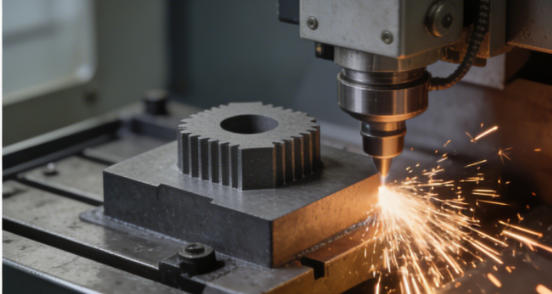
With the upgrading of demand in semiconductors, high-end equipment, EDM and other fields, the customized demand for graphite components from end customers continues to rise, with increasingly high requirements for machining accuracy, surface finish, complex structure forming and batch consistency. Ultra-precision five-axis machining technology, clean machining technology, non-destructive testing technology, and complex special-shaped part forming technology have become the core competitiveness of graphite deep processing enterprises. Enterprises that can provide customers with full-chain customized services of “material R&D – structural design – precision machining – testing and verification – after-sales maintenance” will gain significant premium capacity and competitive barriers in the high-end market.
3. Technological Iteration and Modification Upgrading of Lithium Battery Anode Materials
The technological competition in the lithium battery anode field is becoming increasingly fierce, with the core direction focusing on three dimensions: first, the technical optimization of fast-charging synthetic graphite, improving rate performance and cycle life through particle morphology design, surface coating modification, and pore structure regulation; second, the high-end application of natural graphite, improving the penetration rate of natural graphite in high-end power batteries through high-purity purification and spheroidization modification; third, the industrialization of composite anode materials, promoting the compounding of graphite with silicon-based, hard carbon and other materials to adapt to the development needs of high energy density batteries.
4. Industrialization of Circular Economy and Recycled Graphite Technology
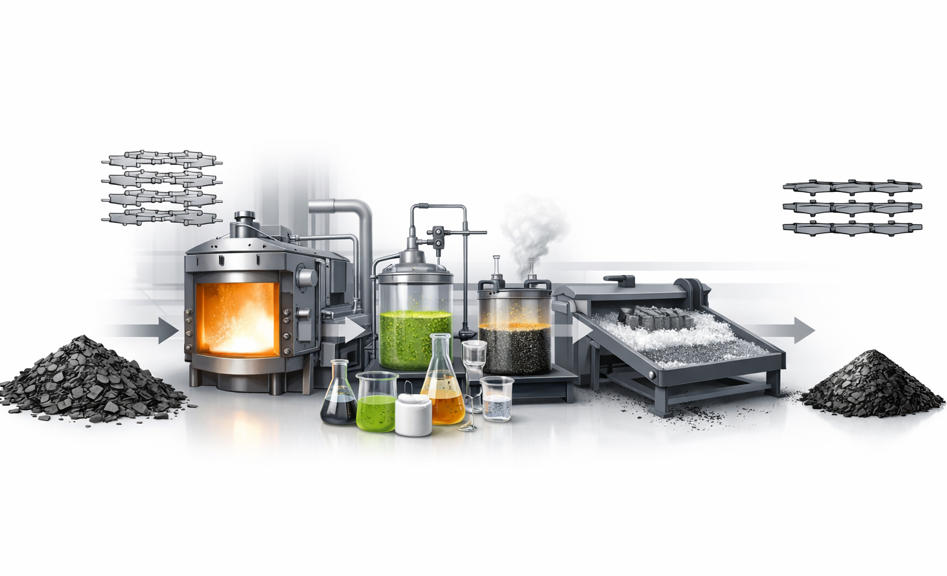
Against the background of the dual-carbon goal and the tightening of global ESG supervision, the green and low-carbon transformation of the graphite industry has become an inevitable trend. Recycled graphite technology has become a hot spot in industry R&D, which includes two core directions: first, the recycling and regeneration of lithium battery anode waste, through crushing, purification, modification and other processes, regenerating graphite anodes from decommissioned power batteries into reusable anode materials to realize resource recycling; second, the recycling of graphite processing waste and used graphite products, preparing mid-to-low-end graphite products through purification and re-molding processes to reduce raw material consumption. At present, leading domestic enterprises have achieved large-scale mass production of recycled graphite. In the next 5 years, recycled graphite technology will become the standard configuration of the industry, restructuring the cost structure and resource supply pattern of the industrial chain.
IV. Core Challenges and Risks of the Industry
Despite the broad growth prospects of the industry, global graphite enterprises still face multiple challenges and risks, which are mainly concentrated in five dimensions:
1. High-End Technical Barriers Have Not Been Fully Broken Through
Domestic enterprises have global competitiveness in the mid-to-low-end graphite field, but there is still a significant gap with international giants in high-end fields such as ultra-high-purity graphite for semiconductors, nuclear graphite, and aerospace specialty graphite. The gap is mainly reflected in the consistency, stability and batch qualification rate of materials, as well as core processes such as ultra-precision machining and surface modification. Breakthroughs in high-end technology still require long-term R&D investment and process accumulation.
2. Raw Material Price Fluctuations and Resource Constraints
Natural graphite is a non-renewable resource. The reserves of high-grade flake graphite resources in China are limited, and the beneficiation and purification links are greatly affected by environmental protection policies. The core raw materials of synthetic graphite, needle coke and asphalt, are affected by the cycle of the petroleum and coal chemical industries, with significant price fluctuations, which directly affect the profitability of enterprises. At the same time, the control of graphite resources by major countries in the world continues to tighten, further aggravating the uncertainty of raw material supply.
3. Continuous Pressure from Environmental Protection and Dual-Carbon Policies
Graphite production is a high energy-consuming industry, with high energy consumption in roasting, graphitization, purification and other links, as well as certain environmental emission pressure. With the advancement of the global dual-carbon goal, domestic environmental protection control and energy consumption dual control policies continue to tighten, industry access thresholds continue to rise, small and medium-sized production capacity is accelerated to be cleared, and enterprises’ environmental protection investment and production costs continue to rise, forming a certain squeeze on the industry’s profit level.
4. International Trade Frictions and Geopolitical Risks
Graphite has been listed as a strategic key mineral resource by major countries in the world, and trade barriers continue to escalate. Europe and the United States have launched anti-dumping and anti-subsidy investigations on China’s lithium battery anode materials, implemented export controls on high-end graphite materials, and promoted the localization of the supply chain, posing challenges to the global layout of Chinese graphite enterprises. In addition, fluctuations in global energy prices and rising logistics costs caused by geopolitical conflicts have also aggravated the operational uncertainty of the industry.
5. Potential Competition from Alternative Materials
In some application scenarios, carbon fiber, silicon carbide ceramics, new composite materials, etc., pose a certain substitution threat to graphite materials by virtue of their better high temperature resistance, high strength and corrosion resistance. Especially in high-end aerospace, semiconductors and other fields, technological breakthroughs in alternative materials may impact the long-term demand for graphite.
V. Industry Development Trends and Core Opportunities in the Next 5 Years
Looking ahead to 2026-2030, the global graphite industry will enter a golden cycle of high-quality development, with five core trends clearly visible, and huge industrial opportunities bred at the same time.
1. High-End and Customization Are the Core Growth Curves of the Industry
The profit and growth opportunities of the industry will continue to concentrate on high-end specialty graphite and customized deep processing links. Customized graphite components in semiconductors, photovoltaics, hydrogen energy, high-end equipment and other fields will become the core track for domestic enterprises to break through. Enterprises with material R&D capabilities, ultra-precision machining capabilities, and full-chain customized service capabilities will obtain profitability and growth space far exceeding the industry average.
2. Full Industrial Chain Vertical Integration Has Become the Mainstream Trend of the Industry
In response to raw material price fluctuations, supply chain risks and cost pressures, leading enterprises will accelerate the promotion of full industrial chain vertical integration, layout upstream raw material links such as graphite mines and needle coke, and extend downstream to deep processing, customized components and terminal application services. Through full industrial chain collaboration, they will enhance anti-risk capabilities and core competitiveness, the industry concentration will continue to increase, and the Matthew Effect will become more and more significant.
3. Green Low-Carbon and Circular Economy Become the Standard Configuration of the Industry
Under the dual-carbon goal, green production will become the core access threshold for graphite enterprises. Low-energy graphitization processes, clean purification technologies, and waste heat recovery and utilization will be accelerated in popularity, and recycled graphite technology will achieve large-scale industrial application, forming a closed-loop industrial chain of “resources – products – waste – renewable resources”. Enterprises with green and low-carbon production capacity will gain significant advantages in the global supply chain competition.
4. Parallel Global Layout and Localized Operation
Faced with global trade barriers and supply chain restructuring, leading domestic graphite enterprises will accelerate their global layout, and achieve localized operation by building production bases, R&D centers and service outlets overseas, getting close to end customers and avoiding trade risks. At the same time, relying on cost advantages, technical advantages and full industrial chain supporting capabilities, Chinese enterprises will accelerate their penetration into the global high-end market, and gradually break the monopoly pattern of international giants.
5. Emerging Application Scenarios Continue to Open Up the Industry Ceiling
With the continuous breakthrough of new materials, high-end manufacturing, and new energy technologies, the application scenarios of graphite materials will continue to expand. Emerging fields such as nuclear fusion, commercial aerospace, third-generation semiconductors, solid-state batteries, and graphene composite materials will bring new incremental demand to the graphite industry, promoting the industry to leap from a 10-billion-level market to a 100-billion-level market.
Conclusion
The graphite industry is at a historic inflection point of transformation from traditional basic materials to strategic high-end new materials. In the short term, the industry still faces challenges such as production capacity structure adjustment, trade frictions, and cost fluctuations; but in the long run, the explosive demand from strategic emerging industries such as new energy, semiconductors, photovoltaics and hydrogen energy has brought unprecedented development opportunities to the industry.
For industry enterprises, only by adhering to technological innovation, focusing on high-end tracks, deeply cultivating customized services, and promoting full industrial chain integration and green low-carbon transformation, can we seize the first opportunity in the wave of global industrial chain restructuring, realize the leap from “scale leadership” to “technology leadership and value leadership”, and occupy a more core position in the competitive pattern of the global graphite industry.