Graphite Paper: Properties, Uses, and How to Choose It for Industrial Applications
Graphite Paper: Properties, Uses, and How to Choose It for Industrial Applications
Graphite paper is a thin graphite-based material widely used in thermal management, sealing, high-temperature systems, and selected industrial assemblies. In real projects, buyers are usually not asking only what graphite paper is. They are trying to understand whether it is the right material form for heat spreading, compressibility, chemical resistance, installation convenience, and long-term stability in the target application.
Compared with bulk graphite materials, graphite paper offers a more flexible and easier-to-convert sheet form. Depending on the grade and production route, it can be used directly or further processed into gaskets, heat-spreading layers, insulating support structures, and other custom parts. For many customers, graphite paper sits between raw graphite material and finished industrial component. That is exactly why material selection matters.
As a supplier of industrial graphite materials, QDZRT Graphite provides Graphite Paper solutions for customers requiring stable quality, application-based specification support, and export-oriented supply.
What Is Graphite Paper?
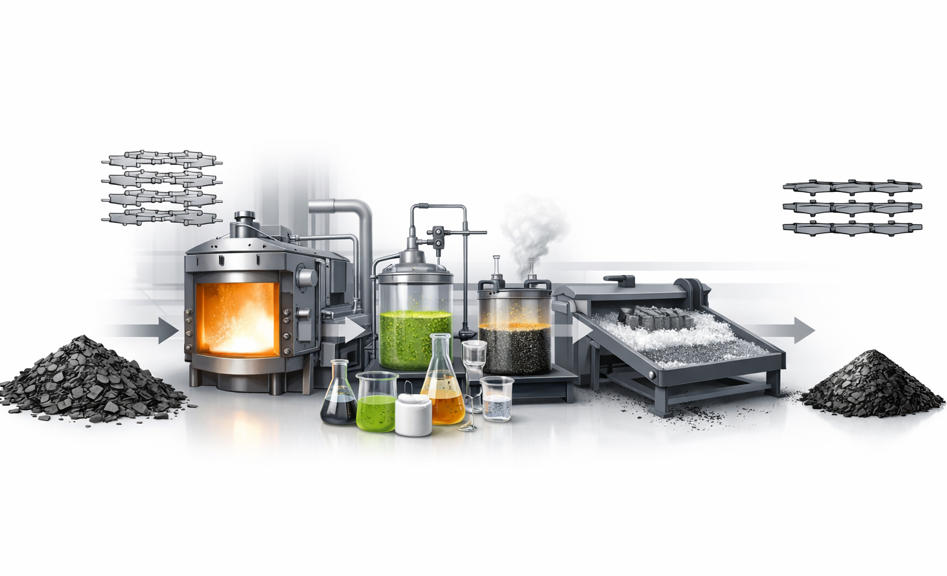
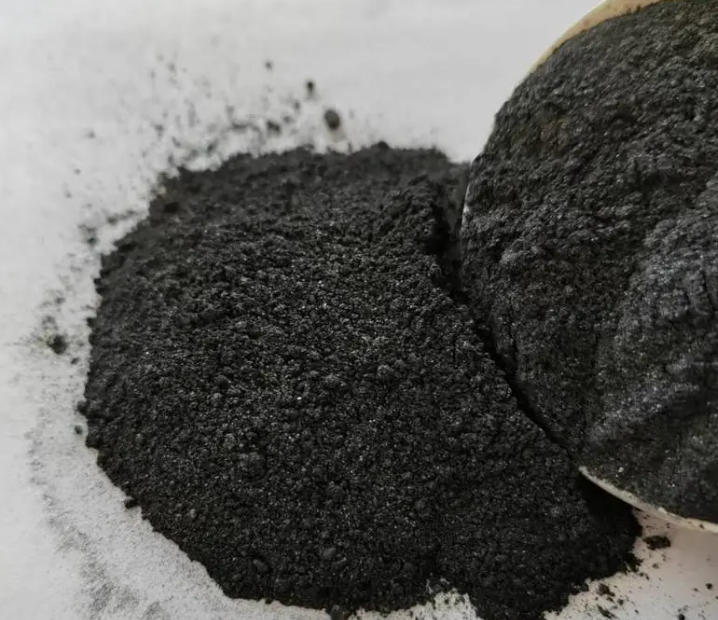
Graphite paper is generally made from expanded graphite or related graphite-based sheet-form processing routes. It is known for being thin, flexible, and able to combine the core properties of graphite with sheet-format convenience. Depending on the application, users may focus on thickness, density, compressibility, thermal conductivity direction, surface condition, or whether the material needs reinforcement or lamination.
In industrial use, graphite paper may overlap in discussion with Graphite Sheet and Flexible Graphite Sheet. In some markets these names are used differently depending on thickness, flexibility, reinforcement structure, or downstream use. That is why buyers should evaluate the real product form rather than relying only on the label.
Key Properties of Graphite Paper
Excellent Heat Spreading Potential
Graphite paper is widely valued for thermal management because graphite can transfer heat efficiently along the plane direction. In practical use, this makes graphite paper attractive for heat spreading, temperature balancing, and thermal interface support in selected systems.
Flexibility and Easy Conversion
Compared with rigid graphite blocks or machined parts, graphite paper is easier to cut, laminate, die-cut, punch, and integrate into layered structures. This improves usability in both standard products and customized conversion projects.
Chemical and Temperature Resistance
Graphite-based sheet materials are often selected because they can remain useful in demanding thermal and chemical environments. Actual performance depends on grade, atmosphere, and system design, but graphite paper is commonly considered where heat resistance and material stability are important.
Compressibility and Sealing Adaptability
Some graphite paper grades are also useful for sealing-related conversion because they can conform to flange or contact surfaces better than many rigid materials. In these cases, thickness stability, surface finish, and reinforcement structure become important selection points.
A Practical Comparison: Graphite Paper vs Other Graphite Forms
| Material Form | Main Advantage | Typical Fit | Selection Note |
|---|---|---|---|
| Graphite Paper | Thin, flexible, easy to convert | Thermal layers, sealing conversion, thin sheet structures | Check thickness, density, and reinforcement needs |
| Graphite Sheet | Broader sheet-format industrial use | Thermal, sealing, insulation, layered assemblies | May include wider thickness and structure range |
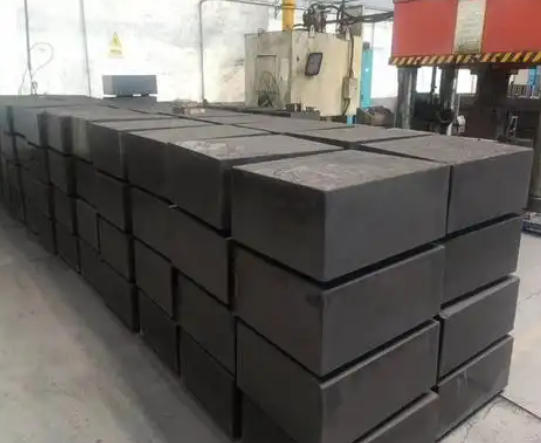
| Graphite Block | Rigid and machinable | Furnace parts, structural components, custom machining | Not suitable where thin flexible format is required |
This comparison matters because some buyers describe every thin graphite material as a “sheet,” while others specifically ask for “paper.” The better approach is to start from the actual application and working structure.
Common Industrial Uses of Graphite Paper
Thermal Management and Heat Spreading
Graphite paper is often used in thermal management structures where a thin heat-spreading layer is needed. It may be selected for electronics-related thermal paths, battery-related heat balancing, and equipment sections where temperature distribution matters more than bulk structural strength.
Sealing and Gasket Conversion
In some industrial sealing systems, graphite paper can be converted into gaskets or sealing layers for high-temperature and chemically demanding environments. Here the buyer should pay attention to compressibility, thickness consistency, and whether reinforcement is necessary.
Insulation and Protective Layer Structures
Graphite paper may also serve in layered industrial assemblies where flexibility, temperature resistance, and compact structure are all important. In these cases, ease of cutting and integration often becomes a practical advantage.
Custom Laminated or Die-Cut Parts
Because the material is easier to convert than rigid graphite, graphite paper is also used for die-cut parts, layered composites, adhesive-backed structures, and other custom industrial formats.
How to Choose the Right Graphite Paper
- Confirm whether the application is mainly thermal, sealing-related, insulating, or structural.
- Check the required thickness, density, and flexibility range.
- Evaluate whether the material needs reinforcement, lamination, or adhesive backing.
- Clarify the operating temperature, atmosphere, and media environment.
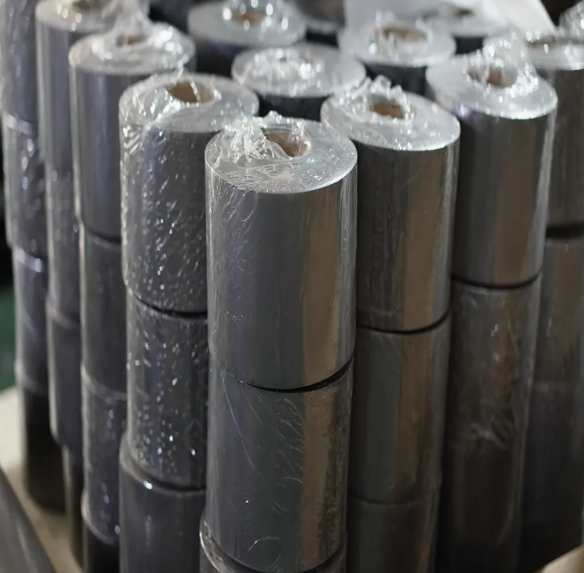
- Decide whether standard rolls/sheets are enough or whether custom die-cut conversion is needed.
For many projects, the right graphite paper is not simply the thinnest or softest one. It is the grade that fits the installation method, the heat or sealing requirement, and the downstream processing route.
Common Purchasing Mistakes
- Using the term graphite paper without confirming thickness and density expectations.
- Assuming every graphite paper grade behaves the same in thermal and sealing systems.
- Ignoring reinforcement or lamination requirements in demanding installations.
- Choosing only by price without checking conversion, handling, and long-term stability.
Liugong Graphite Paper Features the Following Superior Properties
-
Excellent Machinability
Liugong graphite paper can be die-cut into custom sizes, shapes and thicknesses. We supply die-cut flat sheets with a thickness ranging from 0.05mm to 1.5mm.
-
Superior Wide-Temperature Stability
Liugong graphite paper delivers reliable performance across an extreme temperature range, with a maximum service temperature of up to 400℃ and a minimum service temperature below -40℃.
-
Ultra-High Thermal Conductivity
The in-plane thermal conductivity of Liugong graphite paper can reach up to 1500W/mK. Its thermal resistance is 40% lower than that of aluminum and 20% lower than that of copper.
-
Outstanding Design Flexibility
Liugong graphite paper can be easily laminated with metals, insulating layers or double-sided adhesive to form composite laminates, enabling greater design flexibility. Adhesive backing is also available as an option.
-
Ultra-Thin & Lightweight Profile
Liugong graphite paper is 30% lighter than aluminum and 80% lighter than copper of the same dimensions.
-
Exceptional Ease of Application
The graphite heat dissipation sheet can be smoothly and seamlessly affixed to any flat or curved surface.