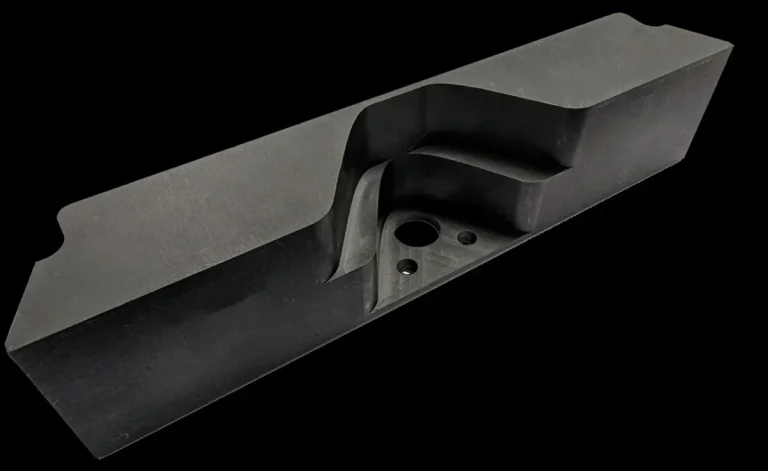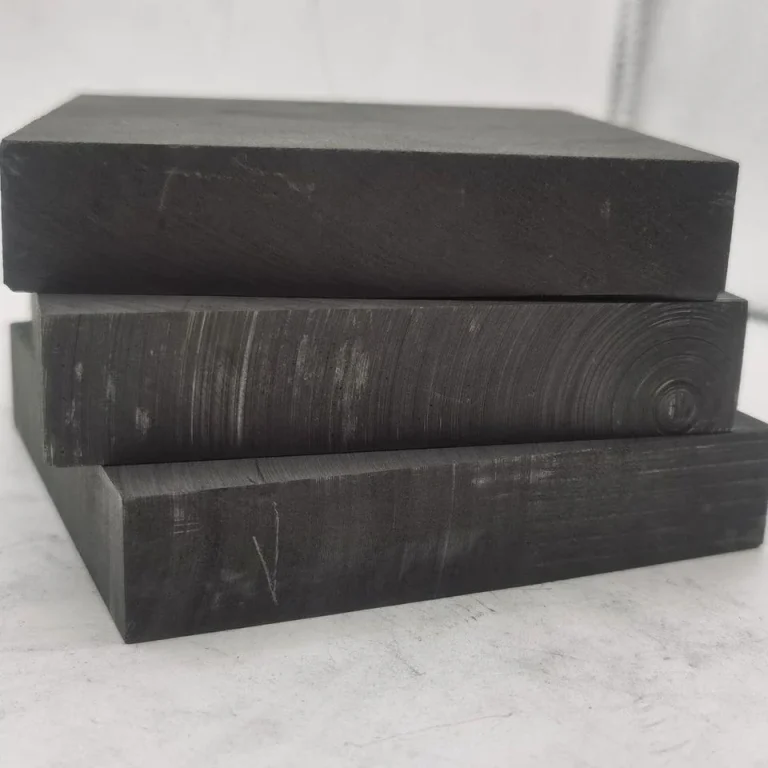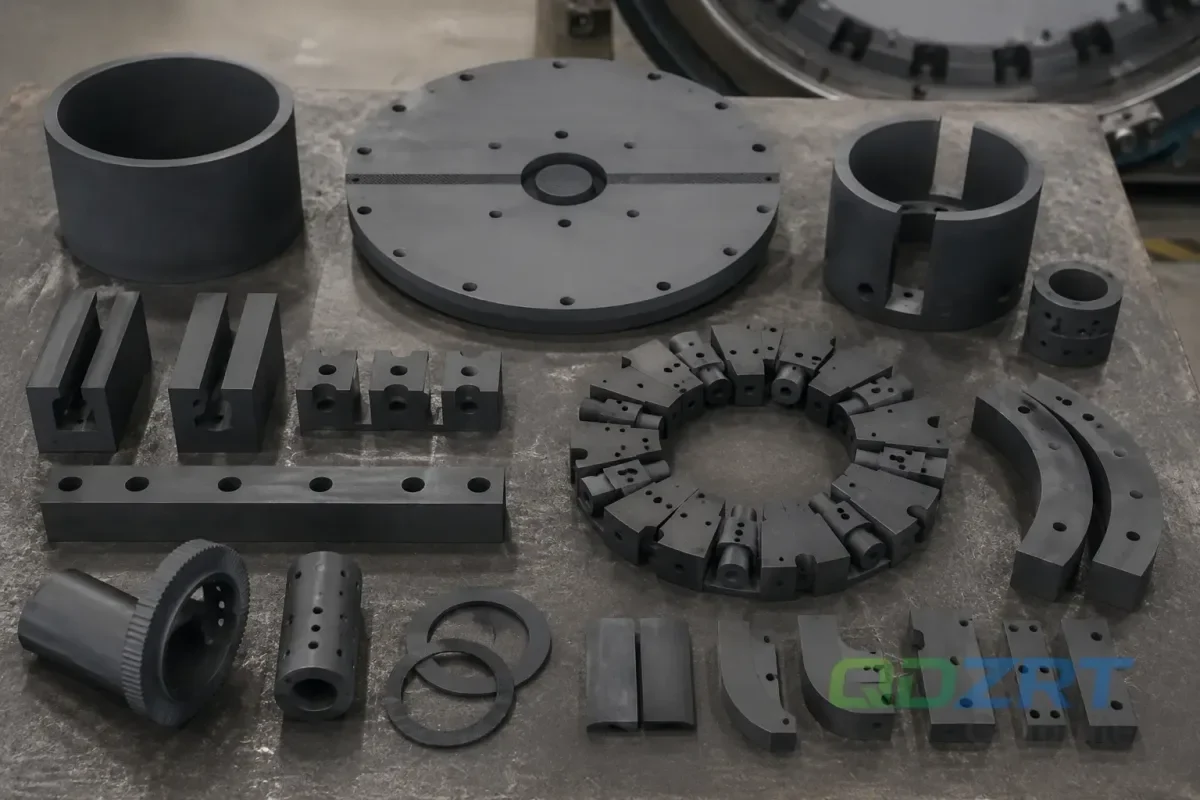
Most graphite block buying mistakes trace back to an early definition gap. They usually begin when the project team defines a block only by outside size, a rough material name, or a target price. A shipment can then arrive at the correct nominal dimensions and still be unusable because the forming route, named grade, machining state, measurement method, sample freeze, or packing condition was never aligned with the real application. QDZRT Graphite therefore treats buying failures as specification failures first and price failures second.
Turn each repeat buying problem into a clearer requirement for the next RFQ, drawing package, inspection plan, or repeat-order record. A complaint about grade, flatness, chipping, or packing should leave the next lot with a measurable purchasing control rather than a longer email trail.
Quick Diagnostic Table for Repeat Graphite Block Failures
| Observed problem | Example clue | Likely missing control | Next-record action |
|---|---|---|---|
| Block becomes undersize after squaring | Finished size was ordered with less than about 1 mm machining allowance per face in a worked example | Delivered state and allowance were not defined | Add raw / saw-cut / squared note and allowance field to RFQ |
| Ribs, corners, or electrode edges chip during machining | A thin feature below roughly 2 mm is paired with a coarse general-grade material in a screening scenario | Geometry was not reviewed against a named material grade | Approve feature list and named grade together |
| Supplier quotes look incomparable | One quote includes blank machining, inspection, packing, and documents; another does not | Scope definition is missing | Use one normalised quote sheet with line items |
| Sample passed but repeat lot performs differently | Project retained sample photos only, without grade, lot, route, or test details | Frozen specification was never created | Create approved sample + frozen specification + repeat-lot control |
| Blocks arrive intact on paper but fail at receiving or after transport | Inspection points, support condition, and packing constraints were defined too late | Measurement and packing were treated as afterthoughts | Issue an inspection and handling plan before release |
The numerical values in the diagnostic table are screening points for investigation. Actual acceptance comes from the named grade, forming route, geometry, machining plan, support condition, service environment and agreed inspection method for the order.
Mistake 1: Buying by Outside Size and Price Only
The first repeat failure appears when a graphite block is treated like a commodity brick. The buyer sends only overall dimensions and asks for the lowest price. That approach ignores a key distinction: a project may need a raw saw-cut blank, a squared blank, or a machined block. If the supplier quotes one condition and the machine shop assumes another, the finished part can fall short before real machining even begins.
A common worked example is a block that must finish at 200 × 120 × 50 mm. If the project also expects surfaces to be cleaned up, squareness corrected, and a flat datum created, the delivered block may need extra stock on every face. Whether that allowance is 1 mm, 2 mm, or more depends on the blank condition, plate quality, final tolerance, and machining sequence. The underlying failure is leaving the delivered state undefined, with the specific allowance number being secondary.
To prevent a repeat, the RFQ should separate at least five fields: finished size, blank size, delivered state, machining allowance, and whether squaring is included in supply or remains the customer’s responsibility. When those fields are missing, a low quote often means some of the scope has simply been omitted.
Mistake 2: Comparing Quotations with Different Scopes
The second buying mistake is believing that all quotations refer to the same thing. In practice, one graphite block quotation may cover only the blank material. Another may include squaring, rough machining, dimensional inspection, export packing, and even material test documents. A third may show a low EXW number while shifting local transport, export handling, and all inspection risk to the buyer. Prices cannot be compared fairly until the scope is normalised.
For that reason, our team recommends a line-by-line quotation structure: material, yield or utilisation assumption, machining, inspection, packaging, domestic transport, export handling, international freight, insurance, and destination charges when relevant. Trade terms should be written explicitly, for example FCA Qingdao, China, Incoterms® 2020 or FOB Port of Qingdao, China, Incoterms® 2020. This prevents a price gap from being mistaken for a pure material advantage when it is actually a scope difference.
The same logic applies to lead time. A supplier promising fifteen days from drawing approval is not making the same commitment as a supplier promising fifteen days from deposit plus confirmed grade availability. A correct comparison must identify the start trigger, the inspection stage, and which documents are included.
Mistake 3: Waiting Until After Failure to Define the Material
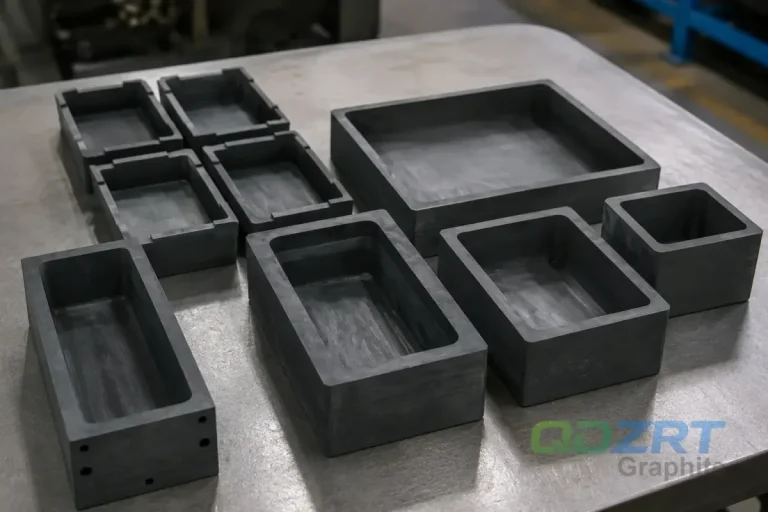
A third mistake is using “graphite block” as if it were a complete material description. The project may need molded, extruded or isostatic graphite; a general furnace grade, a finer EDM grade or a purified material for a contamination-sensitive thermal application. Public product-family ranges are useful for initial screening, but the repeat order should identify the named grade or the property envelope that was actually approved.
If a project later reports chipping, excess porosity, poor yield, or unstable surface quality, the root cause may relate to grade selection, but it may also come from feature geometry, clamping, tool condition, datum strategy, or packing damage. For that reason, the corrective action should start by classifying the evidence under six headings — material, geometry, machining, measurement, assembly or service, and handling or packing — before defaulting to a “switch to a better graphite” decision.
A good RFQ therefore lists the named grade if one is already approved. If not, it should at least state the intended function, required physical priorities, forming route preference, and whether the property values are typical references or guaranteed limits. This prevents later disputes about whether a block family reference range was being treated as a lot-specific promise.
Mistake 4: Approving a Sample Without Freezing the Specification
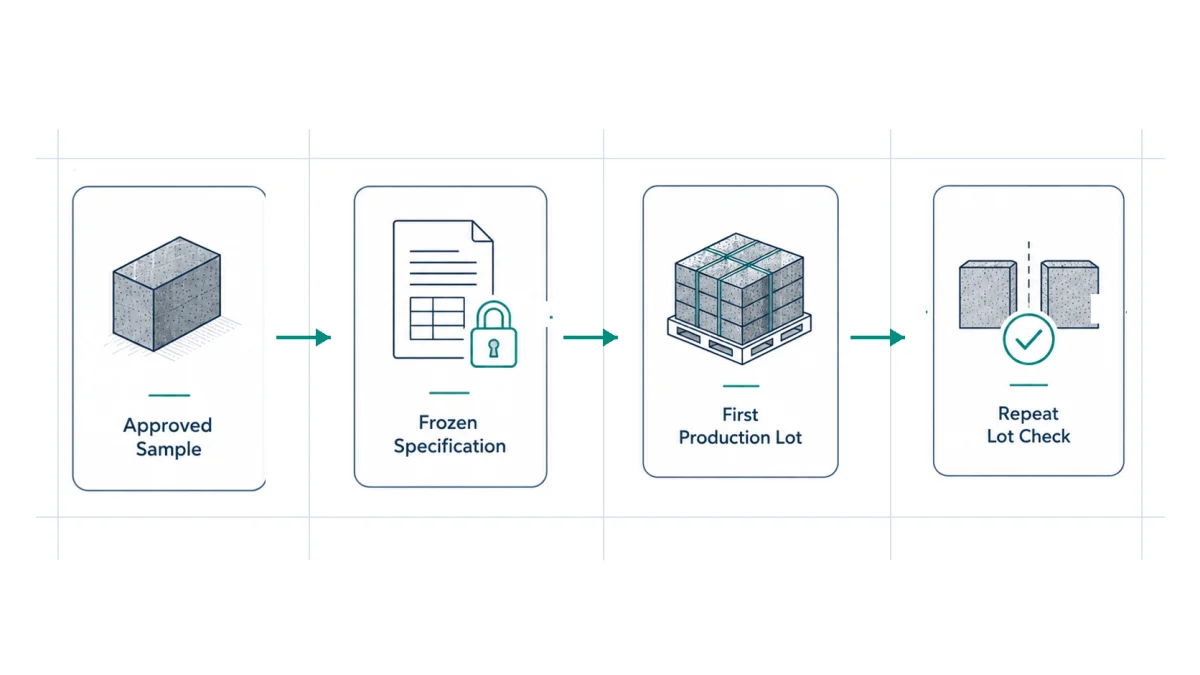
Many buyers think the problem is solved once a sample works. In reality, a sample without a frozen specification is only a temporary success. Projects often retain photographs, a dimension sheet, and a basic invoice, but omit the information that actually protects repeat orders: the named grade, forming route, lot or mother-block identity, cutting direction when relevant, test method, test direction, document field list, and any approved deviations.
To avoid this mistake, our team uses a four-step chain: Approved Sample → Frozen Specification → First Production Lot → Repeat Lot. Each step carries the previous evidence forward. The first production lot must not silently replace the material family, reshape the blank strategy, or simplify inspection without approval. If a substitute grade is proposed, that change needs its own approval record rather than being hidden in the repeat purchase.
This is the point where many repeat failures begin. The buyer believes the repeat lot is “the same as the sample,” but the written record only proves that both parts are called graphite. That gap is exactly what creates avoidable requalification cost.
A frozen specification should record the failure that triggered the change, who approved the revised requirement, and how the next lot will verify that the corrective action still works.
Mistake 5: Leaving Inspection and Packing Too Late
The last recurring mistake is to discuss inspection and packing after the part is already finished. Graphite blocks are sensitive not only to nominal dimensions but also to support condition, measurement points, edge exposure and transit risk. A flatness target such as 0.05 mm over a 150 mm span is meaningful only when the datum, support method, measurement span and inspection instrument are defined with it.
The same is true for packing. A heavy machined block with exposed edges, thin ribs, or long unsupported corners should not be handled like a simple rectangular blank. Whether the shipment uses foam supports, partitioned cavities, wrapped edges, or export wood packaging depends on the geometry, route, and destination requirements. Example clearances such as 20–40 mm around a part are only planning values; the correct structure must be set by product fragility and transport risk.
Plan receiving inspection before release, and treat packing as part of the product-protection design rather than a warehouse afterthought.
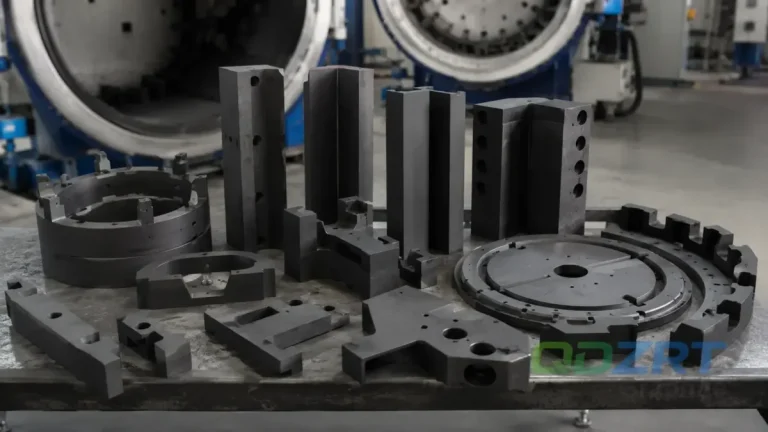
The commercial damage from the wrong block grows after each release stage. Before sample approval, the loss may be limited to a new quotation or another material review. After machining starts, wrong scope or wrong material can consume tool time, programmer time, inspection time, and blank yield. After assembly, the same issue can delay the line, consume replacement freight, or trigger a new validation loop. When the failure appears only in repeat supply, the hidden cost grows further because the project assumed the risk had already been removed.
| Release stage | Typical hidden cost | Best corrective action |
|---|---|---|
| RFQ stage | Wrong assumptions about blank state, grade, or scope | Clarify specification fields before quotation |
| Sample stage | Rework, extra machining, new sample cycle | Freeze material and evidence after approval |
| First production lot | Inspection delays, packaging changes, replacement freight | Use first-lot validation against the frozen specification |
| Repeat lot | Repeat qualification, supply interruption, customer confidence loss | Control substitutions and lot changes explicitly |
Turning Failure Evidence into Order Controls
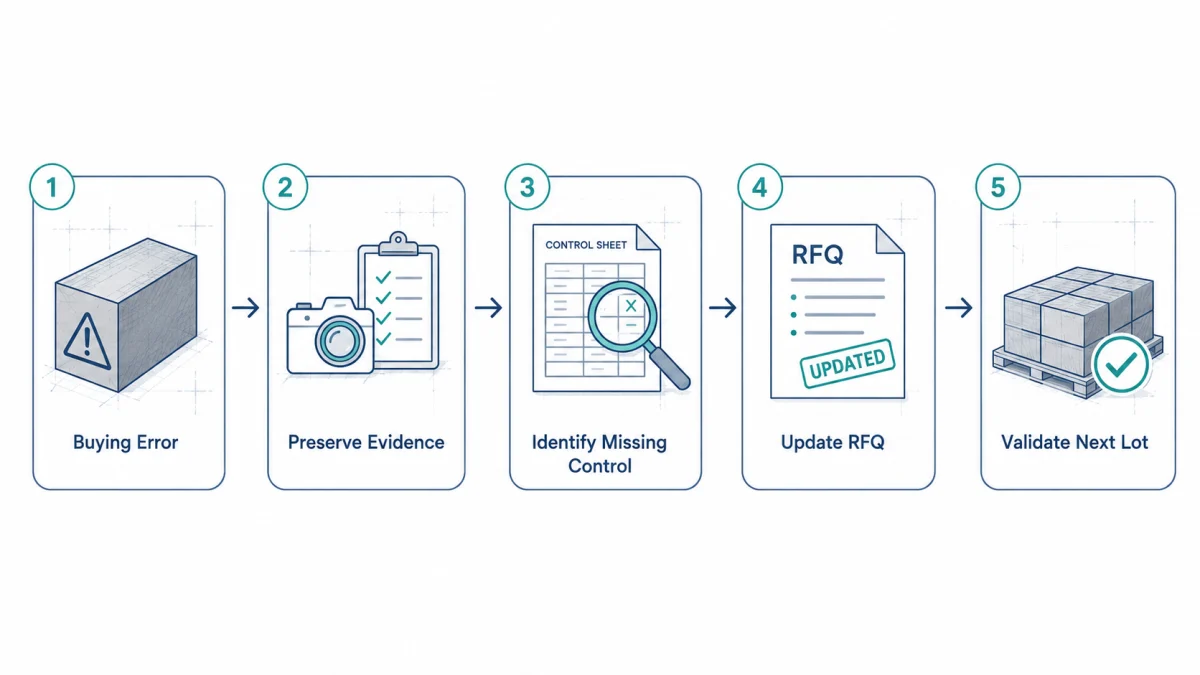
The practical response to a buying failure is not to produce a longer email thread. It is to convert the failure into a measurable order control. If the block became undersize, add a delivered-state field and explicit allowance. If the quote comparison failed, add a line-by-line scope sheet. If the sample could not protect repeat supply, add a frozen specification record. If a part broke in transit, add packaging constraints and handling markings to the release pack.
This approach also limits overreaction. A cracked edge does not by itself justify a material change, and a flatness complaint does not by itself justify tighter grinding. First identify the failure category, then tighten the control that was actually missing.
A root-cause category is not a conclusion by itself. Each hypothesis should be tested against material records, geometry, machining data, measurement evidence, assembly or service conditions, and handling or packing observations.
How to Make Supplier Comparison More Objective
The easiest way to reduce buying mistakes is to compare suppliers with one fixed template. The current graphite block product range, the OEM customization options, and the EDM and precision tooling solution can be used as starting references before the project-specific template is completed. That template should include: product function, finished size, blank state, named grade or screening target, quotation scope, inspection method, packaging method, trade term, lead-time trigger, and required documents. It should also include a place to declare whether a value is a family-typical reference, a tested result, or a guaranteed limit.
Objective comparison is especially important when projects are moving between block-only procurement and block-plus-machining procurement. A supplier that looks expensive on a material-only basis may be more economical after inspection, packing, and export handling are normalised. Likewise, the apparently cheapest material source may become the highest total-cost option once yield loss, rework, and repeat validation are included.
What an Objective Supplier Comparison Sheet Should Contain
A comparison sheet should force all suppliers to answer the same technical and commercial questions. That means recording the forming method, the named grade or screening proposal, the delivered blank state, the machining scope, the inspection scope, the packaging method, and the applicable trade term. It should also ask which values are typical references and which ones are guaranteed by the quotation. When a quotation omits any of those fields, the buyer should assume the scope is incomplete rather than assume the supplier “must have included it.”
| Field | Why it matters | Example of misunderstanding if omitted |
|---|---|---|
| Named grade / route | Controls material family and likely performance window | Buyer compares isostatic and extruded material as if they were equal |
| Blank state | Determines how much machining remains | One quote covers saw-cut stock only, another includes squaring |
| Inspection scope | Defines cost and release confidence | A cheaper quote excludes dimensional reporting |
| Packing method | Protects value-added geometry in transit | Fragile edges are packed like ordinary blanks |
| Trade term and start trigger | Explains responsibility and lead-time basis | Lead times appear comparable but start from different events |
Inspection and Evidence Plan: The Missing Link in Many Repeat Orders
Inspection should not be described only with a target number. A useful plan states where the measurement is taken, how the block is supported, what instrument is used, the instrument resolution, how many pieces are checked, which report is issued, and what happens when a deviation appears. Without those details, two inspectors may both claim to check the same block and still reach different results. That uncertainty becomes especially expensive when the block is used as a substrate for downstream machining or assembly.
A concise project plan normally includes a drawing revision, datum strategy, support note, key dimensions to check 100 percent, sampling rules for non-critical faces, edge-protection requirements, packaging photo records, and a receiving-inspection feedback section. These records do not need to be complicated, but they do need to be explicit enough that the next lot can be checked in the same way as the first one.
| Plan field | Decision it supports |
|---|---|
| Drawing revision and delivered-state note | Confirms what product was actually inspected |
| Datum and support condition | Prevents flatness or perpendicularity disputes |
| Instrument and resolution | Controls measurement capability and repeatability |
| Sampling rule and reporting format | Aligns the release basis between supplier and buyer |
| Packing photos and receiving feedback | Links transit performance to the next release |
Receiving Inspection as Feedback to the Next RFQ
Receiving inspection should not be a final gate only. It should also be treated as a feedback tool. If the incoming team finds recurring issues at corners, edges, datum surfaces, or packaging contact points, those findings should be added to the next release. The same applies when measurement itself becomes inconsistent. Recording the support condition, inspection tool, acceptance sheet, and photo evidence turns receiving inspection into a control improvement loop rather than a simple pass/fail filter.
This is also where projects should document what not to over-control. If a certain check adds cost but provides little decision value, it can be reduced. The point is to let evidence, instead of habit, shape the specification.
Export Control, Customs, and Destination Rules Are Different Questions
Another source of confusion is mixing export control, customs declaration, and destination-entry requirements into one vague “shipping” topic. They are not the same. The supplier first needs to identify the material and review whether the item falls under the current Chinese control lists. That step depends on the actual graphite material, its properties, and the final end use. Only after that review can the team judge whether a licence is required before export release.
After the control-code review comes the customs and trade-document stage: invoice, packing list, contract or purchase order, declared trade term, and the other records needed for declaration. Destination-side rules come later. For example, wood packaging entering the United States may need compliance with ISPM 15 requirements. That destination requirement should not be confused with the earlier Chinese export-control assessment, and neither one should be confused with internal workshop handling instructions.
Keeping those layers separate prevents two common mistakes: treating all graphite blocks as automatically controlled, or assuming that because a shipment can be packed for export, the control and customs questions have also been solved.
A Practical Mistake-to-Control Checklist
The most useful buying standard is not the longest one. It is the one that captures the decisions that repeatedly change cost, yield, or acceptance. Before the next RFQ is released, the buyer should confirm whether the inquiry is for a raw block, a squared blank, or a fully machined component. The graphite production and delivery management guide explains why release points, inspection timing, and logistics records need to be planned together rather than added after production.
Material choice should also be linked to the final function. For EDM electrodes, the EDM graphite selection guide shows why grain structure, geometry, wear behaviour, and trial records belong in one decision. For furnace fixtures or hot-zone components, the project should instead define thermal cycle, atmosphere, load, and support condition; the high-temperature processing solution provides the application context for that type of review.
The supplier comparison should then be tested against the same checklist. The custom graphite manufacturer evaluation guide and the China OEM graphite block sourcing guide add questions on capability, documentation, sample control and repeat supply.
- Product definition: drawing revision, finished size, blank state, allowance, and critical surfaces.
- Material definition: named grade, forming route, typical versus guaranteed values, test method, and substitution rule.
- Commercial scope: machining, inspection, packing, domestic transport, export handling, freight, insurance, and destination charges.
- Approval chain: approved sample, frozen specification, first production lot, repeat lot, deviation approval, and change notice.
- Evidence package: inspection report, COA fields, photos, packing record, receiving feedback, and nonconformance disposition.
How Geometry Changes the Meaning of a “Correct” Material
A graphite grade that performs well as a thick rectangular block may not be the right choice for a part with narrow ribs, deep holes, thin walls, sharp corners, or long unsupported spans. This is why geometry cannot be reviewed separately from material. The graphite drawing review article identifies the feature categories that normally deserve DFM attention, while the tolerance confirmation guide explains how datum, measurement, and acceptance definitions prevent disputes.
A 1.5–2.0 mm wall or a deep narrow hole can be used as a review trigger, but the real risk depends on grade, feature length, tool access, support, machining sequence and inspection method. The same applies to a heavy block above 10 kg or a machined edge below 2 mm: those numbers may trigger a packing review, while the final packing design still follows the actual centre of gravity, contact points, route vibration and unloading method.
When the geometry is already final, the buyer may use the custom graphite machined parts page to frame the required machining scope. When the form itself is still undecided, the graphite form selection guide helps separate rigid block functions from flexible sheet or paper functions before the RFQ is issued.
Corrective Action Should Change the Record, Not Only the Supplier
A common reaction to failure is to replace the supplier without changing the purchasing record. That may temporarily remove one symptom, but it does not remove the missing definition. If the drawing still omits the delivered state, if the inspection method is still unclear, or if the repeat-lot substitution rule is still absent, the same failure can return with a different source.
The better corrective action is to update the controlled documents. Chipping should trigger a review of material, geometry, tooling, and handling. Dimensional disagreement should trigger a review of datum, support, instrument, and report format. Transit damage should trigger a review of edge protection, cavity support, internal movement, moisture protection, and route. The graphite machining mistakes article and the graphite machining challenges guide provide additional examples of how several causes can produce similar symptoms.
Packing changes should be recorded with the same discipline. The graphite packaging and logistics guide shows why packaging method, handling marks, route, and destination requirements need to match the product. A corrected pack should become part of the approved release record rather than remain an informal warehouse instruction.
When to Escalate a Repeat Failure
Requalification should match the change. A small cosmetic mark may be handled through an agreed visual standard, while a changed material grade, forming route, mother block, critical dimension or packaging contact point can affect function or repeatability and deserves formal review before the next lot is released.
A practical escalation record can classify changes as information-only, buyer approval required, sample revalidation required, or full first-lot requalification required. This keeps small changes from stopping production unnecessarily while ensuring that material or process changes do not pass through as routine purchasing updates.
When a project needs a revised RFQ, a drawing review, or a new sample plan, start the inquiry through the contact page with the application and a summary of the failure and current acceptance record. After we reply, send the controlled drawing, photographs, and other evidence by email or another agreed secure channel. That information gives the technical team a basis for comparing the failed condition with the proposed corrective control.
FAQ about Avoiding Graphite Block Buying Mistakes
Is “graphite block” enough information for a quotation?
No. At minimum, the quotation should identify the intended function, finished size, blank state, material grade or screening target, inspection scope, and packing expectation. Otherwise, the quoted price and the actual requirement may describe different products.
Can I use a family reference range as a guaranteed property value?
No. Public product-page ranges are useful for screening, but repeat procurement should still use a named grade, a defined test basis, and a clear statement of whether each value is typical or guaranteed.
What should be frozen after a successful sample?
The frozen specification should capture the named grade, forming route, lot or block traceability, drawing revision, delivered state, key inspection fields, packing condition, and any approved deviations.
Do all repeat failures require a new material grade?
No. Some failures are caused by geometry, machining setup, measurement method, assembly conditions, or handling. Material changes should be made only after the failure category has been identified.
Should packing be defined only after production is complete?
No. Packing should be defined early enough to influence edge protection, cavity design, transport mode, and destination compliance. For fragile or value-added blocks, packing is part of the technical release package.
References and Sources
- Graphite Block product page — family-level material and forming-route reference information.
- ICC Incoterms® 2020 introduction — trade-term scope and comparison principles.
- MOFCOM export-control FAQ — general guidance on assessing whether an export item is controlled.
- China dual-use export control portal — current control-list access point and policy reference.
Avoid Repeat Buying Failures with a Clearer Graphite Block Record
If a graphite block project has already suffered from rework, edge damage, inconsistent lots, or quotation confusion, the fastest improvement usually comes from a better technical and commercial record rather than a new complaint email. QDZRT Graphite can help convert failure evidence into a clearer RFQ, named-grade review, inspection plan, and repeat-supply package so that the next order starts with fewer unknowns.
For a new inquiry, sending the application, target geometry, delivered state, critical surfaces, inspection expectations, and shipping route usually leads to a more useful first quotation than sending outside dimensions alone.