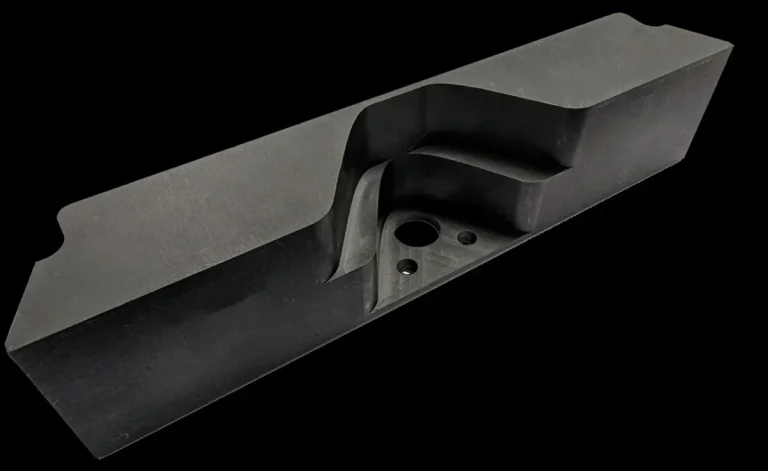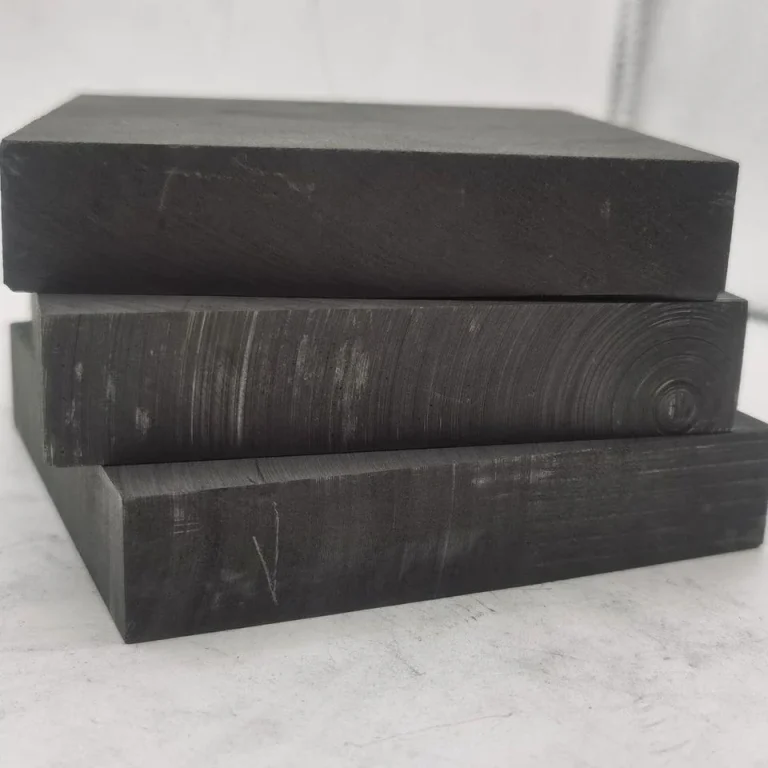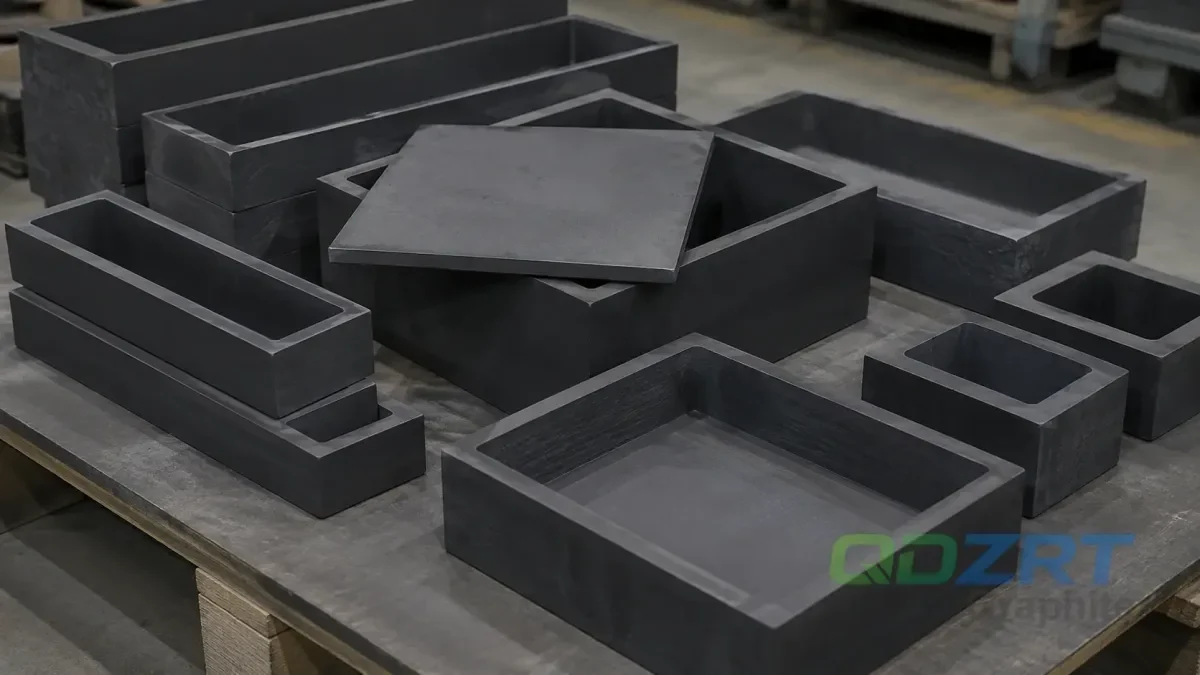
QDZRT Graphite manufactures and supplies graphite blocks for OEM programs under a controlled specification, not a generic price-per-cubic-metre comparison. Our quotation links the named graphite grade, forming route, supplied state, block dimensions, machining allowance, quantity, sample evidence, inspection plan, export-control status, packing, trade term, and repeat-order identity. Raw blocks, saw-cut blanks, six-face squared blanks, and finished graphite components are quoted as distinct supply scopes.
For an OEM program, keep technical definition, export-control screening, sample approval, first production release, shipment, and repeat-lot continuity as separate decisions. This makes competing quotations easier to compare and preserves the material and acceptance basis already approved for the program.
The same project-control method applies to raw blocks, cut blanks, squared blanks, and custom machined parts. Practical numbers are used only to explain a decision; the actual quotation follows the named grade, block size, forming route, drawing, inspection method, destination, carrier, and current regulatory review.
Quick RFQ Controls for Factory-Direct Graphite Block Projects
| RFQ control | What to state | Why it matters |
|---|---|---|
| Delivery state | Raw block, saw-cut blank, squared blank, semi-finished part, or finished component | Defines machining, allowance, inspection, price, and usable material. |
| Material identity | Named grade, forming route, producer-grade cross-reference where applicable, and approved substitution rule | Prevents a broad property range from replacing the material actually approved. |
| Dimensions and tolerances | Length × width × height, units, drawing revision, datums, general tolerance, and critical features | Separates stock supply from precision machining and creates a measurable acceptance basis. |
| Quantity sequence | Sample quantity, pilot quantity, first production lot, repeat-lot forecast | Links material reservation, cutting plan, inspection depth, packing, and lead time. |
| Inspection plan | Critical dimensions, methods, instruments, sample size, material tests, report format, and nonconformance route | Turns general promises into evidence that can be repeated and reviewed. |
| Export-control screening | Actual technical values, destination, end user, end use, and current control-code review | Determines whether licence work must precede production release or shipment. |
| Packing and route | Single-piece weight, package dimensions, inner support, outer case, carrier, and destination handling | Prevents edge damage, movement, moisture exposure, and receiving confusion. |
| Commercial responsibility | Exact named place or port and Incoterms® 2020 rule | Aligns delivery, risk, carriage, and customs responsibilities without replacing compliance duties. |
Start with the State in Which the Graphite Must Be Delivered
Before asking for price, define whether the requirement is a raw graphite block, a cut blank, a squared blank, or a finished part. This is the first major cost and risk boundary. A raw block can retain forming or saw-cut surfaces and wider dimensional variation. A cut blank provides a closer outside envelope. A squared blank adds reference faces, controlled allowance, and a more predictable customer machining route. A finished part adds drawing-based machining, inspection, cleaning, and packing.
An RFQ should not use only the words “graphite block” when the buyer actually needs six-face machining or finished geometry. The quotation should state the supplied condition in the same line as the dimensions. For example, “500 × 300 × 150 mm raw block” is technically different from “496 × 296 × 146 mm six-face squared blank.” Neither is automatically better; they simply represent different material utilization and processing scope.
If the customer will machine the blank, the RFQ should identify intended gripping faces, datum faces, allowance, and any orientation requirement. If QDZRT Graphite will quote finished machining, the buyer should supply a controlled drawing, marked-up 3D model, or both. Related drawing and tolerance controls are covered in the graphite part tolerance guide, the precision graphite machining guide, and the custom graphite machined parts page.
Freeze a Named Graphite Grade, Not Only a Broad Property Range
Graphite block selection begins with the application and forming route. Molded, extruded, and isostatic graphite families can differ in grain structure, directionality, available size, strength, electrical resistivity, thermal behavior, and machining response. The Graphite Block product page lists representative product-family values and common supply forms. These values are useful for screening, but they do not convert every block in the product family into the same guaranteed material.
QDZRT Graphite now organizes Graphite Block only by forming-route grade series: DJY-T01–DJY-T04 for isostatic graphite, MY-T01–MY-T03 for molded graphite, and JY-T01–JY-T02 for extruded graphite. Fine grain, purity, EDM, PV and other requirements are attributes of the selected grade rather than parallel material families. Procurement limits must not be created by combining endpoints from different grades. Where a stable numeric limit guaranteed by QDZRT Graphite has not been established, the RFQ should leave that property for project-specific confirmation instead of converting a representative or typical value into a ≥, ≤, or guaranteed range.
| Field | Minimum record | Repeat-order control |
|---|---|---|
| Named grade | our grade or approved producer-grade cross-reference | No substitution without written review. |
| Forming route | Molded, extruded, isostatic, or other defined route | Route change returns to technical approval. |
| Parent material identity | Parent-block or production-lot reference where available | Links the sample and first production lot to the material record. |
| Orientation | Cut direction, test direction, and orientation mark where relevant | Prevents direction changes from being hidden by identical outside dimensions. |
| Property basis | Actual value, typical value, or guaranteed limit; method and direction | Keeps data from different methods from being treated as directly equivalent. |
| COA fields | Only the properties and identifiers required by the approved specification | The same field set is referenced on repeat orders unless revised. |
A property-based proposal is still useful when the original grade is unknown. In that case, the proposal should identify the candidate grade and explain which properties are being matched. Once the sample or first lot is approved, the named grade and its test basis should be frozen. “Same grade family” is not specific enough for a repeat OEM program because more than one grade may fall within the same broad density or grain-size range.
Prepare the RFQ Before Asking for Price
The RFQ should give the application, supplied state, dimensions, quantity, and acceptance basis before suppliers are compared. If the grade is unknown, describe the actual working condition: temperature, atmosphere, electrical duty, mechanical contact, thermal cycling, process contamination limits, expected life, and whether the part is consumed or reused. A furnace support, EDM blank, continuous-casting die, mechanical seal component, and semiconductor-process fixture do not emphasize the same graphite properties.
For a drawing-based order, send the drawing revision and state which dimensions are critical. For a stock-block order, state the minimum usable envelope after removal of saw marks or forming skin. For a sample-based replacement, provide measured dimensions, photographs, service history, and any known material data, while recognizing that appearance alone cannot identify a graphite grade.
A sequence such as one sample, five pilot pieces, and twenty production pieces can illustrate an OEM release path, but sample quantity should follow the material, geometry, and inspection questions. One large custom block may need one representative sample, while a machined part family may need several first articles or a dimensional study.
Screen Export Control Before Committing the Ordinary Lead Time
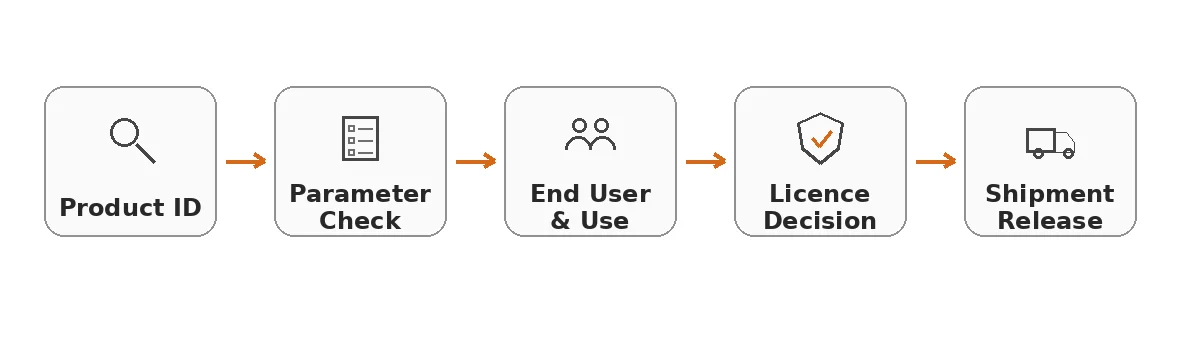
Export packing, customs declaration, and export control solve different problems. Packing protects the product; customs declaration describes the transaction and shipment; export control determines whether the item, destination, end user, or end use requires authorization. Packing photographs and shipping documents should not be labelled as “export control.”
The 2026 Two-Use Items and Technologies Import and Export Licence Catalogue includes several graphite entries under 1C108. For synthetic graphite blocks, two entries are especially relevant:
- 1C108.a: fine-grain monolithic synthetic graphite measured at 20°C that meets all listed criteria: density above 1.72 g/cm³, tensile fracture strain at least 0.7 percent, and coefficient of thermal expansion no more than 2.75 × 10⁻⁶/°C.
- 1C108.b: synthetic graphite materials and products that simultaneously have purity above 99.9 percent, flexural strength above 30 MPa, and density above 1.73 g/cm³.
Export-control screening uses the actual technical values and product facts, not marketing descriptions such as “high-density graphite” or “high-purity graphite.” If classification cannot be determined from the available evidence, the exporter should use the current official consultation or licensing route rather than infer the answer from a broad product label.
| Screening field | Record required | Commercial effect |
|---|---|---|
| Material and grade | Actual named grade, forming route, and product form | Determines which technical criteria must be checked. |
| Technical values | Actual test values relevant to 1C108.a or 1C108.b | May require testing or technical documentation before classification. |
| Destination and route | Destination country or region, transshipment points, and logistics route | Affects review, carrier acceptance, and documentary planning. |
| Importer and end user | Names, addresses, business profile, and relationship to the transaction | Required for due diligence and, where applicable, licence materials. |
| End use | Specific process, equipment, finished product, and operating role | A vague industry label is not an adequate end-use description. |
| Decision record | Control code, non-controlled conclusion, consultation, or licence requirement | Ordinary production and shipment timing should not be promised before this gate is resolved. |
The current MOFCOM licence application guide states that a first application generally includes the application form, contract or agreement, technical description or test report, end-user and end-use certificate, importer and end-user profile, identity documents for relevant responsible persons, and other materials requested by MOFCOM. These requirements are separate from the commercial invoice, packing list, transport document, and customs declaration used for shipment.
This section is a sourcing and documentation control, not legal advice or a final classification. The exporter must use the current official catalogue, announcements, end-user restrictions, and licensing instructions in force when the order is processed.
Use a Four-Stage Evidence Path from Sample to Repeat Lot
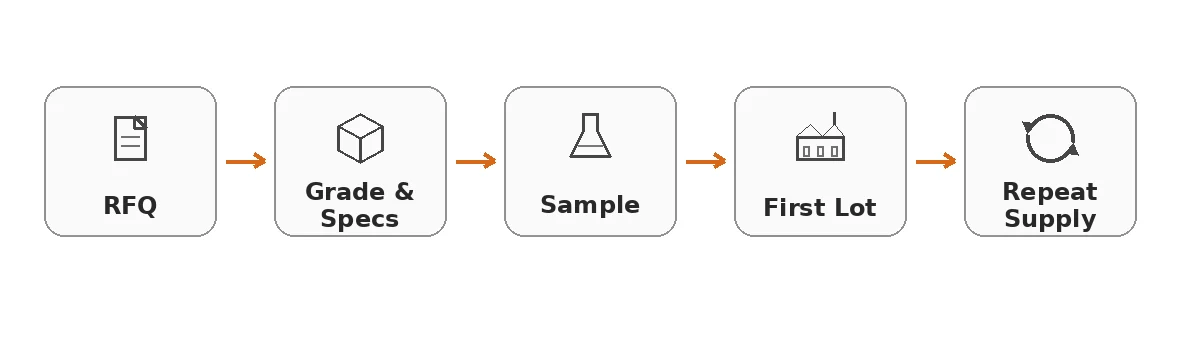
A repeatable OEM program should not approve only the appearance of a sample. The sample must represent the material and manufacturing route intended for production, or any difference must be disclosed. Our team uses the following record sequence for project control:
- Approved Sample: records the named grade, supplied state, dimensions, material evidence, machining result, inspection result, packing method, and customer feedback.
- Frozen Specification: records the drawing revision, grade, forming route, parent-material identity where available, orientation, acceptance criteria, COA fields, packaging plan, and approved deviations.
- First Production Lot: confirms that the first released bulk lot follows the frozen specification and produces the agreed inspection and shipment records.
- Repeat Lot: references the approved specification and previous order while requiring review of any proposed material, process, dimension, inspection, source, or packing change.
An approved sample can be physically retained, documented by photographs and measurements, or represented by a controlled record. The correct approach depends on the product and project. A small finished part may be retained as a physical master. A large block may instead be represented by material and dimensional records, photographs, test results, and a retained witness sample.
For related sample and sourcing risks, see the common graphite block buying mistakes guide, the graphite block industrial uses guide, and the EDM graphite block selection guide.
Define an Inspection Plan That Can Actually Be Repeated
Terms such as “first article,” “100 percent inspection,” and “sampled dimensions” are incomplete unless the inspection plan defines what is measured and how. A first-article report should reference the product definition, revision, datums, material identity, measurement method, and disposition of deviations. One hundred percent inspection should identify which features are measured on every piece and which are sampled.
| Inspection field | Example of a complete instruction | Missing-data risk |
|---|---|---|
| Product definition | Drawing revision, dimension list, or approved block specification | The inspector may measure against an obsolete or incomplete requirement. |
| Datums and faces | Identify the reference face, orientation mark, and measurement sequence | Different setups can produce different squareness or parallelism results. |
| Instrument | Instrument type, resolution, and any required fixture | A tool may not resolve the tolerance or may damage the graphite surface. |
| Measurement location | Specify edge offsets, number of points, and averaging or maximum rules | A three-point check and a full-surface study may not be equivalent. |
| Sampling | Lot size, sample size, critical dimensions, and acceptance or rejection rule | “Sampled” can mean different quantities to different parties. |
| Material test | Property, test method, specimen direction, and actual or guaranteed criterion | Results from different methods or directions may be compared incorrectly. |
| Nonconformance | Segregation, report, concession request, rework, replacement, or rejection route | Unapproved deviations can enter the shipment or repeat order. |
A face tolerance below ±0.10 mm or 100 percent inspection of key dimensions may make sense for some finished parts. The quotation should state the tolerance and inspection scope required by the drawing and delivered condition instead of assuming the same level for every block or machined part.
Normalize Quotations Before Comparing Price
A commercial comparison begins only after every offer is converted to the same material identity, delivery state, inspection scope, packing route, and trade responsibility. A raw-block offer should not be compared directly with a squared-blank or finished-part offer. The buyer should separate material, cutting, machining, inspection, certificates, inner protection, outer case, inland transport, export handling, international carriage, insurance, and destination costs.
| Comparison line | Illustrative Offer A | Illustrative Offer B | Normalization action |
|---|---|---|---|
| Delivered state | Raw block 500 × 300 × 150 mm | Squared blank 496 × 296 × 146 mm | Add squaring cost and loss to A or remove it from B. |
| Material basis | Density only | Named grade, forming route, density, grain class, resistivity, ash | Obtain equivalent material identity and test basis. |
| Dimensional basis | Illustrative ±3 mm raw envelope | Illustrative ±0.20 mm squared envelope | Calculate the usable minimum envelope after customer machining. |
| Theoretical mass | Volume × quoted density | Volume × quoted density | Compare mass, not only price per block. |
| Material yield | Includes forming skin and squaring loss | Closer to the usable machining envelope | Calculate usable volume or finished-piece yield. |
| Inspection | Identity and outside size only | Defined face, dimension, and material report | Price the missing evidence or align the report scope. |
| Packing | Unspecified | Defined inner support and outer case | Add route-appropriate packing to the same basis. |
| Lead time | Illustrative 20 days after payment | Illustrative 25 days after technical release | Use the same start event and exclude unresolved licence timing. |
The theoretical weight of a rectangular block is calculated from length × width × height × density, with consistent units. For the hypothetical 500 × 300 × 150 mm block, the volume is 0.0225 m³. Using a density of 1.75 g/cm³, equivalent to 1,750 kg/m³, the theoretical mass is approximately 39.4 kg before packaging. This is an example only; the quotation should use the actual measured dimensions and stated density basis.
Unit price should also be connected to usable yield. A slightly larger raw block may create more machining loss than a squared blank. A lower block price can therefore produce a higher cost per finished piece. The landed-cost boundary should state whether Chinese inland transport, export documentation, main carriage, insurance, import duties, destination fees, and local delivery are included or excluded.
State the Exact Incoterms® 2020 Rule and Named Place
Trade terms should be written with the rule, precise named place or port, and version, such as “FCA Qingdao, China, Incoterms® 2020” or “FOB Port of Qingdao, China, Incoterms® 2020.” A phrase such as “FOB China” is incomplete because it does not identify the port. A phrase such as “EXW factory” is also incomplete without the exact named place.
The official ICC Incoterms® 2020 rules explain that under EXW the seller places the goods at the buyer’s disposal at the named place and is not required to clear the goods for export. Under FCA, the seller is responsible for export clearance and delivers the goods according to the named-place arrangement. The correct rule should match the actual shipment and the parties’ ability to perform customs and transport responsibilities.
Incoterms® does not replace export-control classification, export licensing, product acceptance, payment terms, transfer of ownership, or regulatory documentation. These items should be stated separately in the quotation or contract.
| Control layer | Typical record | Do not confuse it with |
|---|---|---|
| Export-control review | Classification record, technical values, end user, end use, licence or consultation | HS code or packing list alone. |
| China export declaration | Declaration data, contract, invoice, transport document, packing list, permits and attachments as applicable | The buyer’s destination import clearance. |
| International carriage | Carrier booking, airway bill or bill of lading, route, cargo dimensions and weight | The product acceptance or export licence decision. |
| Destination import clearance | Importer registration, tariff classification, duties, taxes, and destination permits | China export declaration or seller’s material inspection. |
The current China Customs goods declaration guide and our graphite export documentation guide lists commercial documents such as contracts, invoices, transport documents, and packing lists, together with required licences and other accompanying documents. The exact declaration and supporting-document set depends on the transaction and regulatory status.
Plan Lead Time Around Technical Release, Compliance, and Material Availability
The quotation should define the event that starts the lead time. Possible start events include drawing approval, receipt of payment, approval of a sample, release of the frozen specification, confirmation of material availability, or completion of an export-control requirement. “Twenty days” has little value if one supplier counts from inquiry and another counts from drawing approval.
Material availability also matters. A stock block may be available quickly but may not match the approved grade or parent-block size. A custom block may require production scheduling. A large block may require a cutting plan that affects material utilization. A finished component may need programming, tooling, trial machining, inspection, cleaning, and individual protection.
Where export-control classification or a licence is required, the ordinary production or shipment lead time should not be presented as though the compliance stage does not exist. The commercial offer can state that production planning and shipment timing are subject to completion of the required review and authorization.
Match Packing to the Graphite Shape and Transport Route
Graphite blocks are rigid but brittle. The packing plan should prevent movement, edge impact, point loading, contamination, and confusion at receiving. Single-piece weight, centre of gravity, forklift access, lifting method, moisture protection, package dimensions, and stacking limits can all affect the design.
Carrier choice should be based on the actual package. A carton below 70 kg may still be unsuitable for parcel handling because of its dimensions, impact sensitivity or destination, while another package may fit a courier service. The selected carrier or freight forwarder should confirm the route against the finished package.
For exports to the United States, regulated wood packaging material must meet applicable ISPM 15 treatment and marking requirements. The USDA APHIS wood packaging guidance supports this destination-specific requirement. Related graphite protection methods are discussed in the graphite packaging and logistics guide.
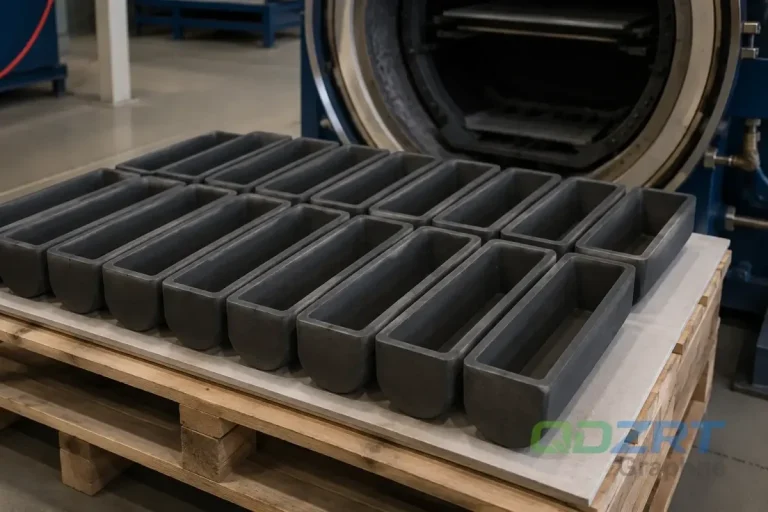
Build Repeat Supply Around Change Control
After a successful first order, repeat production should reference the frozen specification, drawing revision, approved grade, material identity, inspection plan, packing plan, and previous order. A short message such as “same as last time” is not sufficient when the part or material is important to the customer process.
Changes that require review can include grade, forming route, parent material, block size, cutting direction, purification, machining method, tolerance, inspection method, COA field, packaging, carrier, route, destination, end user, or end use. Not every change requires a new full qualification, but the affected control gate should be reopened and the decision recorded.
A repeat-order record can include:
- approved specification and drawing revision;
- named grade, forming route, and material identity;
- sample or previous lot reference;
- inspection and nonconformance history;
- packing photographs and receiving feedback;
- approved deviations and their expiration or scope;
- current forecast and requested delivery window;
- export-control classification or licence status for the specific transaction.
Related continuity controls are described in the graphite production and delivery management article and the stable supply video.
Keep Technical, Commercial, and Shipment Communication Separate
A clean communication rhythm prevents requirements from being lost inside a mixed email thread. Technical clarification covers the application, grade, supplied state, drawing, tolerance, material data, and inspection. Commercial quotation covers quantity, price, payment, lead time, packing, and trade term. Compliance and shipment confirmation covers classification, licences where applicable, destination, carrier, export declaration, shipping documents, and receiving instructions.
If the drawing changes after quotation, the new revision should be issued clearly and the previous revision cancelled. If the buyer changes the quantity, destination, end user, end use, packaging, or trade term, the supplier should review the effect on price, lead time, compliance, and documentation before release.
An approved English specification can reduce translation gaps among purchasing, engineering, production, inspection, logistics, and receiving teams. The specification does not need to be unnecessarily long, but it should preserve the fields that repeatedly cause disputes: grade, delivered state, dimensions, allowance, inspection, packing, and change control.
For broader project planning, see the global graphite project communication guide, the EDM and precision tooling solution, and the thermal management and high-temperature processing solution.
FAQ About Factory-Direct OEM Graphite Block Supply
What should an OEM buyer send in the first RFQ?
Send the application, delivery state, dimensions or controlled drawing, quantity sequence, grade requirement if known, tolerance, service conditions, inspection needs, packing route, destination, end user, end use, and requested Incoterms® 2020 rule with named place. When the grade is unknown, describe the operating conditions so a candidate material can be proposed and documented.
Is a sample order always necessary?
No. A standard repeat material with an approved history may move directly to production. A sample or first article is valuable for a new grade, new geometry, large custom size, finished machining, critical application, new inspection method, or incomplete historical record. The sample should represent the intended production route or disclose the difference.
How can buyers reduce repeat-order differences?
Freeze the named grade, forming route, drawing revision, parent-material or lot identity where available, orientation, inspection plan, COA fields, packaging, and approved deviations. Reference the frozen specification and previous order on each repeat purchase, and require written review of any proposed change.
Does every graphite block exported from China require a dual-use licence?
No. The result depends on the actual material and technical values, the current control list and announcements, and transaction-specific end-user and end-use review. Synthetic graphite blocks should be screened against the applicable 1C108 criteria before a non-controlled conclusion or licence requirement is recorded. When the exporter cannot determine the status, it should use the official consultation or licensing route.
What is the difference between a raw block and a squared blank?
A raw block retains a broader forming or saw condition and normally provides a larger, less controlled envelope. A squared blank has machined reference faces and a defined allowance. The quotation should state the delivered condition and minimum usable dimensions so the buyer can compare material yield and downstream machining.
What information should I provide for a reliable quotation?
The basis includes application, named grade or required material properties, forming route, block or finished size, delivery state, quantity sequence, drawing revision, allowance, inspection plan, export-control screening data, packing route, destination, and exact Incoterms® 2020 rule. A controlled drawing is required when datums, tolerances, holes, pockets, or finished geometry are part of the supply.
References and Sources
- Graphite Block — current product-family reference values, forming routes, supply forms, and application context.
- MOFCOM and GACC: 2026 Two-Use Items and Technologies Import and Export Licence Catalogue — current 1C108 catalogue entries and technical criteria.
- MOFCOM: Dual-Use Item Export Licence Application Guide — application materials, technical descriptions, end-user and end-use documents, and filing consistency.
- ICC: Incoterms® 2020 Rules for Any Mode or Modes of Transport — EXW and FCA delivery and export-clearance responsibilities.
- General Administration of Customs of China: Goods Declaration Service Guide — declaration process and accompanying documents.
Send an OEM Graphite Block RFQ to our team
Our team can quote graphite block, cut blanks, squared blanks, and custom machined graphite parts against a defined project scope. Send the application, drawing or size list, named grade or material requirements, quantity sequence, inspection needs, destination, end user, end use, and requested delivery term. The quotation can then separate material, machining, evidence, compliance, packing, and transport assumptions instead of hiding them inside a single block price.
For finished-part sourcing, review the custom graphite manufacturer guide. Company context is available on the QDZRT Graphite profile and the factory and warehouse video.