Isotropic Homogeneous Structure
Isostatic pressing can reduce directional variation; verify density and properties by grade and test direction.

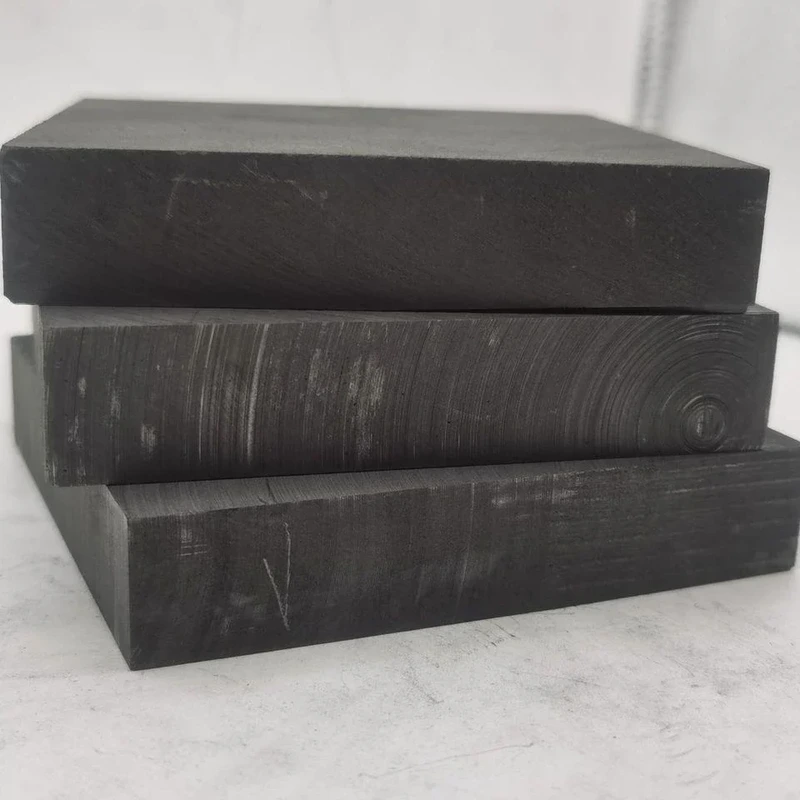
DJY Series isostatic graphite for EDM, precision machining, furnace fixtures, semiconductor-related components, and other applications requiring a uniform graphite structure.
Isostatic pressing can reduce directional variation; verify density and properties by grade and test direction.
Fine grain sizes down to 2 μm enable intricate EDM electrodes, thin-wall features, and mirror finishes.
DJY-T01 to DJY-T04 offer densities up to 1.92 g/cm³ and compressive strengths up to 125 MPa.
Supplied as large isostatic blocks, precision-sawn plates, or 5-axis CNC-machined components.
DJY Series comprises isostatic graphite grades manufactured by QDZRT Graphite. It is used when a project needs a comparatively uniform graphite structure, consistent machining behavior, and grade selection based on density, strength, electrical properties, purity, and component dimensions.
The table below does not convert representative typical source values into QDZRT Graphite guarantees. Numeric fields are published only after a stable QDZRT Graphite range or limit has been confirmed for that grade.
| Grade | Bulk DensityBulk Density (ASTM C559 / C838)(g/cm³) | ResistivitySpecific Electrical Resistivity (ASTM C611)(μΩ·m) | Grain SizeAverage / Maximum Grain Size | Flexural StrengthFour-Point Flexural Strength (ASTM C651)(MPa) | Compressive StrengthCompressive Strength (ASTM C695)(MPa) | Thermal ConductivityThermal Conductivity at 20°C(W/(m·K)) | CTECoefficient of Thermal Expansion (CTE, 20–100°C)(×10⁻⁶/K) | Shore HardnessScleroscope / Shore Hardness (HSD) | AshAsh Content / Purity (ASTM C561 / DIN 51903) |
|---|---|---|---|---|---|---|---|---|---|
| DJY-T01 | 1.72 g/cm³ | 10–13 μΩ·m | — | 30 MPa | 65 MPa | 100 W/(m·K) | 5.0 ×10⁻⁶/K | 40 | 500 ppm |
| DJY-T02 | 1.90 g/cm³ | 8–10 μΩ·m | — | 55 MPa | 105 MPa | 135 W/(m·K) | 3.6 ×10⁻⁶/K | 55 | 500 ppm |
| DJY-T03 | 1.76 g/cm³ | 12–16 μΩ·m | 8 μm | 40 MPa | — | — | — | 40 | — |
| DJY-T04 | 1.88–1.92 g/cm³ | 10–14 μΩ·m | 2 μm | 60 MPa | 125 MPa | 110 W/(m·K) | 3.9 ×10⁻⁶/K | 75 | — |
QDZRT Graphite presses isostatic graphite using cold isostatic pressing (CIP) technology, ensuring identical compaction pressure from all directions. Standard billet geometries include:
| Billet Format | Standard Dimensional Envelopes (mm) | Supply Options |
|---|---|---|
| Rectangular Billets (Blocks) | 520 × 420 × 1200 mm 650 × 500 × 1850 mm 500 × 500 × 1000 mm |
Full raw billet, pre-cut sawn blocks (-0/+2 mm), ground precision plates |
| Cylindrical Billets (Rounds) | Φ350 × 1800 mm Φ450 × 1200 mm Φ500 × 1200 mm Φ650 × 1000 mm |
Full round logs, sliced discs, pre-turned cylindrical blanks, hollow rings |
| Custom Sawn Blanks | Cut precisely to customer bounding dimensions | Eliminates rough-machining waste, cuts shipping costs, and shortens customer cycle time |
Due to its micro-grain structure (2–15 μm) and isotropic mechanical strength, DJY Series isostatic graphite exhibits good edge retention under qualified CNC machining conditions. QDZRT Graphite provides drawing-based machining for high-specification applications:
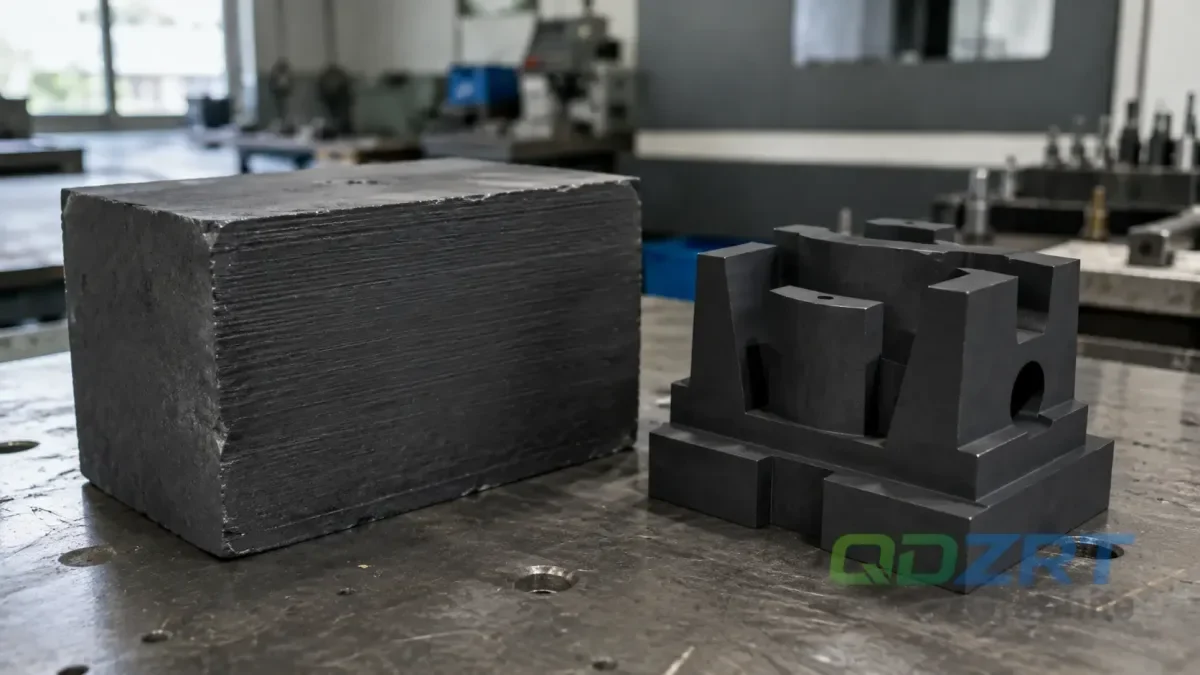
For semiconductor, photovoltaic, and optical glass applications where metal impurities cause contamination or premature degradation, QDZRT Graphite provides high-temperature halogen gas purification:
DJY Series material can be discussed as raw blocks, cut blanks, or drawing-based machined components. Block dimensions, machining allowance, grain size, purification, and inspection requirements should be confirmed together rather than selected from density alone.
Send the application, finished-part size, required density or strength, purity/ash limits, electrical or thermal requirements, and drawing if available. QDZRT Graphite will match the requirement to the appropriate DJY specification and confirm the available property combination before order.
Isostatic graphite features an ultra-fine grain size (2–15 μm) and isotropic microstructure, meaning its mechanical and electrical properties are identical in all directions. This allows intricate, thin-walled electrodes to be machined with sharp corners without edge chipping. During electrical discharge machining, it delivers lower electrode wear ratios, faster material removal rates, and superior workpiece surface finishes.
For high-detail mold cavities, 3D glass bending, and thin-rib electrodes, DJY-T03 (Fine-Grain EDM) and DJY-T04 (Precision Mold / Ultra-Fine) are recommended due to their minimal particle size, high flexural strength, and superior edge retention.
Batch test documentation and any applicable export-control documents are confirmed by the selected grade, destination, end use, and order requirements before shipment.
 PRODUCT
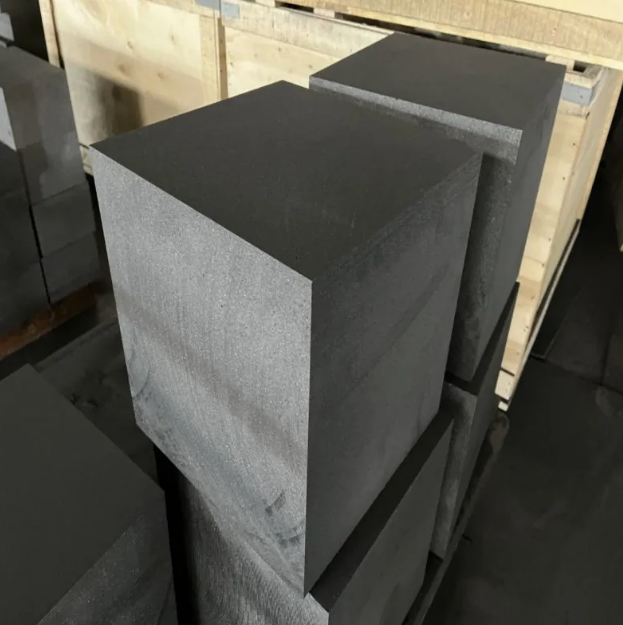
MY Series molded graphite for general industrial blocks, molds, furnace supports, metallurgy, electrodes, and drawing-based machined graphite components.
 PRODUCT
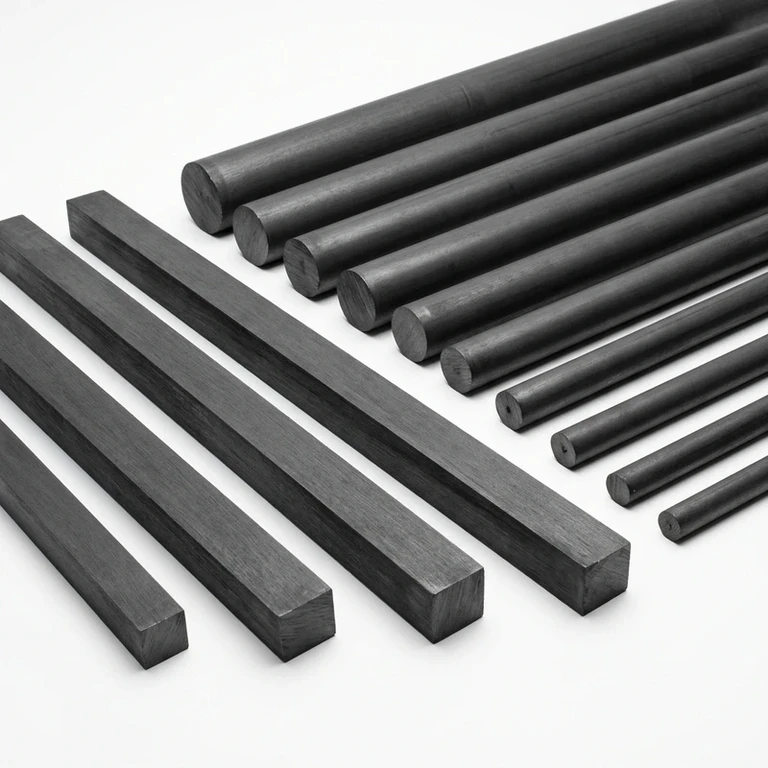
JY Series extruded graphite for rods, heating components, furnace structural parts, larger sections, and general industrial machining where material orientation is considered in selection.
 PRODUCT
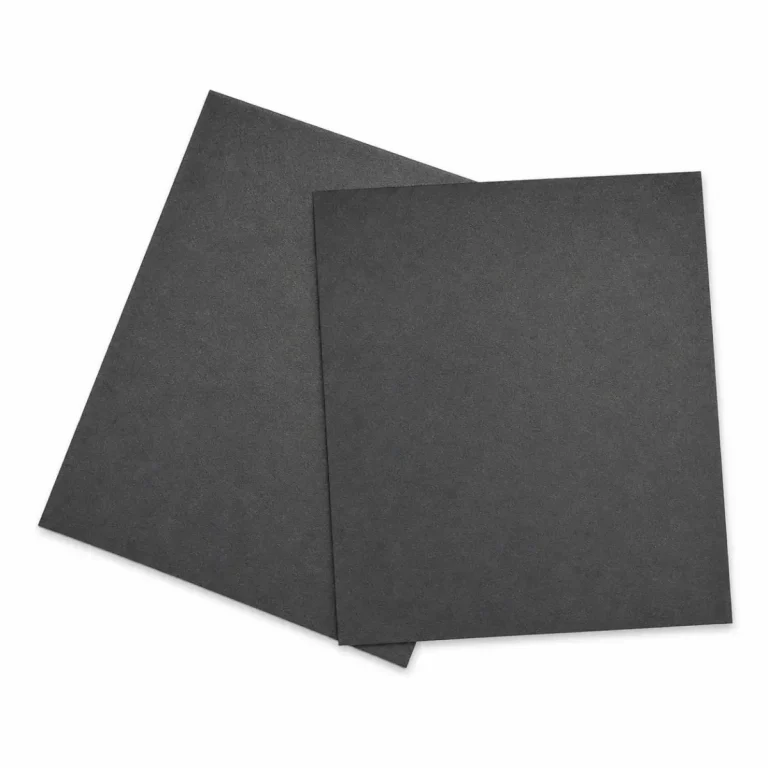
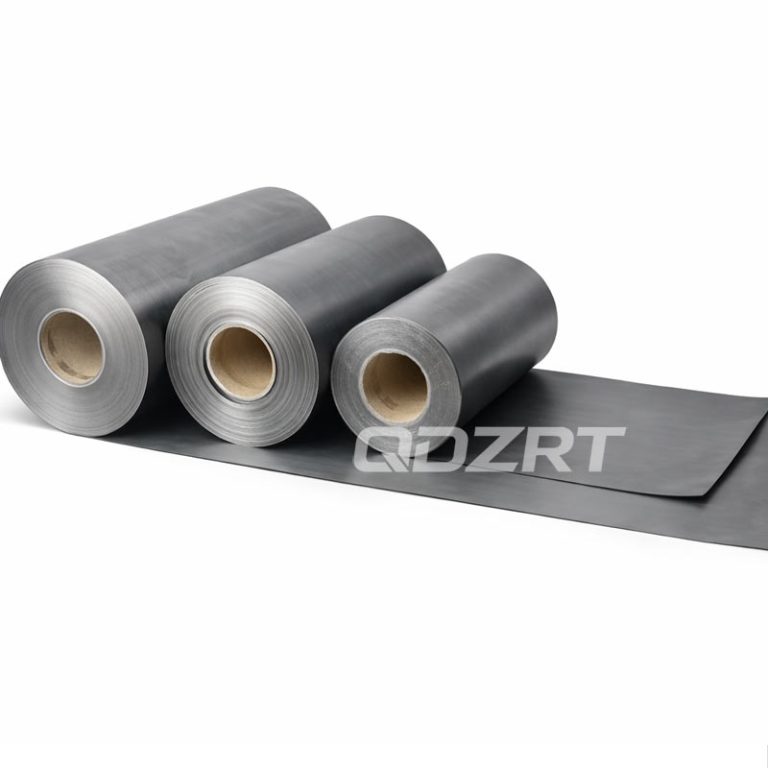
Thin flexible graphite paper and graphite roll material for heat spreading, lamination, die-cutting, adhesive backing, sealing sheets and thermal management processing.
 PRODUCT
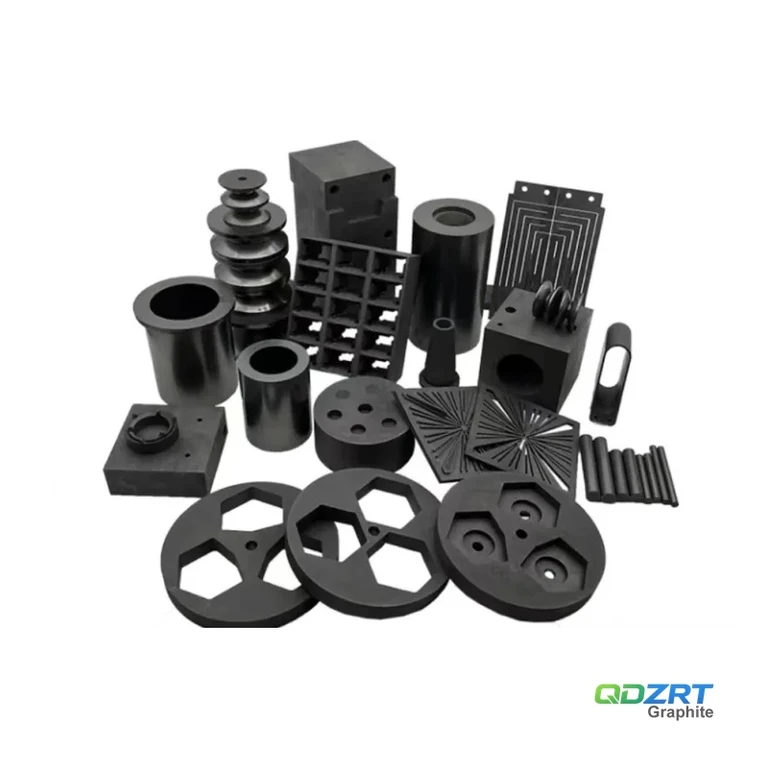
Custom Graphite Machined Parts are drawing-based graphite components manufactured from isostatic, molded, extruded, fine grain, or high purity graphite for EDM, thermal processing, metallurgy, sealing, and industrial equipment.
 PRODUCT
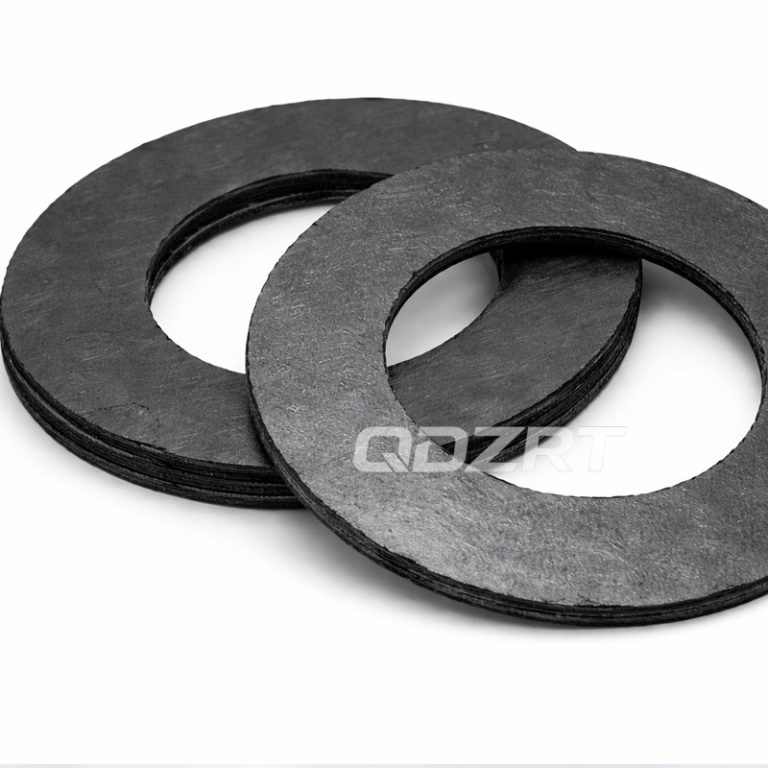
Graphite Sealing Materials cover flexible graphite sheets, reinforced graphite sheets, graphite gaskets, packing rings, braided packing, and graphite-filled gasket solutions for valves, pumps, flanges, steam lines, and industrial equipment.
 PRODUCT
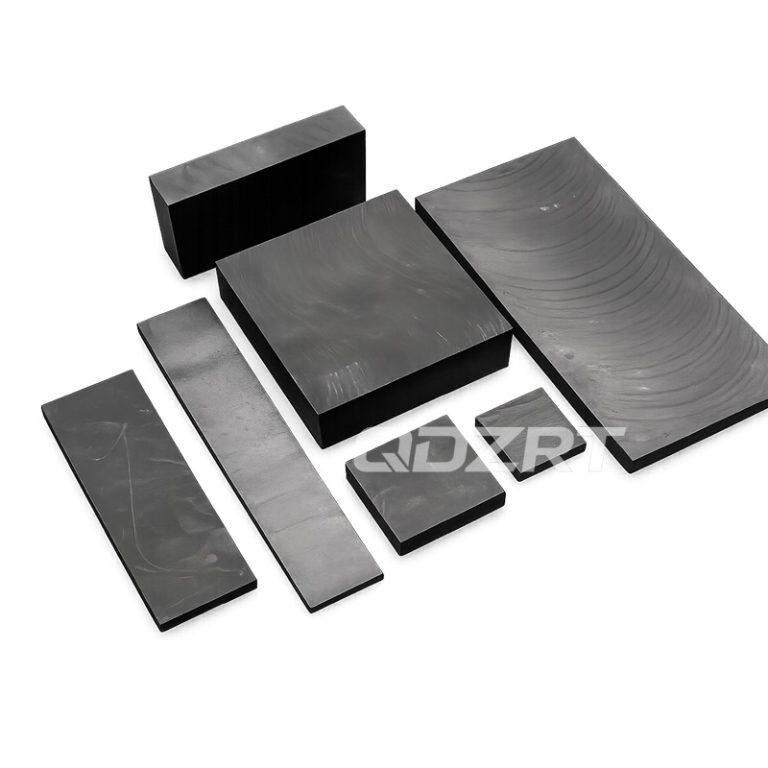
Graphite Block is the QDZRT Graphite overview for three forming-route series: DJY isostatic, MY molded, and JY extruded graphite. Fine-grain, high-purity, EDM, and other requirements are confirmed at grade level for the application.
 PRODUCT
Flexible graphite sheet made from high-purity natural graphite for industrial sealing, gasket manufacturing, insulation and thermal management applications.
PRODUCT
JY Series extruded graphite for rods, heating components, furnace structural parts, larger sections, and general industrial machining where material orientation is considered in selection.