Balanced Performance
Molded graphite provides a practical balance of machinability, mechanical strength, and cost-efficiency.

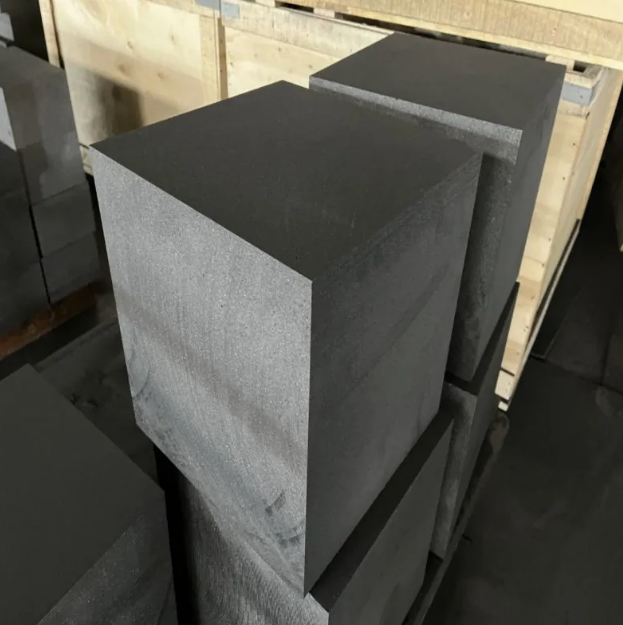
MY Series molded graphite for general industrial blocks, molds, furnace supports, metallurgy, electrodes, and drawing-based machined graphite components.
Molded graphite provides a practical balance of machinability, mechanical strength, and cost-efficiency.
Supplied as high-density rectangular blocks, heating fixtures, casting molds, and furnace structural parts.
MY-T01 to MY-T03 cover standard medium-grain to high-strength fine-grain specifications.
Available as raw pressed blocks, sawn plates, or custom CNC-machined components to drawing.
MY Series comprises molded graphite grades manufactured by QDZRT Graphite. It is intended for projects that need a practical balance of block size, machinability, mechanical performance, electrical properties, and cost.
The table distinguishes typical/reference properties from explicitly marked minimum or maximum limits. Final grade specifications and batch documentation are confirmed with the order.
| Grade | Bulk DensityBulk Density (ASTM C559 / C838)(g/cm³) | ResistivitySpecific Electrical Resistivity (ASTM C611)(μΩ·m) | Grain SizeAverage / Maximum Grain Size | Flexural StrengthFour-Point Flexural Strength (ASTM C651)(MPa) | Compressive StrengthCompressive Strength (ASTM C695)(MPa) | Thermal ConductivityThermal Conductivity at 20°C(W/(m·K)) | CTECoefficient of Thermal Expansion (CTE, 20–100°C)(×10⁻⁶/K) | Shore HardnessScleroscope / Shore Hardness (HSD) | AshAsh Content / Purity (ASTM C561 / DIN 51903) |
|---|---|---|---|---|---|---|---|---|---|
| MY-T01 | 1.80 g/cm³ | 8–10 μΩ·m | — | 40 MPa | 80 MPa | 125 W/(m·K) | 4.9 ×10⁻⁶/K | 45 | 500 ppm |
| MY-T02 | ≥1.758 g/cm³ | ≤33.63 μΩ·m | 14–20 μm | ≥119 MPa | ≥352 MPa | ≤65 W/(m·K) | 6.4 ×10⁻⁶/K | ≥113 | — |
| MY-T03 | 1.84 g/cm³ | 11.8 μΩ·m | 8–12 μm | 53.75 MPa | 106.6 MPa | 156 W/(m·K) | 4.4 ×10⁻⁶/K | 56 | — |
MY Series molded graphite is manufactured via uniaxial and hydraulic die pressing. This forming route allows efficient production of medium to large rectangular blocks with high compaction density and reliable mechanical performance. Standard factory formats include:
| Format Type | Standard Billet Dimensions (mm) | Typical Supply State |
|---|---|---|
| Standard Molded Blocks | 400 × 400 × 800 mm 500 × 500 × 1000 mm 300 × 300 × 600 mm |
Raw as-pressed block, custom sawn blanks (-0/+2 mm), planed plates |
| Large Slabs & Sintering Plates | Up to 600 × 600 × 200 mm 500 × 1000 × 150 mm |
Surface-ground slabs for furnace hearths and metallurgical trays |
| Cylindrical Molded Rounds | Φ200 to Φ500 mm (length 400–800 mm) | Rough turned rounds, crucibles, rings, and casting dies |
Molded graphite bridges the gap between high-end isostatic graphite and coarse extruded stock. It delivers key engineering advantages for large-volume industrial applications:
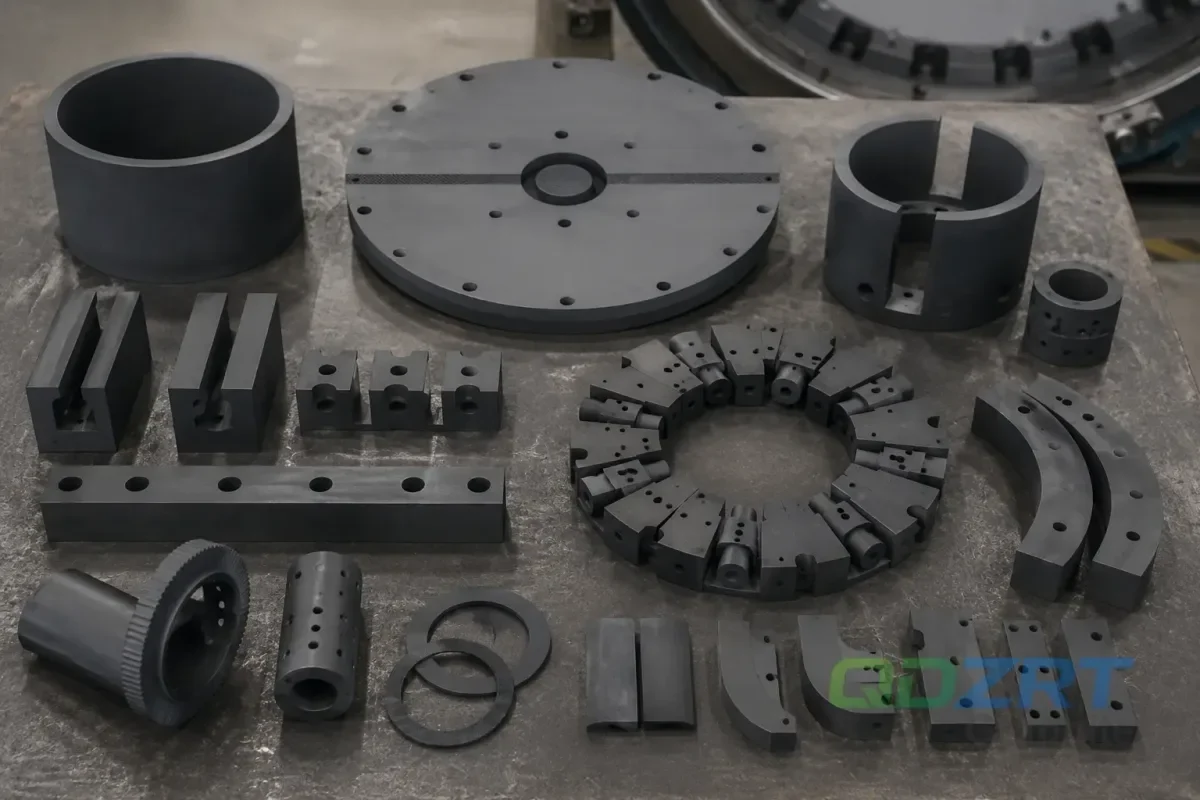
To meet demanding operational environments involving fluid sealing, abrasive wear, or oxidizing atmospheres, QDZRT Graphite provides in-house vacuum-pressure impregnation services:
| Target Industrial Sector | Typical Supplied Components | Operating Demands & Performance Rationale |
|---|---|---|
| Non-Ferrous Continuous Casting | Crystallizer sleeves, casting dies, feed nozzles, stopper rods | High thermal conductivity and self-lubricating properties for horizontal and vertical continuous casting of copper, brass, bronze, and aluminum. |
| Precious Metal Smelting | Melting crucibles, pouring troughs, bullion ingot molds, stirring rods | Ultra-low ash content (<50 ppm) and high density to prevent melt contamination and slag adhesion during gold, silver, and platinum refining. |
| Cemented Carbide & Powder Sintering | Sintering boats, multi-tier trays, pusher plates, furnace saggers | High thermal shock resistance and anti-carburization stability in vacuum and protective atmosphere furnaces up to 1800°C. |
| Battery Materials & Heat Treatment | Grooved setter plates, sagger boxes, carrier trays, pusher slabs | Uniform heat transfer, dimensional stability across repetitive thermal cycles, and resistance to corrosive off-gases during anode/cathode calcination. |
| Industrial Vacuum Furnaces | Hearth support blocks, thermal shrouds, heating elements, connection pins | High compressive strength, minimal thermal expansion, and structural rigidity for high-load hot-zone frameworks. |
| Diamond Tools & Superhard Tooling | Hot-pressing dies, top/bottom punches, segment spacer plates | High compressive strength (>85 MPa) under severe hydraulic tonnage and elevated sintering temperatures. |
| Mechanical Seals & Bearings | Dynamic/static seal rings, split bushings, guide bearings, rotary joint rings | Self-lubricating dry-running capability, fine grain structure, and optional resin or metal impregnation for zero permeability. |
| Photovoltaic & Semi Auxiliaries | Base pedestals, PECVD carrier strips, crucible support rings, shield blocks | Cost-effective thermal field components for auxiliary zones where high purity and thermal stability are required without isostatic cost. |
| Glassware & Optical Hot-Bending | 3D glass bending molds, bottle takeaway tongs, conveyor rollers | Mirror-finish machinability, non-wetting surface against molten glass, and anti-scratch properties preventing surface defects. |
Molded graphite is preferred when parts have medium-to-large dimensions (e.g., continuous casting dies, sintering boats, and furnace hearth plates) where the extreme ultra-fine grain of isostatic graphite is not strictly required. MY Series molded graphite provides sufficient density and mechanical strength at a potentially more cost-effective route, subject to grade, size, and order quantity.
Yes. QDZRT Graphite provides vacuum-pressure impregnation with phenolic resins or metals (antimony/copper). This can reduce open porosity; permeability is verified against the project specification and significantly enhancing self-lubricating wear resistance.
Standard milling tolerances for molded graphite parts are maintained at ±0.05 mm, with critical locating pins or sealing surfaces held to ±0.02 mm.
 PRODUCT
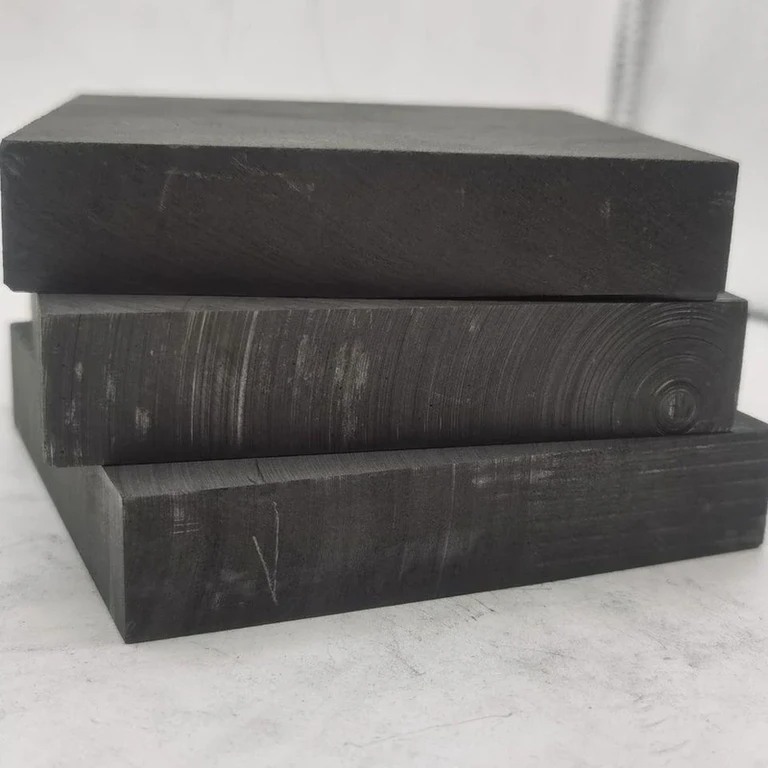
DJY Series isostatic graphite for EDM, precision machining, furnace fixtures, semiconductor-related components, and other applications requiring a uniform graphite structure.
 PRODUCT
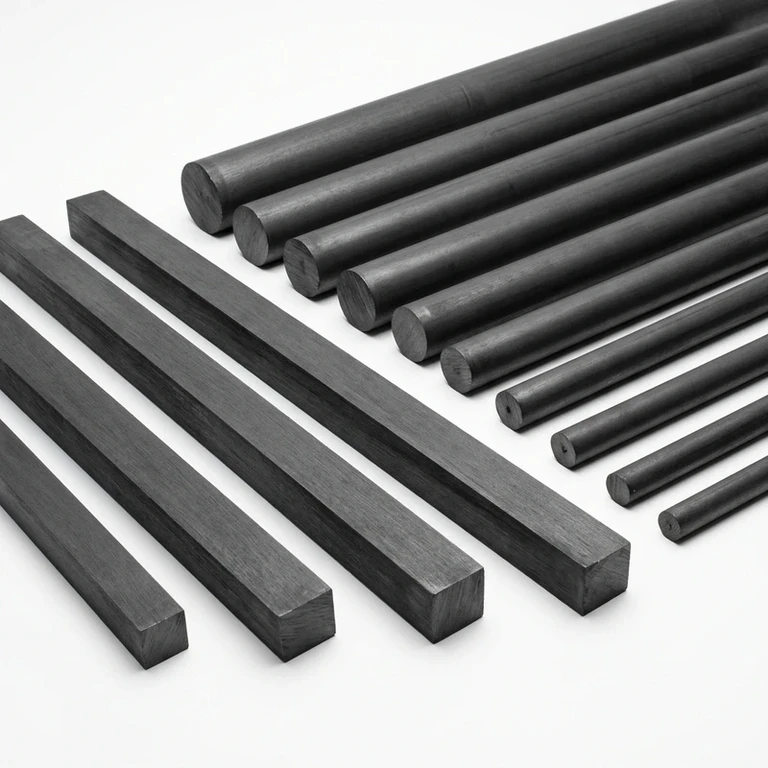
JY Series extruded graphite for rods, heating components, furnace structural parts, larger sections, and general industrial machining where material orientation is considered in selection.
 PRODUCT
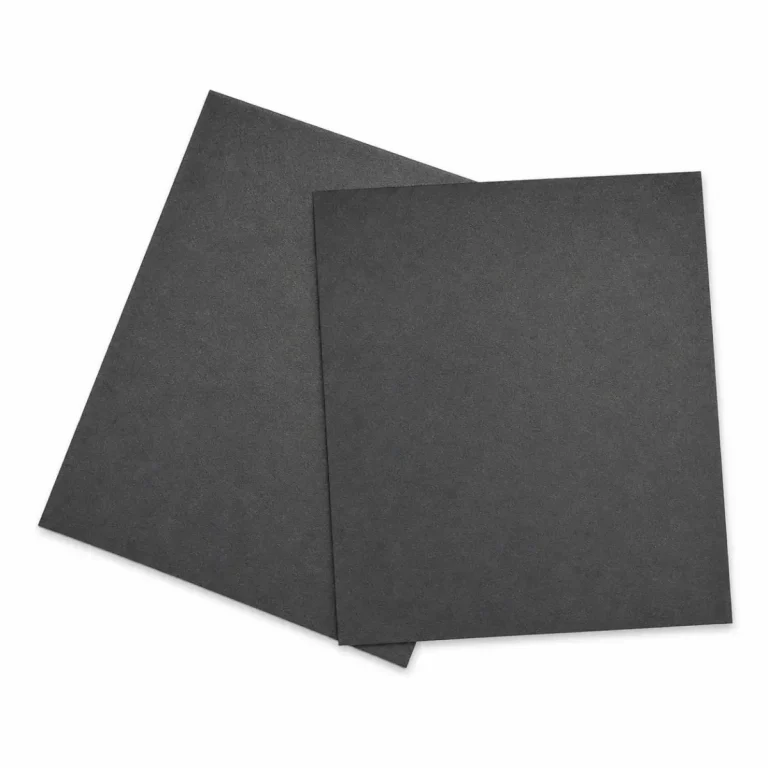
Thin flexible graphite paper and graphite roll material for heat spreading, lamination, die-cutting, adhesive backing, sealing sheets and thermal management processing.
 PRODUCT
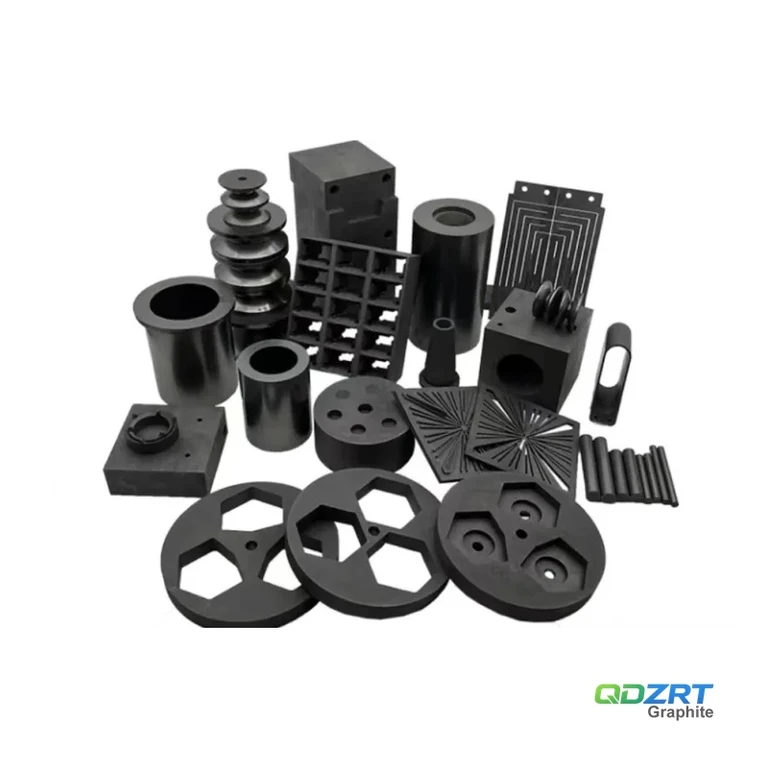
Custom Graphite Machined Parts are drawing-based graphite components manufactured from isostatic, molded, extruded, fine grain, or high purity graphite for EDM, thermal processing, metallurgy, sealing, and industrial equipment.
 PRODUCT
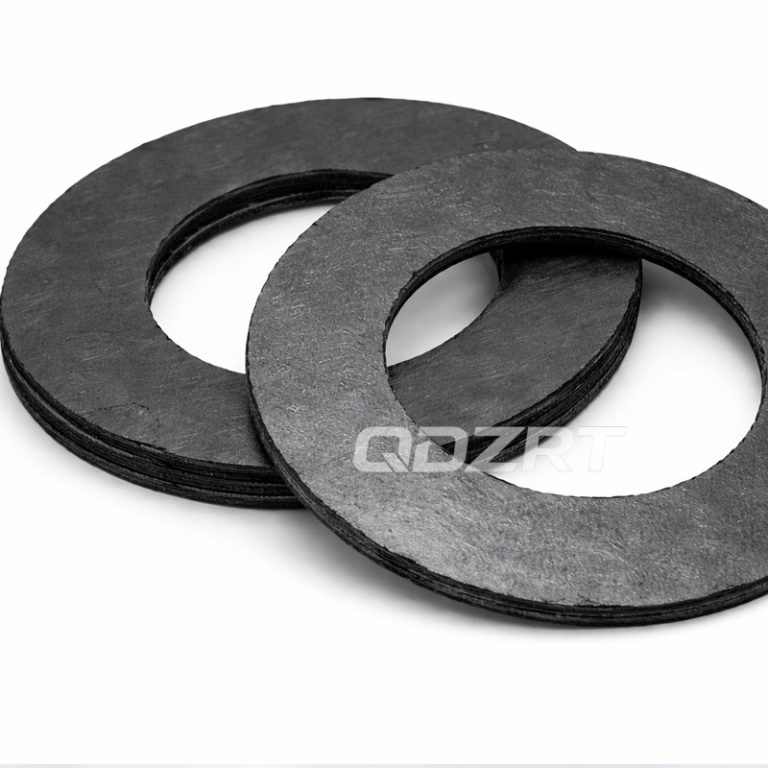
Graphite Sealing Materials cover flexible graphite sheets, reinforced graphite sheets, graphite gaskets, packing rings, braided packing, and graphite-filled gasket solutions for valves, pumps, flanges, steam lines, and industrial equipment.
 PRODUCT
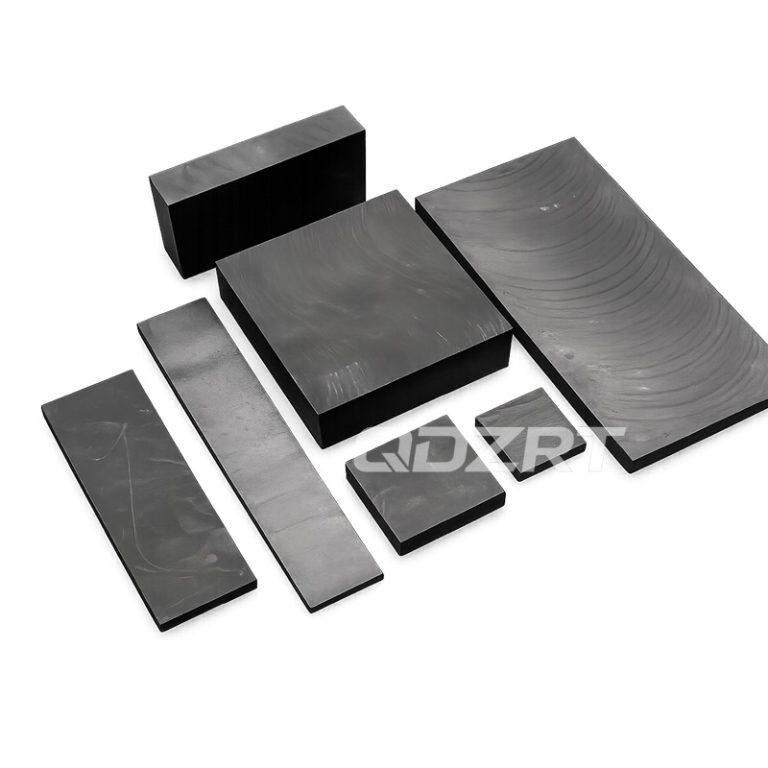
Graphite Block is the QDZRT Graphite overview for three forming-route series: DJY isostatic, MY molded, and JY extruded graphite. Fine-grain, high-purity, EDM, and other requirements are confirmed at grade level for the application.
 PRODUCT
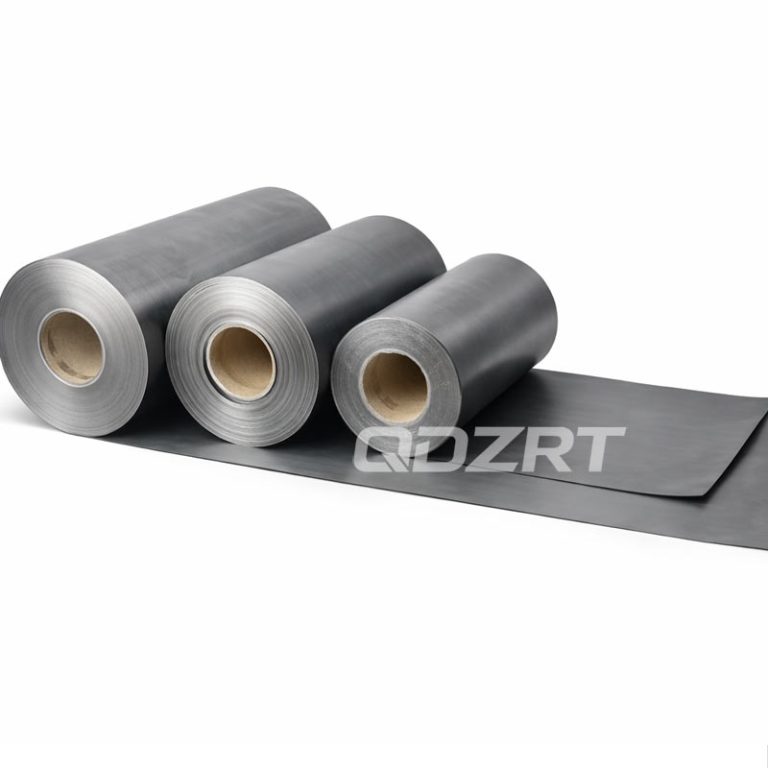
Flexible graphite sheet made from high-purity natural graphite for industrial sealing, gasket manufacturing, insulation and thermal management applications.
PRODUCT
JY Series extruded graphite for rods, heating components, furnace structural parts, larger sections, and general industrial machining where material orientation is considered in selection.