An expandable graphite grade that looks strong on a certificate can still be a poor fit for an intumescent coating. The coating has to remain mixable, apply at the required film build, cure without unacceptable defects, stay stable during storage, and develop the intended protective structure during fire exposure. Those jobs are controlled by the complete formulation, not by one graphite number.
Selection starts with the coating system, not a graphite ranking. Map the cure and fire-response window, check whether particle size fits the film build and surface requirement, verify binder and additive compatibility, then test dispersion, storage stability, and a representative pilot panel.
The raw material can be screened against China’s current GB/T 10698-2023, Expansible graphite. The coating itself still needs application-specific qualification. A certificate proves only the characteristics measured for the supplied graphite lot; it does not prove adhesion, film integrity, char structure, insulation performance, or storage stability in a particular coating.
Map the Coating System Before Choosing a Grade
The coating system defines which expandable-graphite characteristics are relevant, because the same flakes can behave differently in different binders, liquid phases, additive packages, and film thicknesses. Grade selection should begin with a formulation map rather than a supplier catalogue label.
Record the binder family, whether the formulation is waterborne, solventborne, or another system, the pigment and filler package, other flame-retardant components, rheology modifiers, defoamers, wetting or dispersing additives, cure mechanism, expected wet and dry film thickness, substrate, application method, storage target, and the fire-performance method. Some of those fields may be proprietary; they do not all need to be sent to a supplier. They do need to be controlled inside the development record.
| Coating-system field | Question for expandable graphite selection | Failure signal to watch |
|---|---|---|
| Binder / liquid phase | Does the graphite wet and disperse without destabilizing the formulation? | Agglomeration, viscosity drift, poor application, separation |
| Film build | Is the particle distribution compatible with the required wet and dry thickness? | Surface protrusion, drag marks, poor leveling, weak local coverage |
| Cure schedule | Does normal drying or curing remain safely below the graphite activation window? | Premature expansion, porosity, blistering, dimensional disruption |
| Other fire-retardant components | Do their thermal reactions complement or interfere with the graphite response? | Weak char, cracking, delamination, excessive gas release |
| Storage and application | Does the solid package remain uniform until use? | Settling, hard sediment, viscosity change, nonuniform coating |
| Fire test | Which measured output defines success? | Passing a raw-material test but failing the coated system |
This map prevents the graphite from being evaluated in isolation. If the coating has a thin-film requirement, particle size may become a primary constraint. If the binder or substrate is chemically sensitive, sulfur or other residual chemistry may deserve more attention. If the coating passes through a warm cure or bake, the activation window becomes a process constraint before fire performance is even tested.
The broader expandable graphite selection guide covers expansion volume, particle size, sulfur, and expansion temperature as raw-material controls. The coating project should take only the parameters that have a direct link to the formulation risk and then verify them in the finished system.
Expansion Onset vs Cure and Fire-Response Window
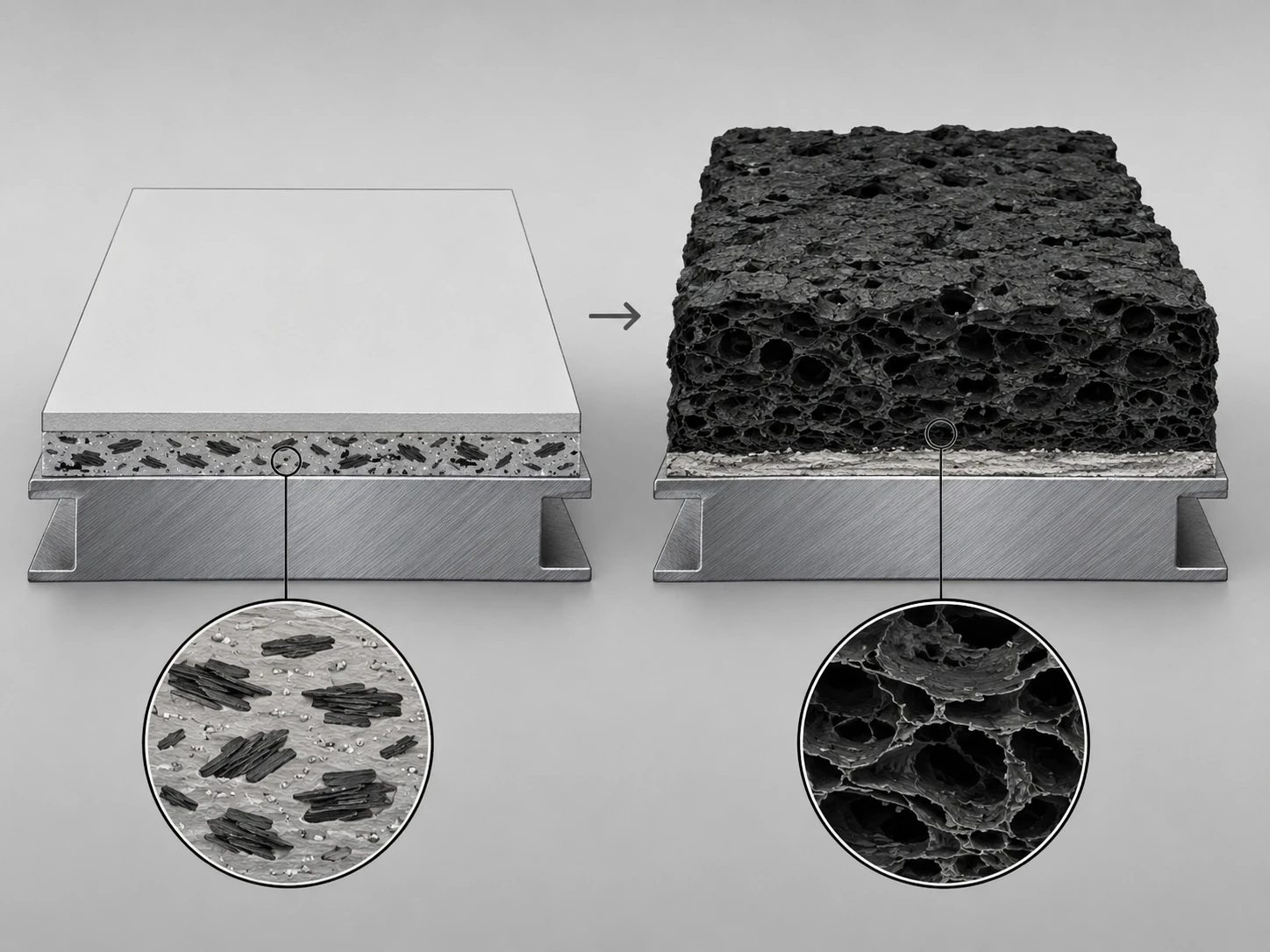
The expandable graphite should remain stable during manufacturing, application, drying, and normal service, then respond within the thermal window required by the coating’s fire-protection mechanism. That makes the gap between routine heat exposure and fire activation more useful than a simple “low-temperature” or “high-temperature” grade label.
A coating may experience several heat stages before a fire test: warm raw-material storage, high-shear mixing, application to a warm substrate, forced drying, oven cure, post-cure, outdoor solar heating, or service near a heat source. If the graphite begins to expand during one of those normal stages, the film can become porous or distorted before it ever reaches service.
During fire exposure, the graphite is not heated as loose powder. It is surrounded by binder, pigments, fillers, gases, decomposition products, and a changing char structure. The temperature at the flame or furnace is therefore not the temperature at every flake. Film thickness, substrate conductivity, heat flux, binder decomposition, and gas release influence the local heating rate.
Treat the supplier’s expansion-temperature result as a raw-material descriptor. The coating developer still needs a thermal sequence that records cure conditions and fire exposure. Any additional thermal analysis should answer a defined compatibility question rather than add data without a decision attached.
Chinese research supports this system-level view. Work published in Acta Materiae Compositae Sinica examined expandable graphite as a modifier in an APP/PER/EN fire-retardant coating and reported that the chemical intumescence and the physical expansion of graphite operated in nearby temperature ranges in that formulation. The result is useful as a mechanism example, not as proof that every coating has the same thermal overlap.
Particle Size vs Film Build and Surface Quality
Particle-size distribution must be compatible with the intended film build and application method because the unexpanded flakes are physical particles inside a wet coating before they become part of a fire-protective structure. A mesh grade that works in a thick applied layer may be unsuitable for a thinner or smoother finish.
Start by comparing the coarse end of the graphite distribution with the actual coating thickness and surface requirement. The objective is not to apply a universal particle-to-film ratio; binder rheology, particle orientation, application pressure, substrate roughness, and the presence of other fillers all change the result. The trial should identify whether coarse particles protrude, drag, cluster, or create local weak areas.
The fine end matters for different reasons. Additional fines may alter wetting demand, viscosity, dispersion energy, packing of the solid phase, or settling behavior. A formulation can therefore change when the nominal mesh grade is unchanged but the distribution tails shift. For repeat supply, record the distribution field that correlated with a stable coating rather than relying only on the commercial grade name.
China’s current GB/T 3520-2024, Test method for fineness of graphite, provides a current national fineness-test reference. If the supplier and buyer use this basis, the RFQ should still state the required retained or passing result. A test-method number without a contractual distribution limit cannot release a lot.
Surface quality should be evaluated on a coated panel made by the intended application method. A laboratory drawdown, spray panel, brush application, or industrial coating line can produce different orientation and leveling. Record wet film, dry film, application method, substrate preparation, and any sanding or topcoat step before deciding that the graphite particle size is responsible for a defect.
Check Binder, Additive, and Chemical Compatibility
Binder and additive compatibility must be qualified because expandable graphite introduces a solid surface and residual chemical profile into a formulation that may already contain several reactive or surface-active components. Compatibility cannot be inferred from expansion volume alone.
Start with the chemistry fields that can plausibly affect the system. Sulfur may be important in one project while pH, moisture, ash, residual ions, or another impurity matters more in another. The correct specification follows the mechanism or customer requirement. It does not copy the lowest value found in an unrelated industry.
China’s current GB/T 3521-2023, Methods for chemical analysis of graphite, can serve as a current national reference for graphite chemical analysis. The coating RFQ should identify which chemistry results are contractual and which are qualification-only data.
Interaction with the other fire-retardant package also needs attention. Expandable graphite can be used as the primary physical expansion component or alongside other intumescent ingredients. Those ingredients may decompose, soften, crosslink, release gases, create phosphate-containing char, or change melt viscosity in overlapping temperature ranges. The correct balance is formulation-specific.
Chinese coating research demonstrates the point. A waterborne ultra-thin steel fire-protection study published on Sichuan University’s journal platform evaluated an acrylic system containing an intumescent package and used 3 wt% expandable graphite together with 3 wt% magnesium sulfate whisker as one studied modification. The authors reported a 36% residual mass at 800 °C for that specific modified coating. Those numbers should not be converted into a generic recipe; they show why raw-material selection must be evaluated inside the complete binder and additive package.
If a formulation changes binder supplier, dispersant, pigment, filler, cure schedule, or another component after the graphite has been qualified, decide whether the change can affect wetting, stability, activation, or char formation. Requalification should follow the risk of the change rather than a fixed rule that every minor formulation adjustment requires a full new program.
Dispersion and Storage Stability Before Scale-Up
Dispersion and storage stability must be demonstrated before scale-up because a coating that looks uniform immediately after mixing can segregate, settle, agglomerate, or change viscosity before it reaches application. Fire performance from a freshly mixed laboratory batch does not prove shelf stability.
Separate dispersion from grinding. Expandable graphite is a structured flake material; aggressive processing that changes particle size or damages the flake can change the material being qualified. The development record should identify the order of addition, mixing equipment, approximate shear regime, mix time, batch temperature, and the point at which the graphite is introduced.
Evaluate the wet coating at more than one time point. Immediately after mixing, check visible agglomerates, viscosity behavior, application, and film appearance. After a defined storage interval, inspect separation, settling, hard sediment, redispersibility, viscosity drift, and whether a specimen prepared from the stored material still represents the same formulation. The exact intervals belong to the product-development plan rather than a universal graphite rule.
Packaging and handling can also change apparent stability. Moisture entry, temperature cycling, prolonged vibration, and container headspace can affect the coating or the dry graphite before mixing. If the project stores expandable graphite for extended periods, keep the dry-material lot identity and storage condition connected to the trial record.
Scale-up adds another source of variation: mixing energy per unit volume can fall when a laboratory formulation moves to a production vessel. Addition time, powder induction, wetting, recirculation, and filtration or screen steps may change. The scale-up trial should therefore confirm that the graphite distribution achieved in a small batch can be reproduced in the actual mixing route.
Pilot-Panel Evaluation and Acceptance Criteria
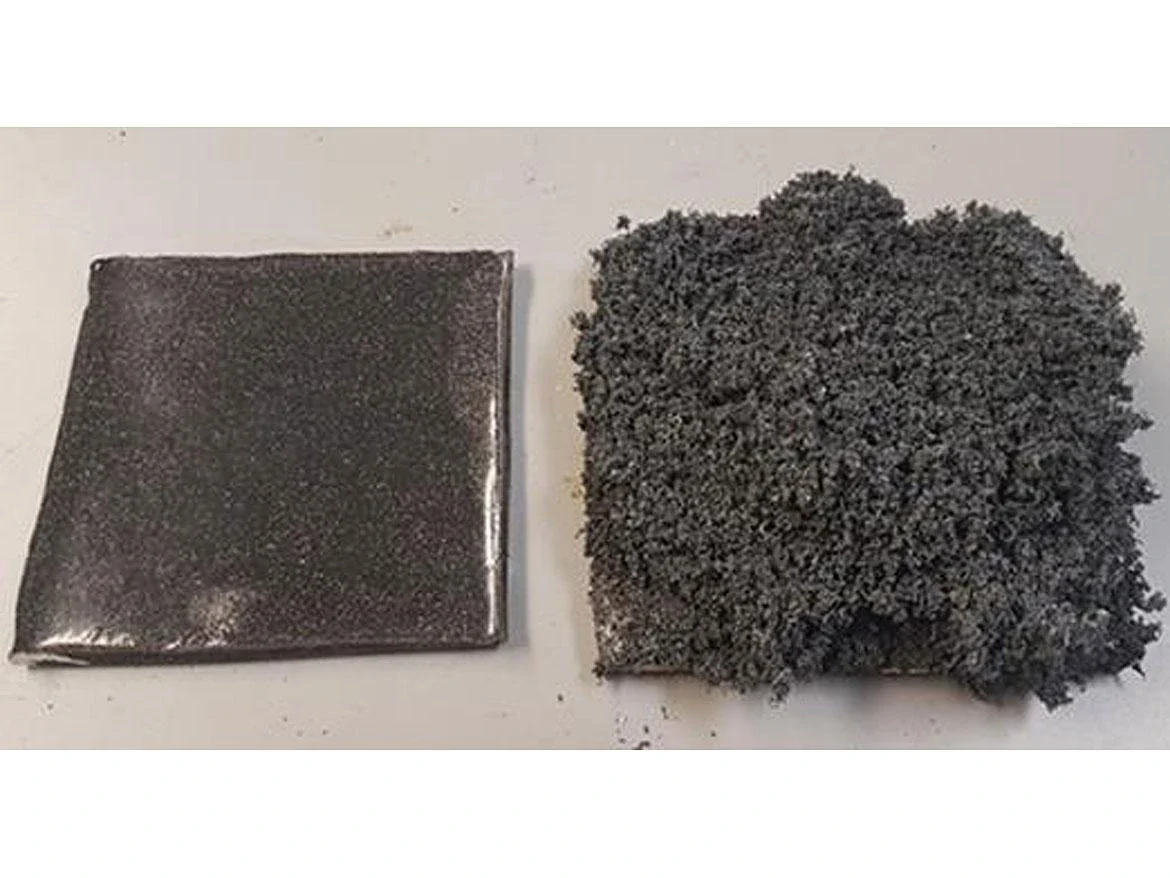
A pilot panel should combine coating-process acceptance with the fire-performance evidence required by the project, so that a raw-material pass does not hide a coating failure and a good fire result does not hide an unstable film. The acceptance plan should be written before the final candidate is chosen.
For the coating stage, record substrate, preparation, application method, wet and dry film measurements, number of coats, recoat interval, cure conditions, appearance, adhesion or other required mechanical checks, and any defects. For the graphite, record grade, lot, particle-size result, expansion-response basis, and the agreed chemistry fields. For the fire test, record the named method, specimen conditioning, orientation, exposure, measured outputs, photographs where useful, and the pass/fail rule.
Chinese fire-science research has used cone calorimetry to evaluate expandable-graphite fire-retardant coatings, including work published by the University of Science and Technology of China’s Fire Science journal. Other studies have combined thermogravimetric analysis, microscopy, and larger-scale or simulated panel tests. The lesson for procurement is that no single raw-material number replaces the finished-panel method selected for the actual application.
| Acceptance area | Examples of evidence | Reason to keep it separate |
|---|---|---|
| Raw material | COA, lot identity, PSD, expansion response, relevant chemistry | Confirms the supplied graphite matches the qualified material. |
| Wet coating | Viscosity behavior, dispersion, settling, application quality | Finds formulation or handling problems before curing. |
| Cured film | Thickness, appearance, adhesion/other project checks | Confirms the applied coating is a valid fire-test specimen. |
| Thermal/fire response | Named test outputs, char/expansion observations, insulation or heat-release evidence as required | Proves the finished system, not just the raw graphite. |
| Storage / repeatability | Stored-batch checks and repeat panel from another graphite lot | Shows whether the qualification can survive production variation. |
When the pilot succeeds, convert the result into a controlled material and formulation record. The expandable-graphite purchase specification should contain only the raw-material characteristics that need to remain within the qualified window. The coating specification should hold the binder, additive, application, cure, and test conditions that define the approved system.
For an RFQ, send the intended coating type, application method, approximate film-build requirement, cure or drying constraint, known particle-size restriction, required expansion-response data, sulfur or chemistry limits that have a real application basis, sample quantity, and the pilot-panel test method. If the chemistry requirement is sulfur-sensitive, the low-sulfur expandable graphite guide provides the separate framework for defining the limit and COA requirement.
The pilot should reproduce the coating architecture used in service. Primer, substrate preparation, substrate thickness, intermediate coats, the intumescent layer, and topcoat can change adhesion, heat transfer, moisture exposure, and char retention. Recheck the graphite when the commercial system differs materially from the laboratory film.
Record dry-film thickness at defined locations. If two graphite candidates are tested at materially different film builds, the fire result cannot be assigned to the graphite alone; keep the comparison panels inside the same controlled thickness range.
After selecting the preferred graphite and formulation, repeat the panel on another batch or production lot where the risk justifies it. Keep substrate preparation, application, cure, film thickness, conditioning, and fire method comparable so any change can be traced to the material or process rather than test setup.
References and Sources
- National Standard Information Public Service Platform — GB/T 10698-2023, Expansible graphite. Current Chinese national product standard.
- National Standard Information Public Service Platform — GB/T 3520-2024, Test method for fineness of graphite. Current Chinese national graphite-fineness test standard.
- National Standard Information Public Service Platform — GB/T 3521-2023, Methods for chemical analysis of graphite. Current Chinese national chemical-analysis reference.
- Acta Materiae Compositae Sinica — thermal degradation of an expandable-graphite-modified intumescent coating. Used only for formulation-specific mechanism context.
- Polymer Materials Science & Engineering — waterborne ultra-thin intumescent steel coating study. The cited formulation percentages and residual-mass result are research-specific, not universal purchase targets.
- Fire Science — cone-calorimeter evaluation of expandable-graphite fire-retardant coatings. Used to support finished-coating fire-test validation.