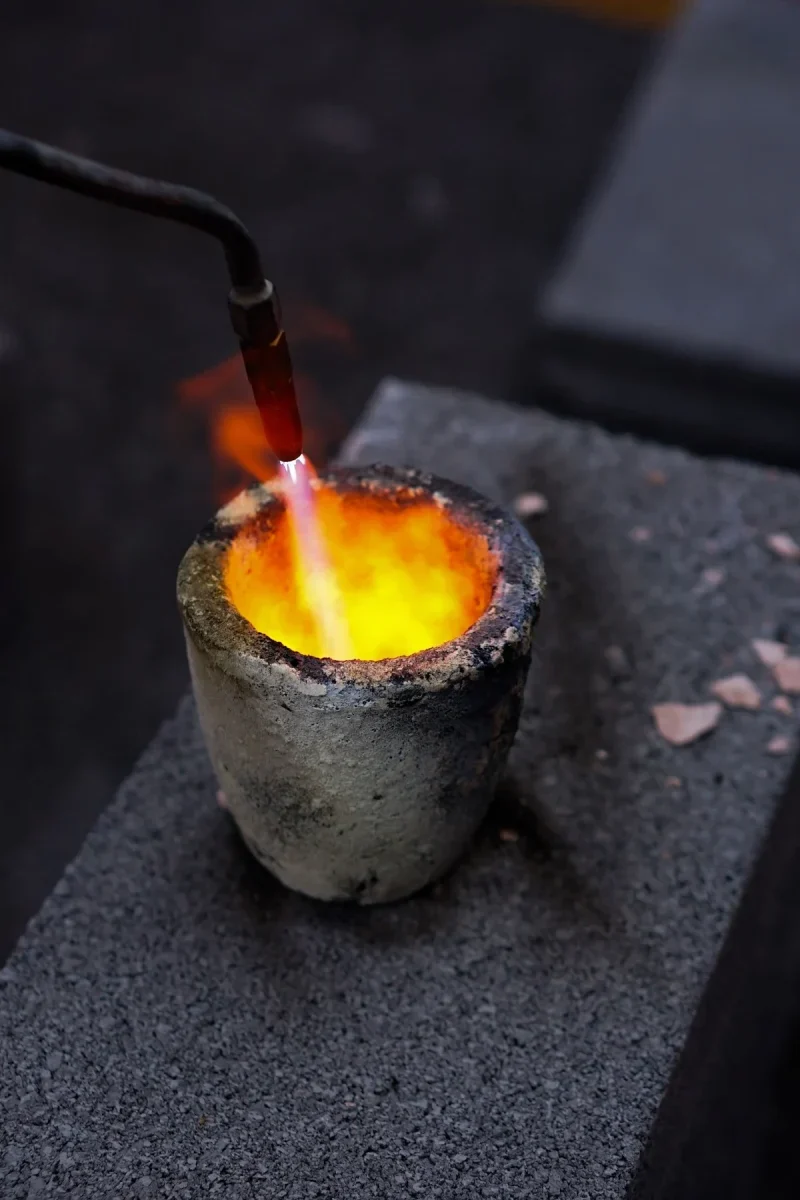
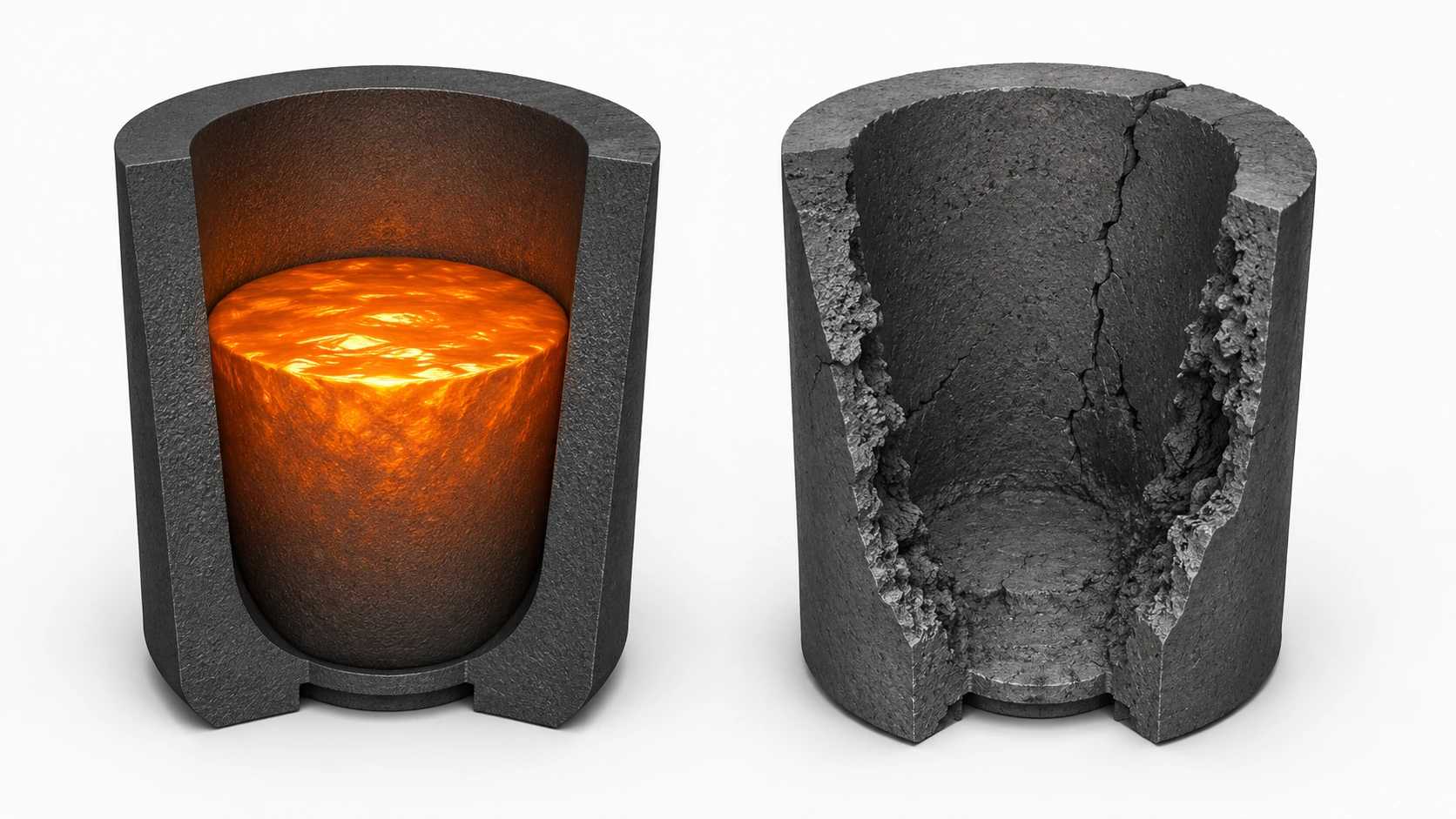
A graphite crucible that fails early can show very different evidence: a vertical crack after a thermal cycle, a thinned wall near the melt line, an oxidized exterior, an eroded interior, a broken flange, or damage at a lifting point. Replacing it with “a stronger graphite grade” without separating those failure modes can waste the next crucible for the same reason.
Crucible selection begins with the melt, atmosphere, furnace, heating method, thermal cycle, handling route, and geometry. Grade and wall thickness are then chosen to manage that service. Service life is the result of the complete system; it is not a fixed property that can be promised from graphite grade alone.
GB/T 26279-2010, Graphite crucible, remains the current Chinese national product standard until November 30, 2026. GB/T 26279-2026 was published May 25, 2026 and takes effect December 1, 2026. Procurement documents dated on or after that implementation date should be reviewed against the 2026 edition.
The older custom graphite parts guide covers material and machining considerations across several applications. This article stays with crucible failure diagnosis and purchasing decisions for melting and casting.
Define the Melt, Atmosphere, and Thermal Cycle First
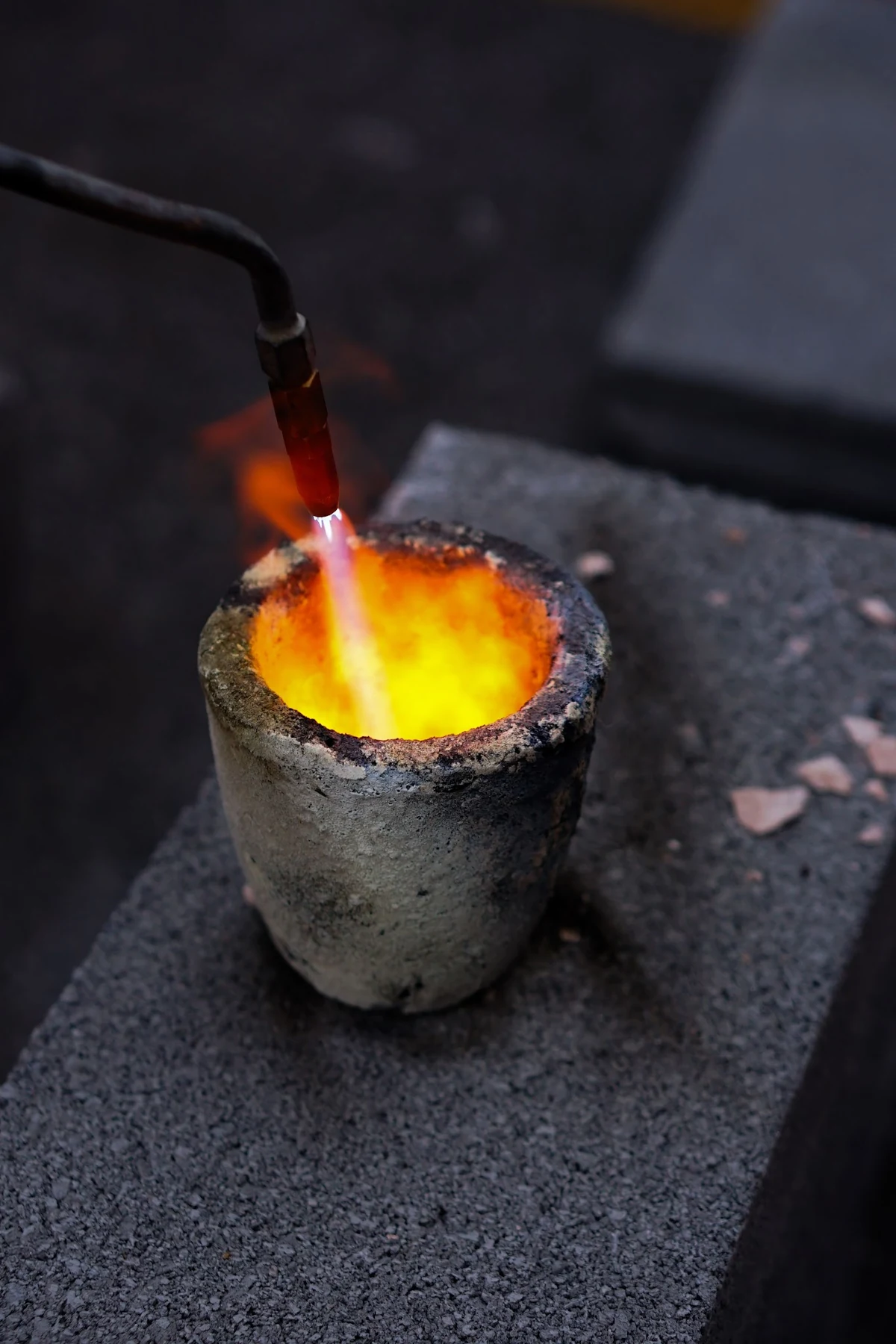
The melt, atmosphere, and thermal cycle should be defined before the graphite grade because they determine the chemical and thermal stresses the crucible must survive. A crucible used for one metal in a protected furnace cannot be assumed suitable for another metal or for open-air heating.
Start with the material being melted. Different molten metals, alloys, fluxes, slags, refining agents, or process additives can interact differently with carbon and with any impurities in the crucible. The buyer should identify the actual melt family and any additives that contact the crucible. “Nonferrous melting” is too broad for technical selection.
Then define the atmosphere. Graphite behaves very differently in inert, vacuum, reducing, sealed, and oxidizing environments. In an oxidizing atmosphere, exterior oxidation can consume wall thickness even if the melt itself is chemically compatible. In a protected atmosphere, chemical attack from the melt may become the dominant life-limiting mechanism instead.
The thermal cycle is equally important. A crucible that is slowly heated and held near steady state sees a different stress history from one that is repeatedly heated, emptied, cooled, and returned to service. Record starting temperature, heating mode, typical cycle pattern, cooling practice, and whether the crucible experiences abrupt exposure to cold charge or cold tools.
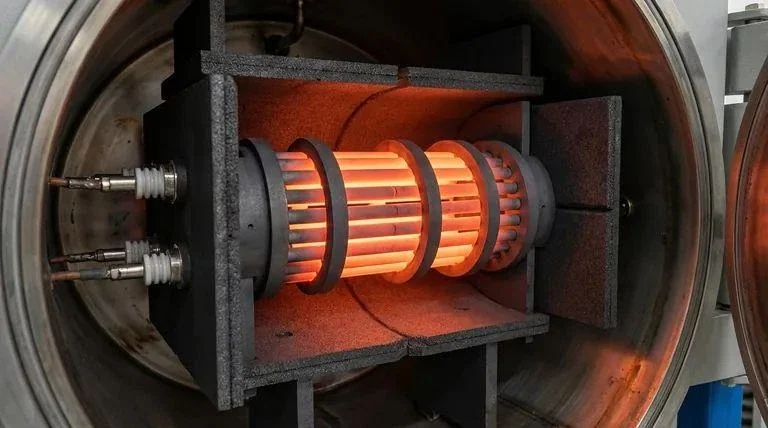
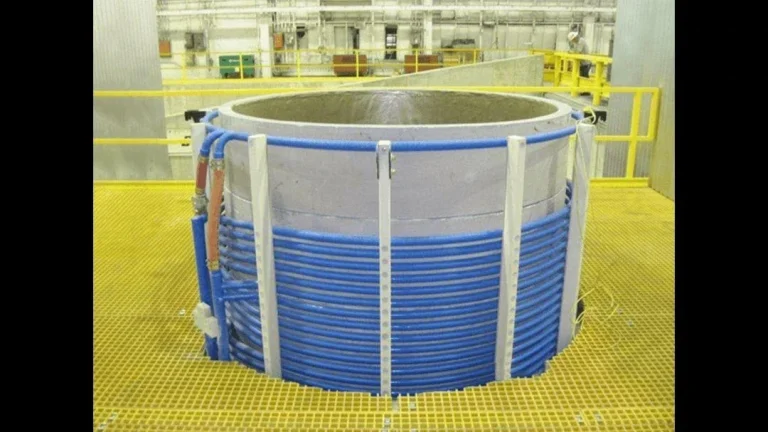
Furnace geometry and heating method should also be shared. Resistance, induction, fuel-fired, and other furnace arrangements can place heat into the crucible differently. Local hot zones, uneven exterior heating, or support contact can produce thermal gradients that are more important than the nominal furnace setpoint.
| Service field | Why it matters | What purchasing should record |
|---|---|---|
| Melt/alloy | Controls chemical compatibility and contamination risk. | Metal/alloy family and relevant additives. |
| Atmosphere | Changes oxidation and reaction conditions. | Air, inert, vacuum, reducing, or controlled process atmosphere. |
| Thermal cycle | Drives repeated expansion/contraction and thermal stress. | Heat-up, hold, pour, cooling, and restart pattern. |
| Furnace/support | Changes heat flow and mechanical support. | Heating method, support geometry, and known hot spots. |
| Handling | Can create impact or lifting damage outside the melt process. | Lifting, tilting, pouring, and cleaning method. |
Choose Graphite Grade and Purity for the Process
Graphite grade should be selected from the property package required by the crucible geometry and service, while purity should be tightened only where melt contamination or process requirements justify it. Neither “high density” nor “high purity” is a complete crucible specification.
Mechanical integrity depends on the grade’s actual strength, microstructure, porosity, forming route, and directional behavior. A fine-grain or isostatic grade can support detailed machined crucibles, but another application may use a different graphite technology. The buyer should compare the supplier’s actual data and available stock size rather than start from a marketing category.
Purity matters when trace elements can contaminate the melt, interfere with a process, or violate a customer specification. The buyer should identify which impurities are sensitive and which evidence is required. A generic “99.9% graphite” statement may hide the elements that actually matter to the application.
Do not over-specify purity for a process that is dominated by thermal or mechanical failure. Higher purification can add cost and lead time without extending life if the crucible is breaking because of thermal shock, an unsupported base, or rough handling. Conversely, a mechanically robust grade can still be unacceptable if it introduces contamination into a high-purity melt.
For custom-machined crucibles, grade availability in the required blank size must be checked early. A preferred laboratory-scale grade may not be available in a section large enough for production geometry. The machining allowance, grain direction where applicable, and material removal should be considered with the final wall design.
Wall Thickness and Geometry: Balance Strength, Heat Transfer, and Mass
Wall thickness should be chosen as part of the complete geometry because thicker walls can improve mechanical section size while also increasing thermal mass and changing temperature gradients. There is no universal wall-thickness formula that applies to all graphite crucibles.
A thin wall heats quickly and reduces material mass, but it leaves less section to tolerate machining defects, oxidation loss, erosion, handling impact, or local stress concentration. A thicker wall provides more material but can develop larger through-thickness temperature differences during rapid heating or cooling.
Geometry matters as much as nominal thickness. Sharp internal corners, abrupt section changes, thin flanges attached to heavy walls, deep keyways, small radii, lifting holes, and unsupported lips can concentrate stress. If a failure repeatedly begins at the same geometric feature, changing the graphite grade without changing the stress raiser may produce only a modest improvement.
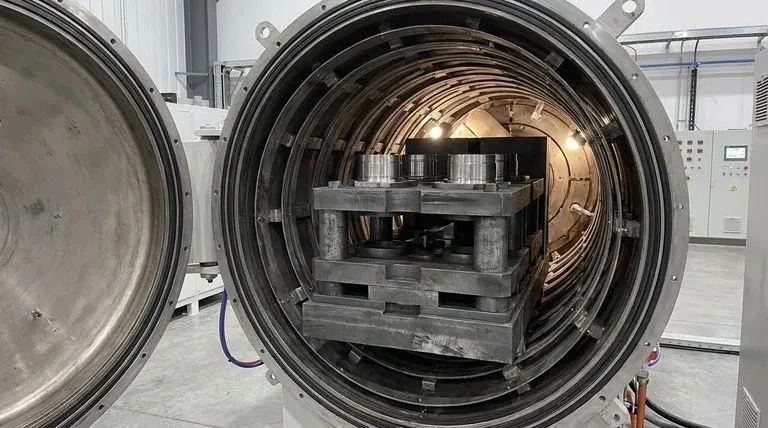
The base deserves separate review. Crucibles can be damaged by uneven support, debris under the base, local furnace contact, or a pedestal that creates a hot/cold boundary. The drawing should define the intended support surface and the installation procedure should keep that surface clean and fully seated as designed.
For a new size, use engineering analysis and trial evidence rather than scaling every wall proportion linearly from a smaller crucible. Heat path, mass, handling load, and local geometry do not necessarily scale in the same way. Large crucibles may require a different balance between thermal response and mechanical margin.
Thermal Cycling and Handling Damage
Thermal cycling and handling damage should be separated because both can produce cracks, yet the corrective actions are different. A crack caused by rapid temperature change will not be solved by changing lifting practice alone, and an impact fracture will not be solved by slower heat-up.
Thermal-shock clues include cracks associated with rapid temperature transitions, local hot/cold boundaries, sudden contact with cold charge, or repeated failure after a similar point in the cycle. Record when the crack first appeared relative to heat-up, charge addition, pouring, cooling, and cleaning.
Handling damage often has a physical origin at a contact point: fork impact, clamp marks, lifting-hole damage, chipped rim, tool strike, or an unsupported heavy crucible during transport. Photograph those areas before installation and after removal. If the same damage pattern appears before the crucible reaches the furnace, the material grade is not the first variable to change.
Cleaning practice can combine both mechanisms. Scraping a hot crucible with a cold steel tool adds mechanical contact and local thermal disturbance. Aggressive removal of frozen residue can also notch the graphite surface. Cleaning procedures should define acceptable tools and whether the crucible must be cooled or held at a controlled state before work begins.
Maintenance records should distinguish “cracked in service” from the actual event sequence. A timestamped cycle and handling log is far more useful than a final note written after the crucible has broken into pieces.
Oxidation and Chemical Attack: Separate the Failure Mechanisms
Oxidation consumes graphite from surfaces exposed to oxidizing conditions, while chemical attack or dissolution from the melt acts through a different mechanism. The failure pattern should identify which side of the crucible is losing material and under what process condition.
Exterior wall thinning, a rough burned surface, or damage concentrated above the melt line can point toward furnace-atmosphere exposure or air leakage. Interior erosion concentrated at the melt line, slag contact zone, or a particular additive location can point toward melt-side chemistry or mechanical scouring.
Do not label every rough surface “oxidation.” Molten material, flux, cleaning, abrasion, and adhered residue can all change surface appearance. Compare mass, dimensions, wall-thickness map, location, and process history when the cost of the failure justifies detailed analysis.
Protective coatings or treatments should be evaluated as part of a qualified system. A coating can change contamination, wetting, heat transfer, crack visibility, and refurbishment options. It should not be added after a failure without checking whether the application and supplier support it.
Atmosphere control can be more effective than buying a more expensive graphite grade when oxidation is dominant. Conversely, improved furnace sealing will not solve chemical attack from an incompatible melt. The failure mechanism determines which cost has value.
Inspect Failure Patterns Before Changing the Grade
A failed crucible should be treated as evidence. Record crack origin, wall-thickness loss, location of erosion, surface condition, support marks, handling damage, cycle count or operating history, and any process change before selecting the next grade.
Use a simple failure map:
- Crack starts at a corner or section change: review geometry, radius, machining marks, and thermal gradients.
- Crack starts at lifting/support feature: review handling and mechanical load.
- Exterior wall loss: review atmosphere, furnace leakage, and local hot zones.
- Interior wall loss: review melt chemistry, flux, agitation, and cleaning.
- Repeated base failure: review support flatness, debris, thermal contact, and base geometry.
- Random early breakage across lots: review incoming material, machining, transport, and process consistency together.
Do not rely on service-life counts without context. “Last crucible lasted 50 heats” has limited engineering value if the alloy, charge mass, furnace cycle, atmosphere, operator practice, cleaning, or wall geometry changed. The unit “heat” is not a standardized severity measure.
When comparing two grades, run them under matched conditions as far as practical and record the same failure fields. A grade that survives more cycles because it was used on an easier alloy or gentler furnace schedule has not been fairly compared.
Commissioning history is especially useful for a new crucible design. Record the first several cycles separately from mature operation because installation errors, support mismatch, or an aggressive initial heat-up can create damage before the normal process is established. If the first unit fails early but later units are stable after a procedure change, the conclusion should not be that the original graphite grade was inherently unsuitable.
Dimensional inspection after service can also reveal the mechanism. Measure wall or base locations that were recorded before use when practical, then compare the loss pattern. Uniform exterior loss suggests a different problem from a narrow internal groove at the melt line. The measurement does not need to be elaborate for every routine crucible; it becomes valuable when failures are expensive or repeated.
Returned crucibles from different operators should be identified by asset, furnace, alloy, and shift or campaign. Without that traceability, a mixed scrap pile can hide the fact that failures are concentrated in one furnace position or one handling route. The same material can appear inconsistent when the actual process exposure is inconsistent.
Spare strategy is another cost variable. A highly specialized graphite grade may extend life but carry a longer replenishment cycle or require a larger blank. The buyer should compare expected service improvement with stock risk and machining lead time. For production-critical melting, a slightly less optimized but qualified grade with reliable availability can sometimes reduce total downtime risk.
Specify the Crucible Drawing and Acceptance Requirements
The RFQ should control material, drawing, service information, inspection, and documentation rather than asking the supplier to infer a crucible from capacity alone. Capacity does not define wall geometry, support, flange, lifting features, or machining tolerances.
Include the controlled drawing with overall dimensions, wall and base thickness, radii, support surfaces, holes or slots, permitted machining marks where relevant, and any critical orientation requirement. State the graphite grade or approved property package and the purity/chemistry fields that matter to the melt.
For standard-product purchases in China, verify the applicable edition against the order date. Long-term specifications that cross December 1, 2026 should define how the transition will be handled instead of mixing requirements from both editions without review.
When an approved crucible drawing or material specification spans the standard transition, record which requirements are controlled by the customer drawing and which are inherited from the cited standard. That separation makes requalification easier and prevents a standard-edition change from silently altering dimensions, material requirements, or acceptance evidence that were already fixed by the application.
Incoming inspection can include identity, dimensions, visible cracks or chips, surface and edge condition, material/certificate checks, and any customer-specific tests tied to the approved grade. Avoid demanding unsupported “service life” certification from the supplier. Service life belongs to the buyer’s operating history unless a controlled test protocol defines it.
The best crucible specification therefore does not promise a fixed lifetime. It preserves the variables needed to understand lifetime: melt, atmosphere, thermal cycle, grade, purity, geometry, support, handling, inspection, and failure history. That evidence lets the next design change target the actual loss mechanism instead of treating every failure as a material problem.
When a crucible is copied from a worn sample, reverse engineering should distinguish original design from service loss. A thinned wall, rounded rim, enlarged bore, or eroded base may be wear, not the intended drawing. Use old drawings, unused spares, equipment clearances, and process needs to reconstruct the design. Otherwise the replacement can faithfully reproduce a damaged geometry and begin its life with less section than intended.
For large crucibles, transport fixtures should be included in the project review. A mechanically sound crucible can be damaged before commissioning if its own mass is supported through a narrow edge, lifting hole, or poorly padded crate. Packaging and installation are part of the life chain and should be controlled before the first production furnace cycle actually begins.