A buyer can create a serious gasket mismatch with a purchase line that sounds complete: “spiral wound gasket, graphite filler, stainless steel.” That line still leaves major construction questions unanswered. Which flange system is being used? Is the gasket supplied with an inner ring, an outer centering ring, both, or neither? Which metal applies to the winding and which applies to the rings? Which dimensional series governs the outside diameter, winding zone, inner diameter, and marking? What graphite-filler requirements are tied to the service rather than copied from a previous order?
Specify a spiral wound gasket as an assembled sealing product, not as graphite with metal wrapped around it. Filler, winding strip, inner ring, outer ring, and flange designation are separate parts of the purchase definition. The graphite sealing guide for flanges, valve stems, and pump shafts covers the broader sealing context; this article stays with the RFQ.
For Chinese standard references, use GB/T 4622.1-2022 for PN-designated pipe-flange spiral wound gaskets together with its No. 1 Amendment, effective May 1, 2026. GB/T 4622.2-2022 remains the current Class-designated series reference. The withdrawn 2007–2009 documents should not be used as the current specification structure.
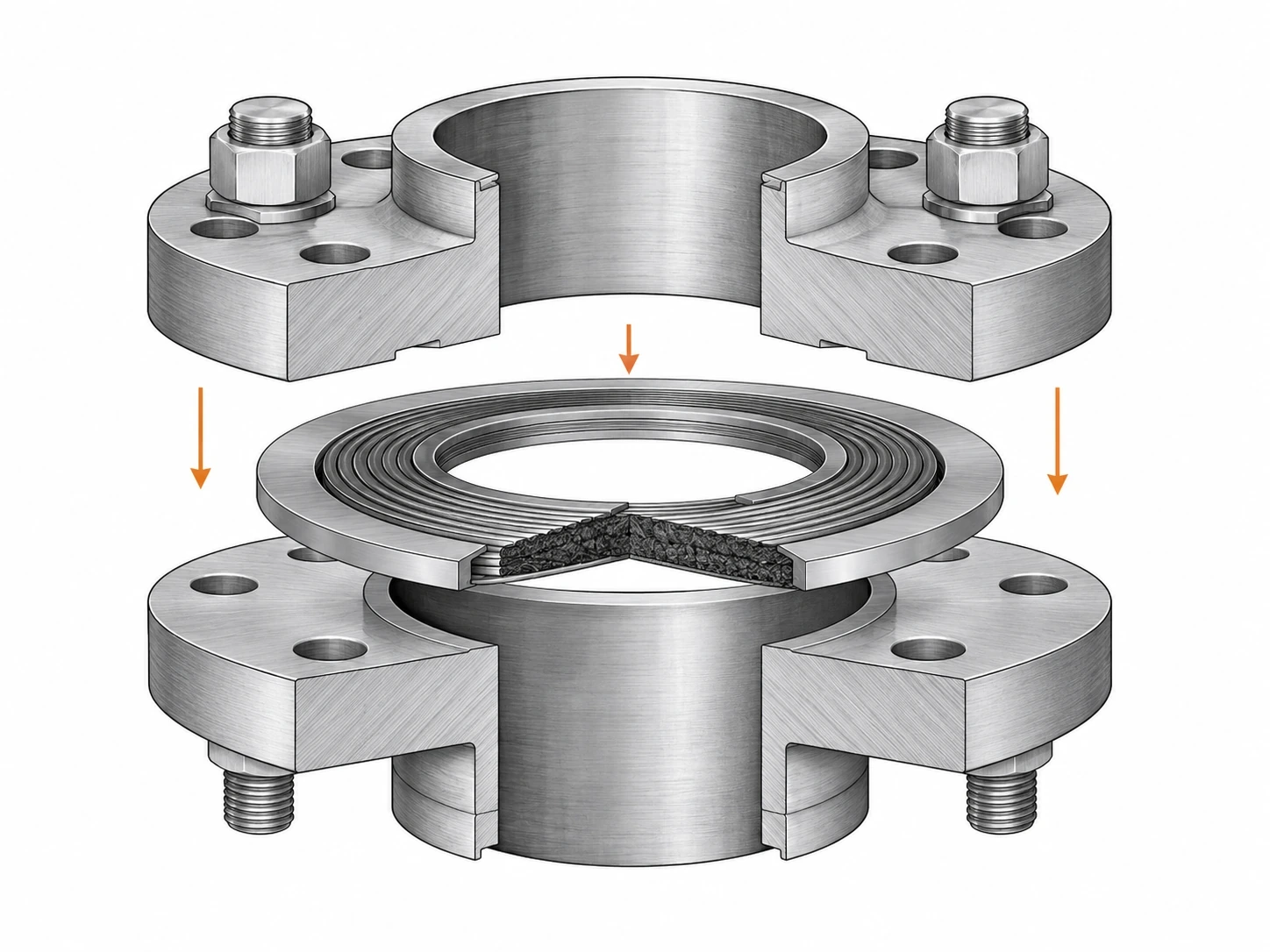
Identify the Complete Gasket Construction Before Quoting
A quotation is only comparable when every supplier is pricing the same gasket construction. “Spiral wound gasket with graphite filler” identifies the general family but does not fully define the assembled part.
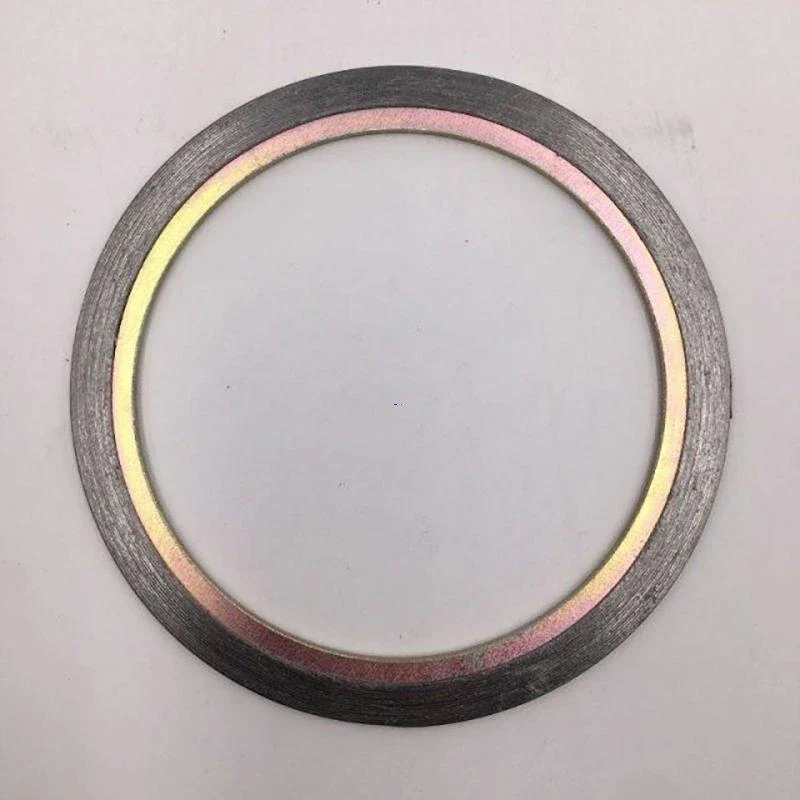
Start by separating the components. The spiral element combines a formed metal winding strip with filler material. Depending on the gasket type, an inner ring can sit inside the spiral element and an outer ring can locate the gasket in the flange assembly. The buyer should identify these pieces independently because the winding metal and ring metals do not have to be assumed from one generic “stainless steel” statement.
The flange series is equally important. A PN-designated gasket and a Class-designated gasket can share a nominal pipe size but belong to different dimensional and pressure-designation systems. If the buyer sends only nominal size and a material description, the supplier may have to infer the flange series. That is an avoidable source of quotation delay and, more seriously, can create a gasket that looks plausible in the packing box but does not match the installed flange dimensions.
A drawing or exact standard designation is useful when the plant has legacy equipment, nonstandard flanges, proprietary exchanger joints, or a historical gasket that no longer corresponds cleanly to a current catalog designation. The RFQ should not force a standard reference onto equipment that is actually custom. In that case, the drawing becomes the controlling geometry and the standard may be used only for material, terminology, or manufacturing context where appropriate.
| RFQ element | Question the buyer must answer | Common ambiguity if omitted |
|---|---|---|
| Flange system | PN series, Class series, or custom drawing? | Supplier infers the wrong dimensional family. |
| Spiral element | What winding metal and filler construction are required? | “Stainless + graphite” is interpreted differently. |
| Inner ring | Required or not, and what material? | Ring configuration differs between quotations. |
| Outer ring | Required or not, and what material/marking? | Centering and identification assumptions vary. |
| Drawing/standard | Which document controls geometry? | Legacy dimensions are mixed with current standard sizes. |
Graphite Filler: What the Buyer Needs to Define
Graphite filler should be specified by the chemistry and material evidence needed for the service, not by the word “graphite” alone. The winding process uses a flexible filler, but the application determines which impurity controls, documentation, and qualification conditions are actually important.
For general industrial service, the buyer may need a material grade, a supplier certificate, and confirmation that the filler used in the manufactured gasket is the same material family that was qualified. For chemistry-sensitive valve or process service, sulfur and other halogen-related fields may need explicit limits or test evidence. Those limits should come from the plant specification, equipment owner, process-medium compatibility assessment, or another documented requirement rather than from an invented universal “low sulfur” value.
The distinction matters because a finished gasket specification combines graphite chemistry with metal compatibility. A low-sulfur filler does not by itself establish compatibility if the winding strip or inner ring is unsuitable for the process medium. Conversely, a highly corrosion-resistant metal selection does not remove the need to control filler chemistry when the application is sensitive to it. The low-sulfur flexible graphite buyer guide goes deeper into writing sulfur-related requirements without creating unsupported universal thresholds.
If filler chemistry is a release requirement, state what lot-specific evidence must travel with the gasket: filler certification, a finished-product certificate field, a traceable filler-lot reference, or another agreed record.
Do not use graphite-filler specification to replace the actual service review. Temperature, oxidizing exposure, process medium, cycling, flange condition, gasket loading, and fire-related requirements can all change the qualification route. Where those variables are critical, the purchaser should provide them rather than asking a supplier to infer service suitability from nominal size and pressure class.
Winding Metal, Inner Ring, and Outer Ring
The winding metal, inner ring, and outer ring should be treated as separate material fields because each part has a different job in the gasket assembly. A single metal designation applied to the entire gasket can hide a mismatch.
The winding strip is part of the resilient sealing element. Its material must be suitable for the service environment and compatible with the filler and flange system. The inner ring, when used, sits at the inside of the spiral element and can affect support at the bore side. The outer ring, when used, assists centering and provides a practical surface for marking and identification. Their service exposure and mechanical function are not identical.
That means an RFQ should avoid a line such as “304/graphite spiral wound gasket” unless the buyer and supplier already share a documented convention for what “304” applies to. A more auditable description states the winding metal, filler, inner-ring material, outer-ring material, and gasket type independently.
Metal selection should follow the process and the established piping-material specification. Do not upgrade one component in isolation and assume the gasket is thereby improved. A more expensive alloy can add cost without solving the actual risk if the limitation comes from graphite chemistry, flange finish, installation load, or another part of the joint. Similarly, a less expensive ring material may be inappropriate where the ring is exposed to a corrosive environment.
For repeat purchasing, keep material designations consistent across the RFQ, quotation, drawing, purchase order, certificate, and package label. If internal shorthand is used, keep a clear cross-reference.
Match the Gasket to Flange and Service Information
A spiral wound gasket specification is incomplete until the gasket geometry is tied to the actual flange system and the service information needed to qualify the materials. The same nominal line size does not define the joint.

Provide nominal pipe size together with the flange designation and applicable dimensional series. For standard pipe flanges, the current Chinese GB/T 4622.1-2022 and GB/T 4622.2-2022 references divide the gasket families by PN and Class designation. The buyer should use the correct family rather than mixing a PN gasket description with Class flange language or vice versa.
Service information should be sufficient to review graphite and metal suitability. At minimum, the supplier may need the process medium, normal and upset temperature information where relevant, pressure designation or design information, whether cycling is significant, and any customer-specific fire, emissions, chemical, or cleanliness requirements. The supplier does not need every process detail when it adds no selection value, but withholding a critical medium or temperature condition can make an otherwise precise RFQ technically incomplete.
Flange condition remains outside the gasket purchase line but inside the sealing result. A correct gasket cannot compensate indefinitely for damaged flange faces, misalignment, unsuitable bolt condition, or installation practices that prevent the intended load from reaching the gasket. For a recurring field failure, preserve the removed gasket and inspect the joint before automatically changing filler grade or winding metal.
Custom equipment deserves special treatment. Heat exchangers, pressure vessels, imported equipment, or old plant modifications can use dimensions that resemble a standard gasket but are not actually interchangeable with it. In those cases, the buyer should control the drawing revision and identify the equipment tag in the RFQ. “Closest standard size” is not an acceptable substitute unless the engineering owner explicitly approves it.
Dimensions, Standards, and Marking: Keep the Data Consistent
Dimension, standard designation, and marking must describe the same gasket. A receiving problem often begins when the RFQ was copied from one source, the drawing from another, and the purchase order from a legacy spreadsheet without checking that all three still agree.
Use one controlling geometry source. If the gasket is standard, state the standard family and designation clearly. If it is custom, state the drawing number and revision and use any standard references only for the parts they actually control. Avoid combining a current standard number with dimensions manually copied from a withdrawn edition unless an approved engineering deviation explains the reason.
The 2022 GB/T 4622 series matters here because the earlier classification, dimension, and technical-condition standards were partly replaced. A buyer who continues to cite the withdrawn 2007–2009 documents can create uncertainty about which dimensions and marking rules are intended. Current-standard status should be verified at the time the procurement specification is maintained, not only when the original template was created.
Marking should let stores and maintenance personnel distinguish visually similar gaskets. Useful fields can include size and flange designation, gasket type, material combination, manufacturer identification where required, lot or batch traceability where the quality system uses it, and any customer-specific identification. The exact marking scheme should follow the applicable standard and purchase requirement rather than an invented universal template.
Package labeling should repeat enough of that identity to prevent mixed storage. A box containing several gasket sizes is easy to mis-handle if internal labels are detached from the actual parts. For critical or repeated maintenance items, connect the package label to the purchase-order line and equipment list.
Incoming Inspection and Documentation
Incoming inspection should first verify identity and construction before measuring or testing detailed properties. A perfectly dimensioned gasket of the wrong construction is still the wrong gasket.
Start with the purchase line: flange designation, nominal size, gasket type, filler, winding metal, ring configuration, ring materials, and drawing or standard reference. Confirm that the physical part, label, and certificate agree. If the gasket uses an outer ring with visible marking, use that marking as one identity check but not the only one.
Then inspect for manufacturing and handling conditions that can affect use: distorted centering rings, visibly damaged spiral elements, loose winding, damaged inner rings, contamination, mixed labels, or packaging damage. The acceptance criteria should come from the applicable product standard, approved drawing, or purchase specification. Avoid creating cosmetic rejection rules that have no connection to function or standard requirements.
Match documentation to the risk. State the required certificates and traceability before quotation so every supplier prices the same scope and receiving does not add an unquoted test package later.
When filler chemistry or winding alloy is a release condition, the certificate should identify the actual gasket lot and connect it to the relevant component-material evidence, not merely name a generic product family.
Build a Complete RFQ Line Item
A complete RFQ line item lets a supplier quote without guessing and lets receiving inspection verify the delivered gasket without reconstructing the buyer’s intent. The line should be compact, but its fields must be unambiguous.
Use this structure as a drafting checklist rather than a fixed universal specification:
- Gasket family and type: spiral wound gasket and required ring configuration.
- Flange basis: PN series, Class series, or controlled custom drawing.
- Nominal size/designation: exactly as used by the controlling flange or drawing.
- Winding metal: stated independently from ring materials.
- Filler: flexible graphite plus any application-specific chemistry or evidence requirements.
- Inner ring: presence, material, and any drawing-specific requirement.
- Outer ring: presence, material, marking, and centering requirement.
- Standard or drawing: current reference and revision where applicable.
- Documentation: COA, material certificates, traceability, or customer-required records.
- Packaging and labeling: sufficient to protect the spiral element and preserve line-item identity.
A buyer might therefore write the RFQ in structured fields rather than a one-line shorthand: “spiral wound gasket; flange series/designation per controlled drawing or current applicable GB/T 4622 part; flexible graphite filler; winding metal [specified]; inner ring [required/not required, material specified]; outer ring [required/not required, material specified]; lot traceability and agreed certificate fields; packaging and marking per purchase specification.” Numerical dimensions and material grades should be inserted from the approved equipment or piping specification, not invented from a generic online chart.
The value of this structure is separation: filler chemistry controls graphite, winding and ring materials control metal selection, flange designation controls geometry, and documentation controls traceability. A later change is therefore easy to locate.
References and Sources
- National Standard Information Public Service Platform — GB/T 4622.1-2022, Spiral wound gaskets for pipe flanges, PN designated series. The platform records No. 1 Amendment, effective May 1, 2026.
- National Standard Information Public Service Platform — GB/T 4622.2-2022, Spiral wound gaskets for pipe flanges, Class designated series.