The term “graphite paper” is used loosely across several product families. Expanded natural graphite paper or foil is made by expanding graphite flakes and calendering the expanded particles into a flexible sheet. Compressible graphite thermal-interface material may use expanded graphite with a reinforcement, carrier or adhesive. Pyrolytic graphite sheet is produced by a different synthetic route and has a different thickness, anisotropy, handling and temperature profile. These materials can all appear in heat-spreading or converted-part discussions, but their published conductivity, density, weight and temperature values are not interchangeable.
The selection cannot be made from thickness alone. A 0.10 mm paper at 1.0 g/cm³ and a 0.50 mm sheet at 1.3 g/cm³ differ in areal mass, handling, compressibility, contact behavior, thermal path, conversion yield, and packing. QDZRT Graphite therefore defines thickness, density, width, roll length, surface, reinforcement or laminate, purity basis, direction of heat flow, conversion method, and delivery condition as one specification.
This guide uses a form-specific framework to explain properties, uses, comparisons, thickness-density interaction, die cutting, quality checks, packaging, and the information needed for an industrial quotation.
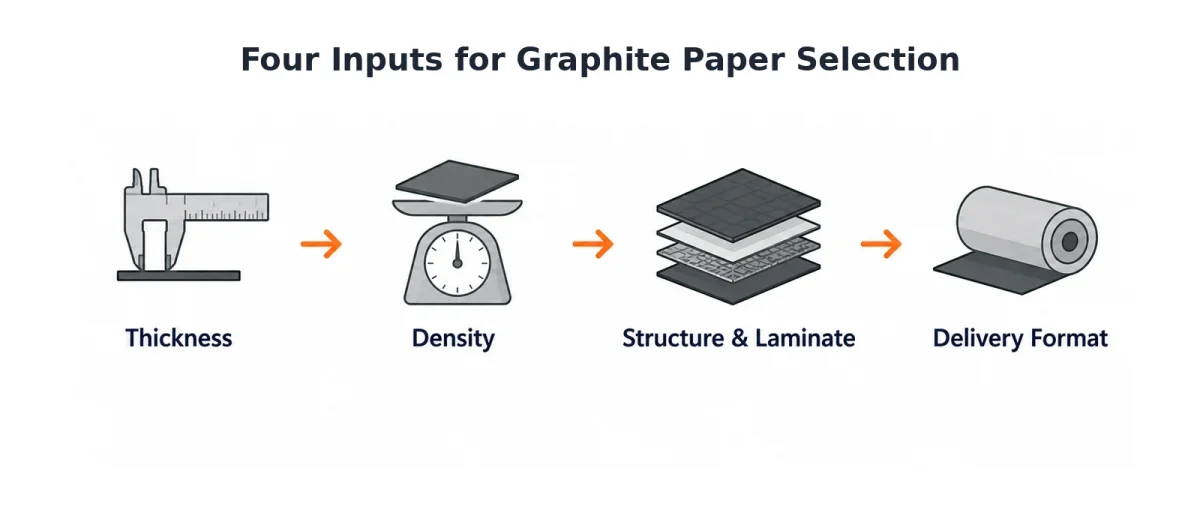
RFQ Inputs for Graphite Paper Selection
A quotation should separate the product family and construction from the dimensions. A value such as 0.10 mm or 1.0 g/cm³ is meaningful only when the material family, test method, complete layer stack and delivered format are also defined. The table below is an RFQ framework rather than a catalogue range.
| RFQ field | Project entry | Definition or method to confirm | Why it matters |
|---|---|---|---|
| Material Family / Construction | Expanded natural graphite foil/paper, compressible graphite TIM, pyrolytic graphite sheet, or another named construction | Manufacturer grade, base material, reinforcement, carrier and adhesive | Prevents conductivity or temperature data from being transferred between unrelated products. |
| Thickness | Nominal graphite thickness and total construction thickness | Instrument, contact pressure, backing support, measurement locations and approved tolerance | Controls stack height, conversion, contact and the interpretation of density. |
| Density or areal mass | Nominal value, unit and whether the value applies to graphite only or the complete laminate | Mass, area and thickness method; conditioning and pressure | Affects compressibility, handling and shipment calculations; it is not a substitute for a grade identity. |
| Width, length and core | Master roll, slit roll, sheet or piece dimensions; core inside diameter; splice policy | Approved drawing, winding direction and usable-edge definition | Determines conversion yield, roll handling and packing. |
| Structure and laminate | Plain graphite, metal reinforcement, PET carrier, adhesive, release liner, coating or other stack | Layer-by-layer thickness and which layers remain in service | The carrier or adhesive can set the real temperature and electrical limit. |
| Functional direction | In-plane spreading, through-plane interface transfer, sealing, shielding or another defined duty | Test direction, temperature, contact pressure, surface condition and method | An anisotropic sheet cannot be specified with one direction-free conductivity number. |
| Service envelope | Air, inert gas or vacuum; continuous and short-duration temperature; media; pressure; cycle | Complete construction and assembly validation | Base graphite capability alone does not become the laminate capability. |
| Delivery and acceptance | Roll, sheet, adhesive-backed part or die cut; label, liner, orientation and pack | Approved inspection plan, batch definition, defect classes, sampling and retest rule | Connects material data to the format actually received and assembled. |
Project-example status: A statement such as “0.20 mm graphite layer on a PET carrier” is an RFQ example, not a universal paper/sheet boundary. The approved order must identify the product family and construction, nominal values, test methods and acceptance limits.
What Is Graphite Paper?
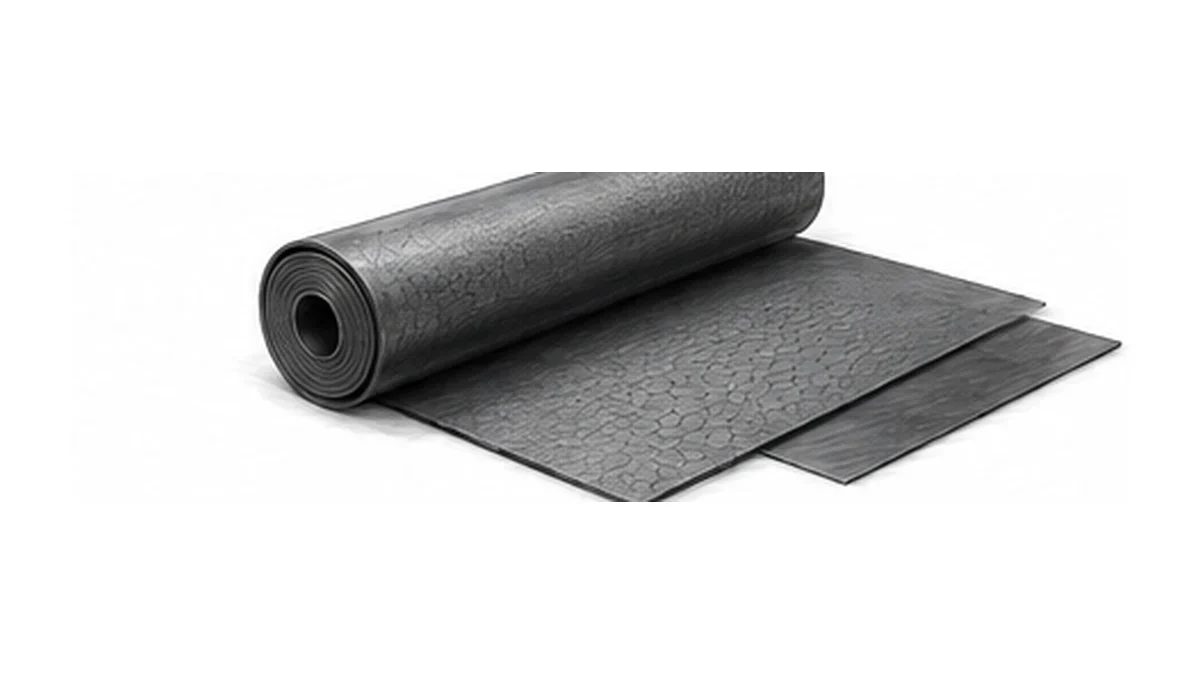
Expanded natural graphite paper or foil starts with natural graphite flakes that are intercalated, expanded and compressed into a continuous sheet, usually without a woven fibre network. SGL Carbon describes a high-density expanded-natural-graphite foil made by expansion and intensive calendering without adhesives or binders, with an in-plane conductivity example of 400–500 W/mK for that product family. That figure is useful only with its route, density, direction and product data.
A compressible graphite TIM may use graphite together with a carrier, reinforcement or adhesive to improve contact under pressure. In this category, through-plane behaviour and interface contact resistance can be more important than the headline in-plane conductivity. Panasonic’s Graphite-TIM products are therefore published as specific part-number constructions, not as one generic “graphite paper” value.
Pyrolytic graphite sheet is produced by a different synthetic route. Panasonic PGS part numbers illustrate why product identity matters: published in-plane conductivity varies by model and thickness, and a PET or adhesive layer can reduce the assembly temperature limit even when a bare PGS grade has a higher limit. A 1300, 1600 or 1950 W/mK PGS value cannot be assigned to expanded graphite paper.
| Product family | Manufacturing route | Data that must stay with the grade | Typical selection question |
|---|---|---|---|
| Expanded natural graphite paper / foil | Expanded natural flake compressed or calendered into flexible foil | Density, purity, thickness, anisotropy, oxidation resistance and reinforcement | Is the duty heat spreading, sealing, compression, a roll conversion or a laminate? |
| Compressible graphite TIM | Graphite-based interface construction, sometimes with reinforcement, carrier or adhesion layers | Through-plane performance, contact pressure, compressed thickness, surface roughness and layer stack | How much interface pressure and conformity are available in the real assembly? |
| Pyrolytic graphite sheet | Synthetic deposition and graphitisation route creating strongly oriented graphite | Part number, thickness, in-plane direction, PET/adhesive construction, electrical insulation and withstand temperature | Is a very thin high-conductivity heat spreader required, and can the sheet be protected from handling damage? |
In industrial use, the words paper, foil and sheet overlap. The controlled route and construction are therefore more reliable than the label. The related Graphite Sheet and Flexible Graphite Sheet pages should be read together with the actual thickness, density, reinforcement and application requirement.
The Four-Axis Graphite Paper Specification Map
This article uses the Four-Axis Graphite Paper Specification Map. Axis 1 is geometry: thickness, width, length and converted outline. Axis 2 is structure: density, reinforcement, laminate and surface. Axis 3 is function: heat spreading, interface transfer, sealing, shielding or protection. Axis 4 is delivery: roll, sheet, die cut, label, core and pack. A complete specification aligns all four axes; changing one axis can alter the others.
| Axis | Required project input | Approval basis | Risk when omitted |
|---|---|---|---|
| 1. Geometry | Nominal graphite thickness, total laminate thickness, width, roll or sheet length, core and converted outline | Drawing, test method, tolerance and conversion layout | Wrong stack height, low yield, handling damage or a part that does not fit. |
| 2. Structure | Material family, construction, density or areal mass, reinforcement, laminate, adhesive, carrier and surface | Named grade and layer-by-layer construction | A nominally correct thickness behaves differently in compression, temperature and conversion. |
| 3. Function | Heat direction and flux, contact pressure, sealing stress, electrical role, atmosphere, temperature, media and cycle | Grade-specific data and application-level validation | One property is optimised while the actual failure mode is missed. |
| 4. Delivery | Master roll, slit roll, sheet or part; liner, winding direction, label, traceability and package orientation | Approved packing drawing and inspection plan | Wrinkle, telescoping, puncture, crease, mixed lots or unusable conversion feed. |
The map prevents a common error: ordering “0.2 mm graphite paper” without density, width, roll length, thermal direction, adhesive or conversion. That description defines only one axis. Our team uses the remaining axes to determine whether the material belongs to thermal conversion, sealing, general industrial lining, or another route.
Key Properties and Their Boundaries
Thermal Performance Depends on Route and Direction
Expanded natural graphite foil and pyrolytic graphite sheet are both anisotropic, but they are not the same material. SGL Carbon publishes 400–500 W/mK in-plane for a high-density expanded-natural-graphite foil and also shows that expanded-natural and synthetic graphite foils occupy different conductivity and thickness ranges. Panasonic publishes model-specific PGS values from 700 to 1950 W/mK depending on thickness and construction. These examples illustrate route dependence; they do not establish a universal material value.
A thermal assembly also includes contact resistance. The 2022 ORNL review of flexible graphite thermal interfaces explains that total and interface thermal resistance depend on the contacting materials and measurement conditions. Therefore, a lower bulk thickness or a larger in-plane conductivity alone does not create a lower junction-to-sink resistance.
Flexibility, Compressibility, and Conversion
Expanded graphite paper can be slit, laminated, punched or die cut when its web strength, liner and tooling suit the construction. Compressibility may improve conformity or sealing contact, but it also means that measured thickness changes with contact pressure. Pyrolytic graphite sheet can be very thin and flexible, yet its handling, edge protection and bend requirements follow the specific PGS construction rather than an expanded-graphite rule.
Temperature and Chemical Limits Belong to the Complete Construction
The base graphite, reinforcement, adhesive, PET carrier, coating and neighbouring surfaces can have different limits. Panasonic model data illustrate this directly: some bare PGS constructions list a higher withstand temperature than PET- and adhesive-laminated versions. Expanded graphite can also oxidise in air at elevated temperature even when inert-gas or vacuum service permits a higher value. The order must therefore define atmosphere, continuous and short-duration temperature, media, pressure, exposure time and the layers that remain in service.
Weight Comparisons Need Equal Geometry and Construction
A statement that graphite is lighter than copper or aluminium is only useful when thickness, area, density, carrier and adhesive are held constant. Panasonic publishes a weight comparison for its PGS family, while SGL publishes density data for expanded-natural and synthetic graphite foils. Neither comparison can be applied automatically to another graphite-paper grade or to a thicker laminate.
A Practical Comparison of Graphite Sheet Forms
| Material form | Defining feature | Typical fit | Selection note |
|---|---|---|---|
| Expanded graphite paper / foil | Expanded natural graphite compressed into flexible roll or sheet form | Heat spreading, sealing conversion, compressible interfaces and laminates | Confirm density, anisotropy, purity, reinforcement and oxidation conditions. |
| Compressible graphite TIM | Interface construction selected for conformity under pressure | Electronics, modules and assemblies where contact resistance matters | Specify pressure, compressed thickness, surfaces and through-plane test basis. |
| Pyrolytic graphite sheet | Highly oriented synthetic graphite, often very thin | Compact electronic heat spreaders and selected shielding structures | Use the exact part number, thickness, laminate and handling instructions. |
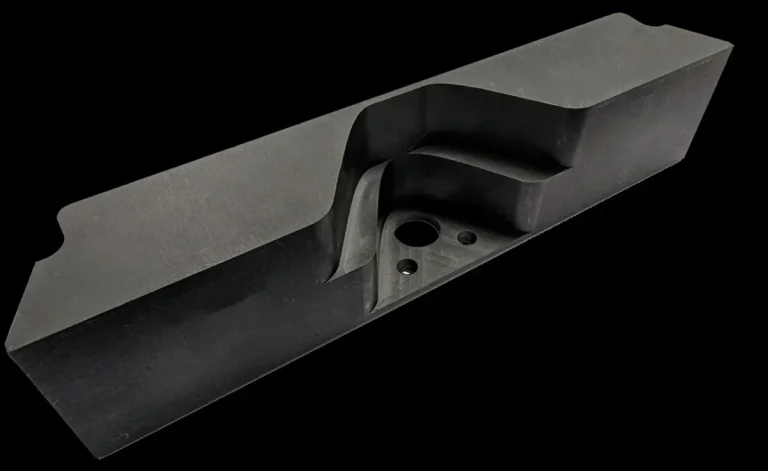
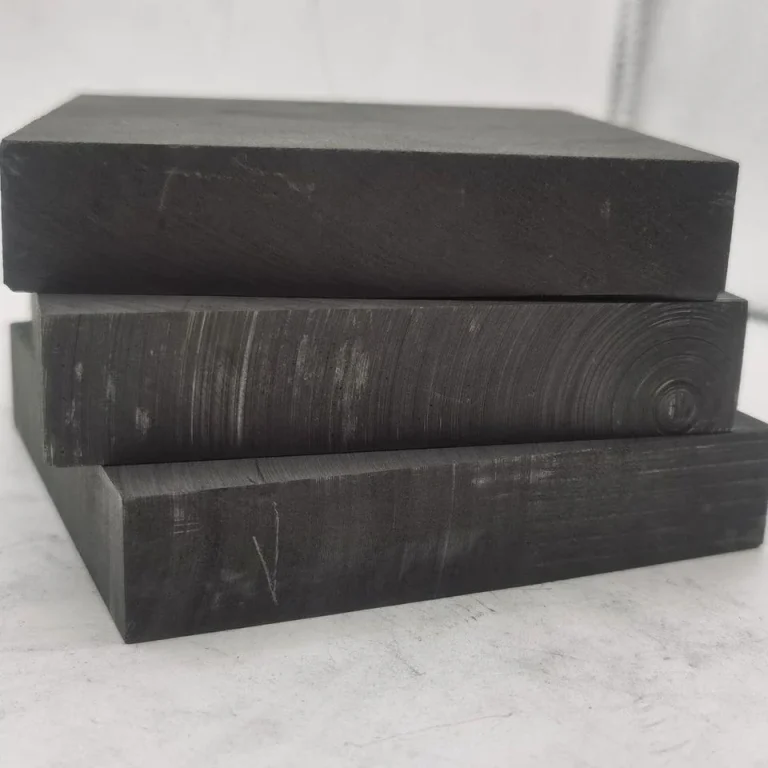
| Rigid graphite block or plate | Machinable structural graphite with unsupported geometry | Furnace fixtures, electrodes and custom machined components | Not a substitute where a conformable roll, thin laminate or die-cut web is required. |
The words paper and sheet do not create a reliable thickness boundary. The material family, construction and end use must be stated before one supplier’s performance data are compared with another product.
Common Industrial Uses of Graphite Paper
Thermal Management and Heat Spreading
Expanded graphite foil, compressible graphite TIM and pyrolytic graphite sheet can all appear in thermal assemblies, but they solve different problems. In-plane spreading redistributes heat laterally; through-plane transfer and interface contact govern how heat enters and leaves the layer. The grade is selected from direction, heat flux, surface condition, contact pressure, thickness, electrical requirements and the full laminate.
Sealing and Gasket Conversion
Expanded graphite paper or foil can be converted into thin gasket layers, facings or laminated seals where the approved construction suits the pressure, medium and atmosphere. Reinforcement, compressibility, recovery, thickness tolerance and media exposure are reviewed together before conversion parameters are released. A PGS heat spreader should not be treated as a sealing foil merely because both products are called graphite sheet.
Electrical, Shielding, and Current-Distribution Structures
Graphite-based sheets may provide electrical conduction or shielding, but contact resistance, direction, pressure, surface treatment and insulation layers determine the assembly result. The DOE graphite-current-collector work is relevant to a specific battery current-collector concept, not to every graphite-paper electrical application.
Laminated and Die-Cut Parts
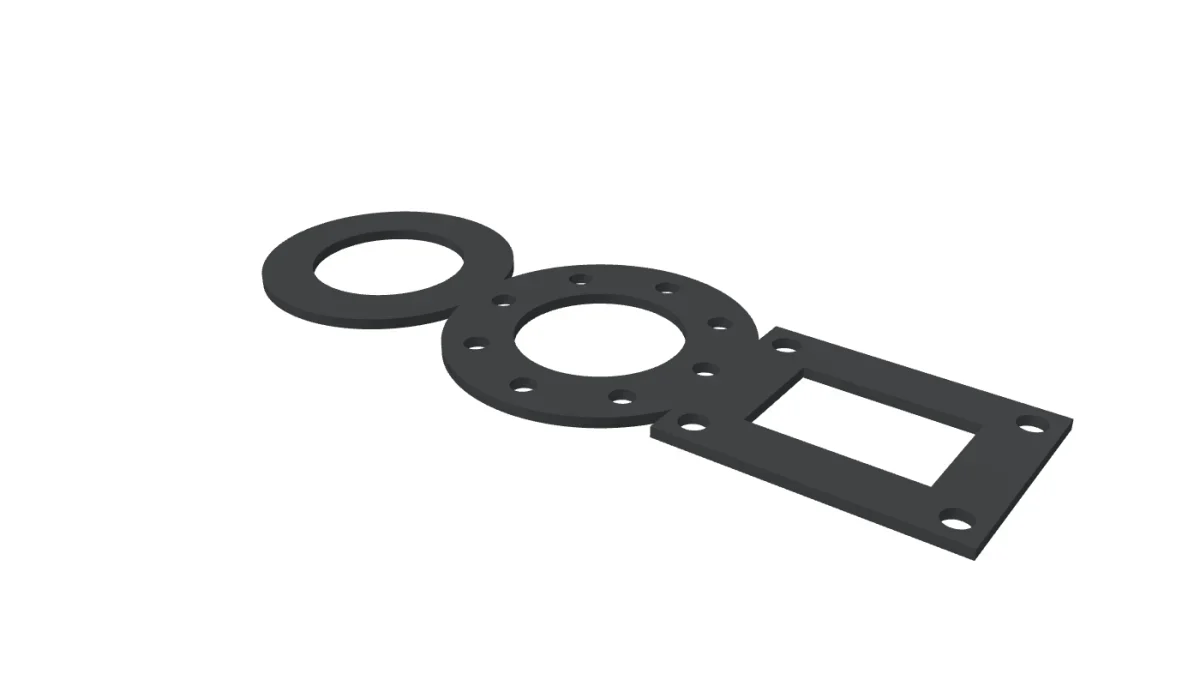
Roll material can be slit, laminated, adhesive-backed or die cut when its strength, orientation, liner and tooling are matched to the part. A drawing should define the outline, minimum web, holes, grain or heat-spreading direction, adhesive keep-outs, edge condition and packaging orientation.
How to Choose the Right Graphite Paper
- Identify the manufacturing route before comparing conductivity, density, thickness or temperature.
- State whether the duty is in-plane spreading, through-plane interface transfer, sealing, shielding, electrical contact or a converted protective layer.
- Define nominal graphite thickness separately from total laminate thickness.
- Specify density or areal mass together with the test method, conditioning and pressure.
- List atmosphere, continuous and short-duration temperature, media, pressure and cycle.
- Identify reinforcement, PET carrier, adhesive, coating, release liner and the layers that remain in service.
- Define delivery as a master roll, slit roll, sheet, laminate, adhesive-backed part or die cut.
- Attach the approved inspection plan rather than relying on an assumed sampling count.
The right selection is not necessarily the thinnest, softest or highest-conductivity product. It is the named construction whose geometry, contact behaviour, temperature limit and delivered form match the actual assembly.
Thickness, Density, and Areal Mass Must Agree
Use Areal Mass as a Cross-Check, Not as a Substitute
Thickness and density combine into areal mass, which is useful for comparing rolls, estimating shipment weight, checking material utilization, and spotting an inconsistent specification. The theoretical relation is straightforward: thickness in metres multiplied by density in kilograms per cubic metre gives kilograms per square metre. For example, 0.10 mm at 1.0 g/cm³ is theoretically close to 100 g/m²; 0.20 mm at 1.0 g/cm³ is near 200 g/m²; and 0.20 mm at 1.3 g/cm³ is near 260 g/m². These values are calculations, not released product data. Actual results depend on the agreed thickness and density tolerances, test pressure, moisture basis, sample locations, surface layers, reinforcement, and laminate.
Areal mass can reveal a mismatch before production. If a nominal 0.20 mm, 1.0 g/cm³ paper is represented by a roll weight that implies a much lower or higher mass per square metre, the core mass, width, length, splices, packaging, and actual measurements need reconciliation. The same cross-check supports converter planning because the number of square metres, nesting efficiency, trim loss, and finished-piece mass can be estimated from one controlled set of values.
Separate Nominal Values from Acceptance Values
A nominal thickness identifies the grade family; it does not define the entire acceptance window. The order needs a measurement method, instrument contact, pressure, number of locations, and tolerance. Flexible material can compress under a contact foot, so two instruments can report different results even on the same sheet. The same principle applies to density. A calculated density based on mass, area, and measured thickness inherits the uncertainty of every input. For a project in which the measurement method is part of the approved order, the result should be reported together with the method rather than treated as self-explanatory. Our team can include the agreed method and result in the supplied inspection record when that deliverable is included in the confirmed scope.
The specification distinguishes lot averages from individual-point limits. Where local uniformity matters, the drawing or purchase specification can define both. A five-point width profile measured at the beginning, middle and end of a representative length provides more useful evidence than one reading near the roll edge.
Account for Laminate and Adhesive Layers
For laminated or adhesive-backed products, total assembly thickness is not the graphite thickness. A 0.10 mm graphite layer combined with a 0.05 mm carrier, a 0.025 mm adhesive layer, and a release liner can create a stack whose processing and installed dimensions differ substantially from the graphite layer alone. The RFQ identifies which layers remain in the final part, which are removed during assembly, and whether the tolerance applies to the graphite, the converted laminate, or both.
This layer-by-layer definition is particularly important for thermal pads. The graphite may spread heat laterally, while adhesive and interface contact govern the path into and out of the spreader. A thicker adhesive can improve assembly convenience but increase thermal resistance. A carrier can improve die-cut handling but alter bending and electrical isolation. The material decision therefore follows the complete stack, not a single graphite property.
Translate Roll Geometry into Usable Conversion Yield
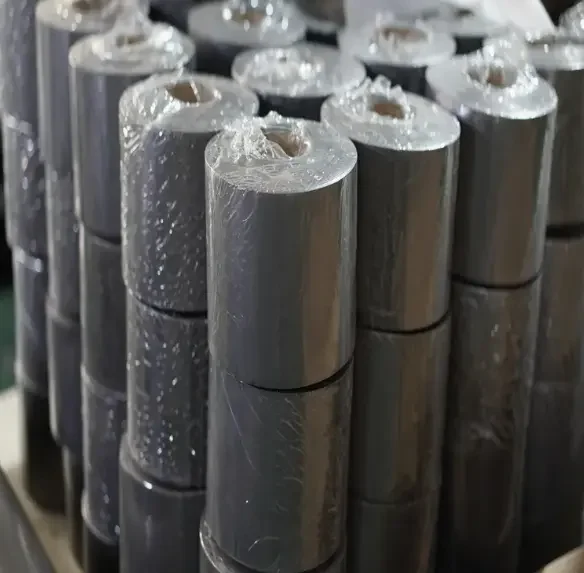
Roll width and length create the available area, but usable yield also depends on edge trim, splice rules, defect exclusions, orientation, nesting, and the minimum web between parts. A 500 mm-wide roll does not guarantee that two 250 mm parts can be placed side by side because slitting tolerance, edge quality, and die clearance consume width. Likewise, a nominal 50 m roll can include an agreed splice or a section excluded by the converter. The quotation defines gross length, usable length basis, splice allowance, edge trim, and inspection treatment so that both material and converted yield can be reconciled.
For converted orders, the translation from roll specification to sheet layout, die pattern, piece count, scrap route, liner handling and packaging orientation should be treated as a manufacturing-transfer step. Our team can review or document that transfer when the applicable conversion work and deliverables are included in the confirmed order scope. That translation prevents a paper grade that passes laboratory checks from failing in actual feeding, cutting, lamination, or assembly.
Quality Checks for Rolls, Sheets, and Converted Parts
| Check item | The approved plan must define | Record | Release risk controlled |
|---|---|---|---|
| Batch or lot | Whether the lot is a roll, production batch, laminate run or converted-part batch | Lot ID, source roll, grade and date | Prevents mixed material and makes retest decisions traceable. |
| Thickness and dimensions | Instrument, contact pressure, support, measurement locations, sample quantity and tolerance | Individual readings, average, minimum and maximum | Controls compression-sensitive measurement and local variation. |
| Density or areal mass | Conditioning, graphite-only or full-stack basis, specimen area and calculation method | Mass, area, thickness and calculated result | Detects route or compression mismatch without assuming density alone proves grade identity. |
| Surface and roll condition | Defect classes, viewing conditions, edge exclusion, wrinkle, split, contamination, winding and telescoping limits | Defect map, images and disposition | Separates cosmetic conditions from defects that reduce conversion yield or function. |
| Converted outline | Drawing revision, critical dimensions, burr or edge criteria, liner and orientation | First article and production sample results | Prevents a roll that passes incoming checks from failing in assembly. |
| Sampling and retest | Risk class, AQL or customer rule, sample size, acceptance number, retest and escalation | Plan reference and release decision | Avoids treating one fixed count as suitable for every roll length, batch size and failure mode. |
The graphite paper roll quality and die-cutting guide gives additional detail. Our team also uses production videos to show the material family and construction, including graphite paper production from raw material and the custom graphite paper production line.
Common Purchasing Mistakes
- Using the term graphite paper without confirming thickness and density expectations.
- Assuming every graphite paper grade behaves the same in thermal and sealing systems.
- Ignoring reinforcement or lamination requirements in demanding installations.
- Choosing only by price without checking conversion, handling, and long-term stability.
Extending Graphite Paper Selection into Conversion
Relevant upstream materials include natural flake graphite, expandable graphite, and natural graphite powder. The article flexible graphite foil versus thermal graphite sheet explains why expanded-natural-graphite foil and high-conductivity synthetic sheet should not share one property table.
For sealing, review the sealing materials and industrial gaskets solution and graphite sealing materials. A sealing conversion requires stress, media, atmosphere, reinforcement and approved gasket data, not merely a flexible sheet label.
Thickness, Density, and Sourcing
The graphite paper thickness and density guide expands the relationship between thickness, density and areal mass. For sourcing and customisation, the custom graphite paper sourcing guide covers width, roll length, converted outline, liner, label and packing.
Our team supplies die-cut flat sheets with a thickness range from 0.1mm to 2.0mm within the published product scope. The appropriate conversion route changes across that span: ultrathin paper needs careful web tension and liner support, while heavier sheet needs suitable cutting clearance, bend radius and flat packing. Width, outline, adhesive, laminate, grain direction and edge condition remain separate quotation fields.
Thermal and Structural Context
The thermal management solution and the article on graphite paper in electronic thermal management should be used after the material family is identified. The graphite block versus sheet selection guide separates conformable roll materials from rigid machined graphite.
Our team supplies thin graphite paper and flexible graphite roll products through the graphite paper product page and thicker or sealing-oriented forms through flexible graphite sheet. The naming is secondary to the controlled specification.
Graphite paper is anisotropic. Rolling aligns graphite layers so in-plane thermal transport can be much higher than through-plane transport. A conductivity value without direction, temperature, pressure and test basis is incomplete. In thermal assemblies, in-plane spreading moves heat laterally, while through-plane resistance and interface contact determine how heat enters and leaves the sheet.
The U.S. Department of Energy graphite current collector presentation evaluates flexible graphite paper within a specific battery current-collector research programme. It supports that application context but does not prove a general conductivity or weight claim for every graphite-paper grade.
For direct material examples, SGL Carbon publishes 400–500 W/mK in-plane for its high-density expanded-natural-graphite foil, while Panasonic publishes 700–1950 W/mK for specific PGS part numbers and constructions. Where a named product specification states a performance value, that value must remain attached to its grade, direction, thickness, construction and method. Our team therefore keeps the stated product performance with the corresponding grade data and confirms the application through sample or assembly-level testing when the thermal path is critical.
Thin paper can bend around a radius and follow a supporting surface, but flexibility does not mean unlimited folding or compatibility with every curve. The RFQ identifies whether the material is installed flat, wrapped, folded once, rolled or repeatedly flexed, and it can define a bend radius and crack criterion for the selected construction.
Frequently Asked Questions
Is graphite paper the same as flexible graphite sheet or PGS?
The names overlap, but the manufacturing route does not. Expanded-natural-graphite foil, compressible graphite TIM and pyrolytic graphite sheet require separate grade data. Thickness alone does not define the family.
How does density affect graphite paper?
At the same thickness, higher density increases areal mass and can change strength, compression, contact and handling. Density alone does not mean better thermal or sealing performance; route, direction, pressure and structure remain controlling.
Can graphite paper be used in air at high temperature?
Graphite can oxidise in air at elevated temperature, and adhesives or carriers may set a lower limit. The order must distinguish air, inert gas and vacuum, as well as continuous and short-duration exposure.
How is thickness measured?
The method controls contact pressure, instrument, sample support, location and number of readings because flexible material can compress. Our team records the agreed method and multiple positions rather than relying on one unqualified reading.
Can rolls and converted pieces be quoted?
Yes. The quotation can cover master rolls, slit rolls, sheets, laminated material, adhesive-backed parts or die-cut components. Each format receives its own dimensional, visual, inspection, label and packing requirements.
Temperature, Laminate, and Conversion Limits
The base graphite may tolerate a wider temperature range than the converted product. Adhesive, carrier film, reinforcement, coating, release liner and neighbouring surfaces can set the practical limit of the finished assembly. Our team therefore records both the graphite specification and the layer stack, then identifies which layers remain during service and which are removed during installation.
The service record should state atmosphere, continuous temperature, short-duration excursion, exposure time, media, pressure, electrical isolation and ageing or oxidation validation. A value published for bare PGS in an inert or non-oxidising condition cannot by itself be used for a PET-backed adhesive laminate in air.
Conversion limits are similarly linked to structure. A thin plain paper may slit and die cut cleanly with suitable support, while a reinforced or adhesive-backed laminate can require different tooling, clearance, liner control and edge criteria. The sample plan checks the delivered form, not only an unconverted laboratory specimen, so roll handling and finished-part quality are evaluated together.
References and Sources
- ORNL: Review of Thermal Contact Resistance of Flexible Graphite Materials — Supports the distinction between bulk properties, total thermal resistance and interface contact resistance.
- U.S. Department of Energy: Graphite Current Collectors — Used only for a battery current-collector research context.
- U.S. Department of Energy: Cost Analysis of PEM Fuel Cell Systems — Used only for the flexible-graphite-foil bipolar-plate manufacturing and cost-study context.
- USGS: Graphite Statistics and Information — General graphite material-flow background, not a source for grade-level paper performance.
Request Graphite Paper for an Industrial Application
QDZRT Graphite can review graphite paper, flexible graphite sheet, roll conversion, die-cut parts, laminates, thermal layers, sealing materials, samples, quality checks and export packing. Start the inquiry through the contact page with the function, material family and construction, thickness, density, width, length, quantity, thermal direction, pressure, laminate, inspection and destination. After we reply, send the controlled drawing or other project files by email or another agreed secure channel. The quotation will define the product form and delivery condition rather than relying on the term “graphite paper” alone.